
Essays · Olfactory Art
Josiah Wedgwood and Sons. Scent Bottle.
Bên ngoài là gương mặt. Bên trong là một mùi đã bay mất.
A face outside. A vanished smell inside.
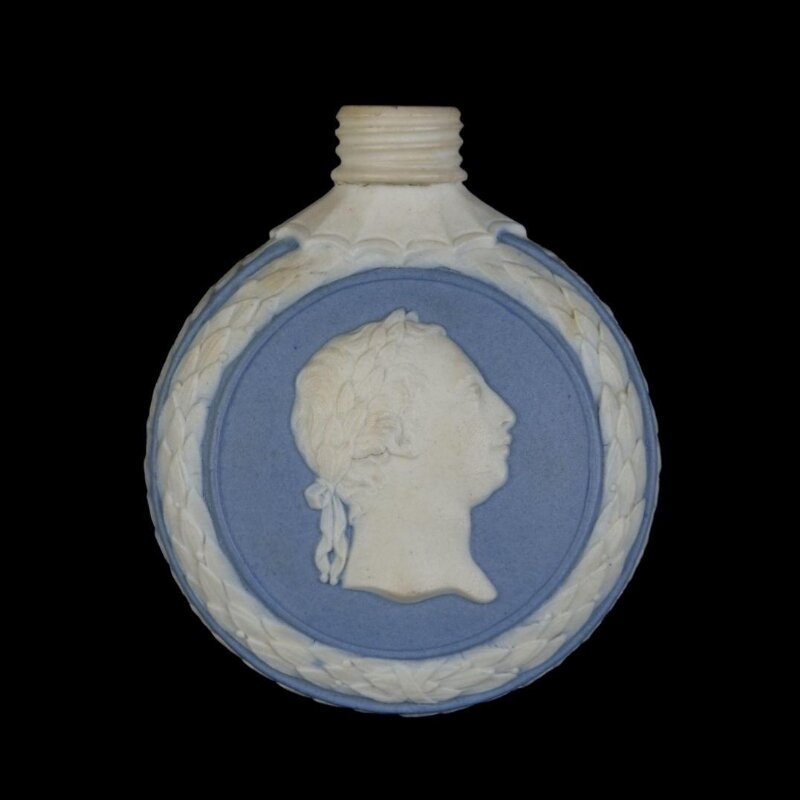
© Victoria and Albert Museum, London; V&A Wedgwood Collection. Presented by Art Fund with major support from the National Lottery Heritage Fund, private donations and a public appeal. · Victoria and Albert Museum (V&A)
Một vật vừa lòng bàn tay
Chiếc lọ cao 52 mm, rộng 43 mm, dày 17 mm. Nó tròn và dẹt, cỡ một chiếc đồng hồ bỏ túi. Nhà sản xuất là Josiah Wedgwood and Sons, xưởng gốm ở Etruria, vùng Staffordshire nước Anh. Niên đại ghi trong hồ sơ Victoria and Albert Museum là khoảng 1785 đến 1790.
Chất liệu là jasperware, loại gốm đá nung ở nhiệt độ cao. Lọ màu xanh, và theo nhãn trưng bày, đó là jasper xanh đặc: màu nằm trong chính khối đất, không phải một lớp phủ bên ngoài. Trên nền xanh ấy là những hình nổi bằng đất trắng, làm riêng rồi đắp lên.
Một mặt là chân dung nhìn nghiêng của vua George III. Mặt kia là hoàng hậu Charlotte, cũng nhìn nghiêng. Hai gương mặt quay lưng vào nhau qua bề dày một chiếc lọ.
V&A giữ hai chiếc lọ cùng kiểu. Một chiếc có viền nguyệt quế quanh chân dung, chiếc kia có viền hoa văn cổ điển. Hiện chúng thuộc V&A Wedgwood Collection, trưng bày ở World of Wedgwood, Barlaston.
Một chất liệu được tìm ra bằng thử và sai
Jasperware là phát minh của chính Josiah Wedgwood trong thập niên 1770. Theo V&A, ông cần hàng nghìn lần thử nghiệm trong nhiều năm mới làm chủ được nó. Kết quả là một chất liệu có thể nhuộm màu, cắt và đánh bóng, nên dùng được cho rất nhiều loại vật: bình, huy chương, khuy áo, và cả những chiếc lọ nhỏ như lọ này.
Cách làm tạo ra một hình ảnh rất rõ. Nền màu phẳng và mờ. Hình nổi trắng nằm trên đó, sắc nét như một con dấu. Không có men bóng làm nhoè đường viền. Một gương mặt nhìn nghiêng trên nền xanh đọc được ngay cả khi vật chỉ lớn bằng đốt ngón tay.
Chính vì thế jasperware hợp với chân dung. Gương mặt nhìn nghiêng là kiểu hình quen thuộc của đồng xu và huy chương. Người thời ấy nhìn một gương mặt như thế là biết đó là ai, và biết đó là thứ đáng giữ.
Wedgwood cũng không xa lạ với hoàng gia. Từ thập niên 1760, dòng gốm màu kem của xưởng đã mang tên Queen's Ware, theo tên hoàng hậu Charlotte. Chân dung của bà trên một chiếc lọ jasper là sự tiếp nối của mối quan hệ ấy, lần này ở dạng một vật nhỏ ai cũng có thể mua.
Chân dung để mang theo mùi
Một lọ đựng hương là vật riêng. Nó nằm trong túi áo, trong ví, trên bàn trang điểm. Người ta mở nó khi ở một mình hoặc ở rất gần người khác. Đặt chân dung vua và hoàng hậu lên một vật như thế là đưa hình ảnh công cộng nhất vào khoảng riêng tư nhất.
Người cầm lọ này mang theo hai thứ. Một là mùi, thứ của riêng họ, đổi theo ý họ. Hai là một hình ảnh mà cả nước đều nhận ra. Mùi thì bay đi, cần được đổ đầy lại. Gương mặt thì nằm yên trên đất nung, không phai.
Hồ sơ bảo tàng không cho biết chiếc lọ từng đựng gì. Có thể là một thứ nước thơm, có thể là thứ khác. Không ai ghi lại, và bài này không đoán. Điều chắc chắn là chiếc lọ được làm để chứa mùi, và mùi ấy đã không còn.
Vì thế ngày nay, người đứng trước tủ kính chỉ còn có thể nhìn. Họ thấy nền xanh, thấy hai gương mặt, thấy vòng nguyệt quế. Họ không ngửi được gì. Một vật làm ra cho mũi giờ chỉ còn nói với mắt.
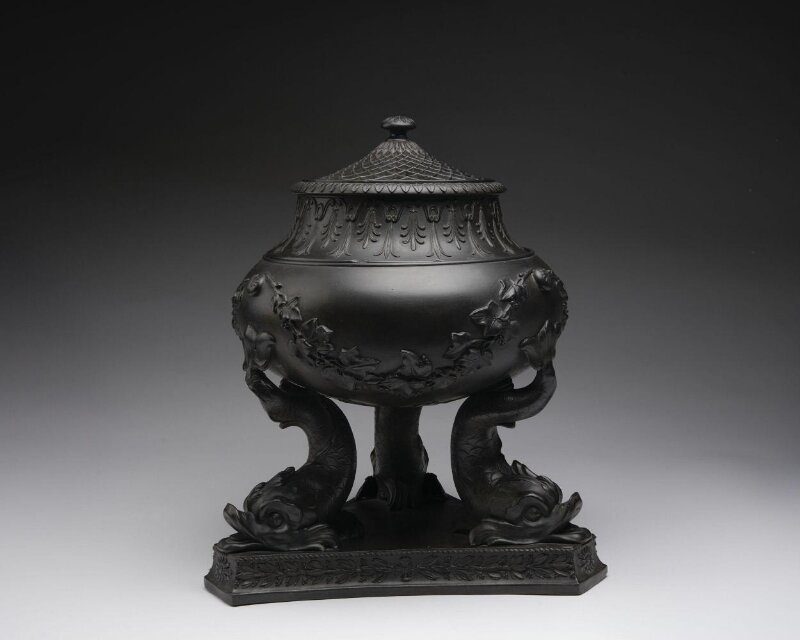
Chiếc lọ đáng nhớ vì nó cho thấy mùi hương từng được gói trong những lớp nghĩa khác: chất liệu mới, hình ảnh quyền lực, thời trang của một thập niên. Cái vỏ ấy tồn tại hơn hai trăm năm. Cái lõi thì chỉ tồn tại đến lúc nắp mở lần cuối. Về cách Wedgwood làm những vật toả mùi cho cả căn phòng, xem thêm lò đốt viên hương Dolphin Tripod.
An object the size of a palm
The bottle is 52 mm high, 43 mm wide and 17 mm deep. Round and flat, about the size of a pocket watch. It was made by Josiah Wedgwood and Sons at their Etruria works in Staffordshire, England. The Victoria and Albert Museum dates it to around 1785 to 1790.
The material is jasperware, a stoneware fired at high temperature. The bottle is blue, and the label calls it solid blue jasper: the colour runs through the clay itself rather than sitting on the surface. On that blue ground sit white reliefs, made separately and applied.
One side shows King George III in profile. The other shows Queen Charlotte, also in profile. Two faces set back to back through the thickness of a bottle.
The V&A holds two bottles of this type. One frames the portraits in a laurel border, the other in a classical border. Both belong to the V&A Wedgwood Collection, on display at the World of Wedgwood in Barlaston.
A material found by trial
Jasperware was Josiah Wedgwood's own invention in the 1770s. According to the V&A, it took him thousands of experiments over several years to perfect. The result could be coloured, cut and polished, which made it useful for many kinds of object: vases, medallions, buttons, and small bottles like this one.
The technique produces a very clear image. The ground is flat and matte. The white relief sits on top, crisp as a seal. There is no glossy glaze to blur the edges. A profile on a blue field reads clearly even when the object is barely larger than a fingertip.
That is why jasperware suited portraits. The profile head was the familiar format of coins and medals. People of the time knew at a glance who such a face was, and knew it was something worth keeping.
Wedgwood already had royal links. From the 1760s the firm's cream coloured earthenware was sold as Queen's Ware, named after Queen Charlotte. Her portrait on a jasper bottle continues that relationship, this time as a small object anyone with the means could buy.
A portrait for carrying a smell
A scent bottle is a private object. It lives in a pocket, a purse, on a dressing table. It is opened alone or very close to someone else. Placing the king and queen on such an object brings the most public image into the most private space.
Whoever carried this bottle carried two things. One was a smell, their own, changed at will. The other was an image the whole country recognised. The smell evaporated and had to be refilled. The faces stayed fixed in fired clay.
The museum record does not say what the bottle held. Perhaps a scented water, perhaps something else. Nobody wrote it down, and this essay does not guess. What is certain is that it was made to contain a smell, and that smell is gone.
So today a visitor at the case can only look. Blue ground, two faces, a laurel wreath. Nothing to smell. An object made for the nose now speaks only to the eye.
The bottle is worth remembering because it shows scent wrapped in other layers of meaning: a new material, an image of power, the fashion of a decade. The shell has lasted more than two hundred years. The core lasted only until the stopper was lifted for the last time. For Wedgwood objects that scented a whole room, see the Dolphin Tripod pastille burner.
Olfactory Art