
Essays · Olfactory Art
Leanne Wijnsma, Froukje Tan. Smell of Data.
Thứ nguy hiểm nhất là thứ không có mùi.
The most dangerous things are the ones without a smell.
© Leanne Wijnsma · Smell of Data (official project site)
Một vụ nổ năm 1937
Năm 1937, ở thị trấn New London, bang Texas, một ngôi trường phát nổ. Nguyên nhân là khí gas thiên nhiên rò rỉ, tích tụ trong một không gian kín mà không ai biết. Khí gas lúc ấy không có mùi. Theo trang của dự án, 295 học sinh và giáo viên đã thiệt mạng.
Sau thảm hoạ ấy, chính quyền bắt buộc thêm mùi vào khí gas vốn không mùi. Cái mùi khó chịu mà ngày nay ai cũng nhận ra khi bếp gas bị hở không đến từ bản thân khí gas. Nó được thêm vào, có chủ đích, để mũi người có thể làm việc canh gác. Số vụ nổ giảm hẳn.
Nhà thiết kế Leanne Wijnsma và nhà làm phim Froukje Tan bắt đầu từ câu chuyện này. Họ hỏi: ngày nay, thứ gì đang rò rỉ quanh ta mà không có mùi? Câu trả lời của họ là dữ liệu cá nhân.
Một mùi cho dữ liệu
Smell of Data ra đời ở Amsterdam năm 2016. Dự án có hai phần. Phần thứ nhất là một mùi mới, được tạo ra để gắn với cảm giác dữ liệu đang bị lộ. Các bài viết về dự án mô tả nó là một mùi kim loại. Mùi được phát triển bởi Wijnsma cùng công ty ScentAir.
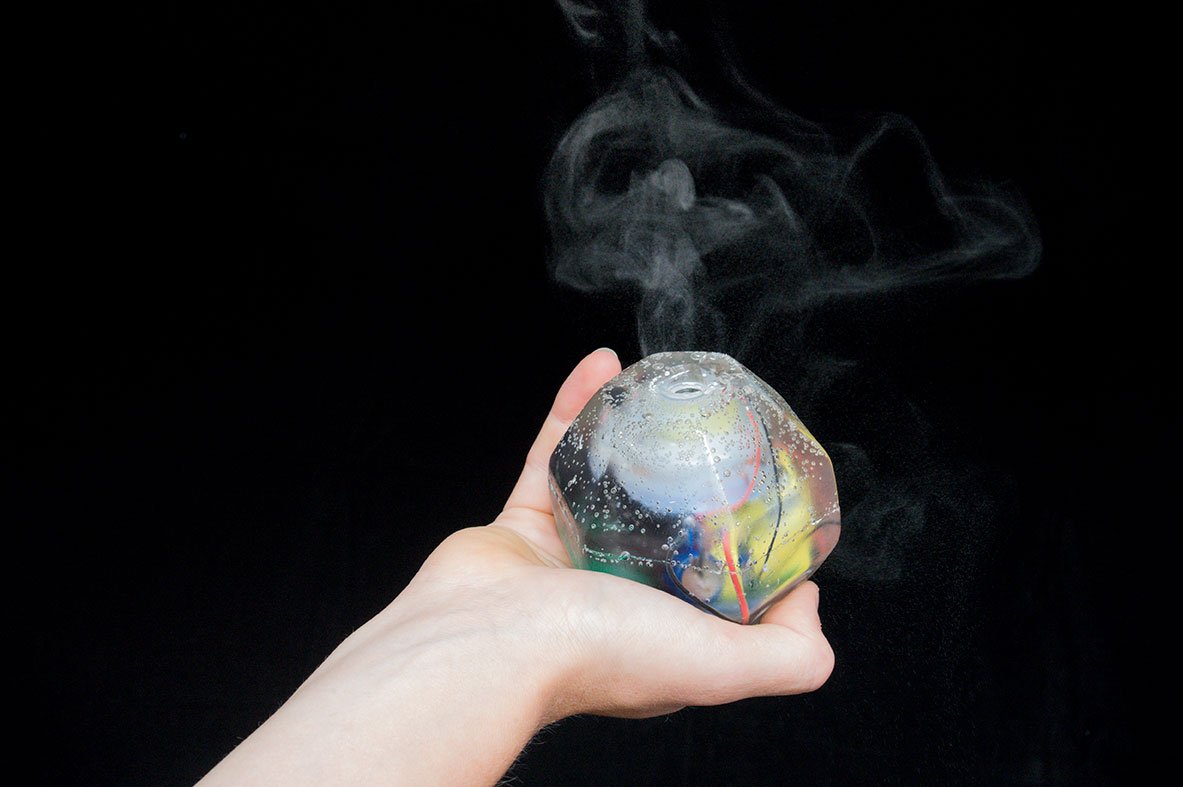
Phần thứ hai là một thiết bị khuếch tán mùi nhỏ, cầm vừa lòng bàn tay, kết nối wifi với điện thoại, máy tính bảng hoặc máy tính. Khi người dùng vào một trang web không được bảo vệ trên một mạng không an toàn, thiết bị xịt ra một làn mùi.
Phần mã do Jip de Beer viết. Nguyên mẫu thiết bị do Robert van Leeuwen thiết kế. Ảnh của Simone C. Niquille. Mã nguồn được công bố theo giấy phép Creative Commons, để bất kỳ ai cũng có thể dựng lại.
Dự án có sự tham gia của nhiều tổ chức, trong đó có ScentAir, Bits of Freedom, Mediafonds, Greenhost và Waag Society. Về sau có thêm SIDN fonds, STRP và Hackers and Designers.
Cảnh báo, không phải khoá cửa
Hai tác giả nói rõ: Smell of Data không phải một giải pháp bảo mật. Nó không chặn được gì. Nó chỉ báo. Giống như mùi trong khí gas không vá được đường ống, nó chỉ cho biết có chỗ hở.
Vì sao lại là mùi, khi điện thoại đã có đủ loại thông báo? Vì thông báo trên màn hình quá nhiều và quá giống nhau. Người dùng quen bấm bỏ qua. Mùi thì khác. Nó đi thẳng vào phản xạ, nhanh hơn việc đọc và suy nghĩ. Ta không quyết định có ngửi hay không. Mùi đã ở đó.
Dự án dựa vào chính đặc điểm ấy của khứu giác: một đường nối trực tiếp tới những phản ứng bản năng. Một mùi lạ trong phòng khiến ta ngẩng đầu lên trước khi kịp nghĩ. Smell of Data muốn dữ liệu cá nhân được đối xử như vậy, như một thứ có thể khiến ta giật mình.
Năm 2016, dự án nhận giải dự án sáng tạo nhất tại Science Hack Day. Năm 2017, nó vào nhóm chung kết giải Sadakichi của Art and Olfaction Awards.
Cho một thứ vô hình một cơ thể
Dữ liệu là một trong những thứ khó hình dung nhất của đời sống hiện nay. Không nhìn thấy, không cầm được, không nghe được. Nó đi qua ta hằng giây mà ta không hay. Mọi rủi ro quanh nó vì thế cũng trừu tượng.
Smell of Data không giải thích dữ liệu. Nó cho dữ liệu một cơ thể. Một mùi, một cảm giác trong mũi, một phản ứng trong người. Khi một thứ vô hình có mùi, nó bắt đầu tồn tại theo cách cơ thể hiểu được.
Nghệ thuật khứu giác thường dùng mùi để nói về những điều cơ thể biết mà lời không nói hết, như nỗi sợ trong The Smell of Fear của Clara Ursitti. Smell of Data đi theo chiều ngược lại: nó dùng mùi để cơ thể biết một điều mà trước đó chỉ lời mới nói được.
Điều đáng nhớ ở dự án là sự khiêm tốn của nó. Không hứa bảo vệ. Chỉ hứa báo. Và nó tin rằng cái mũi, giác quan bị coi nhẹ nhất, vẫn đủ nhanh để canh gác cho một thế giới số.
An explosion in 1937
In 1937, in the town of New London, Texas, a school exploded. The cause was natural gas leaking and building up in an enclosed space without anyone knowing. Gas at the time had no smell. According to the project's site, 295 students and teachers were killed.
After the disaster, authorities required that odour be added to otherwise odourless gas. The unpleasant smell everyone now recognises from a leaking stove does not come from the gas itself. It is added, on purpose, so that the human nose can keep watch. Explosions fell sharply.
The designer Leanne Wijnsma and the filmmaker Froukje Tan began from this story. They asked: what is leaking around us today without a smell? Their answer was personal data.
A smell for data
Smell of Data was made in Amsterdam in 2016. It has two parts. The first is a new smell, created to be tied to the feeling of data being exposed. Articles about the project describe it as metallic. It was developed by Wijnsma with the company ScentAir.
The second is a small dispenser that fits in the palm, connected by wifi to a phone, tablet or computer. When the user visits an unprotected website on an unsecured network, the device releases a puff of scent.
The code was written by Jip de Beer. The prototype was designed by Robert van Leeuwen. Photographs are by Simone C. Niquille. The code is published under a Creative Commons licence so that anyone can rebuild it.
Several organisations took part, among them ScentAir, Bits of Freedom, Mediafonds, Greenhost and Waag Society, later joined by SIDN fonds, STRP and Hackers and Designers.
A warning, not a lock
The makers are clear: Smell of Data is not a security solution. It blocks nothing. It only warns. Just as the smell in gas does not mend a pipe, it only tells you there is a leak.
Why smell, when phones already have every kind of notification? Because on screen alerts are too many and too alike. Users learn to dismiss them. Smell is different. It goes straight to reflex, faster than reading or thinking. We do not decide whether to smell. The smell is already there.
The project relies on exactly this feature of the sense: a direct line to instinctive reactions. A strange smell in a room makes us look up before we think. Smell of Data wants personal data to be treated that way, as something that can startle us.
In 2016 the project won Most Innovative Project at Science Hack Day. In 2017 it was a finalist for the Sadakichi Award of the Art and Olfaction Awards.
Giving the invisible a body
Data is among the hardest things in contemporary life to picture. It cannot be seen, held or heard. It passes through us every second without our noticing, and so every risk around it feels abstract.
Smell of Data does not explain data. It gives data a body. A smell, a sensation in the nose, a reaction in the gut. When something invisible has a smell, it begins to exist in a way the body understands.
Olfactory art often uses smell to speak of what the body knows but words cannot fully say, like fear in Clara Ursitti's The Smell of Fear. Smell of Data works the other way: it uses smell so the body can know something that until then only words could say.
What stays with you is its modesty. It promises no protection. Only a warning. And it trusts that the nose, the most underrated of the senses, is still quick enough to stand guard over a digital world.

Olfactory Art