
Essays · Olfactory Art
Mandy Aftel. Bảo tàng của những mùi lạ.
Vật thô cũng xứng đáng được nhìn.
Raw material deserves to be looked at too.
Berkeley: một người làm mùi đi đường riêng
Mandy Aftel làm việc ở Berkeley, California. Theo lời bà, bà bắt đầu làm nước hoa từ nguyên liệu tự nhiên khoảng ba mươi năm trước. Aftelier Perfumes, tên nhà nước hoa của bà, không dùng chất tổng hợp. Mọi mùi được pha và đóng chai theo mẻ nhỏ, trong một không gian làm việc không mở cửa đón khách.
Con đường dẫn bà đến mùi không thẳng. Trong danh sách sách bà viết có cả những cuốn không liên quan gì đến nước hoa: một cuốn về tiểu sử Brian Jones của nhóm Rolling Stones, những cuốn về chuyện kể và trò chuyện trong đời sống. Rồi đến mùi, và bà ở lại đó.
Bà kể về cách mình tìm nguyên liệu: thường ngửi cả chục phiên bản của cùng một loại tinh dầu, từ những nơi khác nhau, để chọn ra một. Trong bảng nguyên liệu của bà có những tinh dầu đã để lâu hàng chục năm, già đi theo cách riêng của chúng.
Từ năm 2003, bà còn làm tinh dầu dùng trong bếp cho đầu bếp và người pha chế. Mùi và vị, với bà, là hai cửa của cùng một căn phòng.
Essence and Alchemy: viết lại lịch sử của vật
Năm 2001, Aftel in Essence and Alchemy. Cuốn sách không phải một cẩm nang pha chế. Nó đi ngược về lịch sử của các nguyên liệu tự nhiên: người ta đã chiết chúng thế nào, dùng chúng vào việc gì, trong bếp, trong đền, trên cơ thể. Nó được dịch ra tám thứ tiếng và nhận giải Richard B. Solomon của Sense of Smell Institute.
Sau đó là những cuốn khác. Aroma và The Art of Flavor, viết cùng đầu bếp Daniel Patterson, nối mùi với bếp. Fragrant, năm 2014, bàn về mối liên hệ giữa khứu giác và những thèm muốn của con người. Scents and Sensibilities kể về nước hoa sáp, loại nước hoa dạng rắn.
Đọc cùng nhau, các cuốn sách của Aftel có chung một thói quen: bắt đầu từ vật trước, rồi mới đến sản phẩm. Một bông hoa, một mảnh vỏ cây, một giọt nhựa. Rồi người ta đã làm gì với chúng.
Institute for Art and Olfaction ở Los Angeles, nơi bà làm cố vấn, đặt một giải thưởng hằng năm mang tên bà. Năm 2022, viện này trao cho bà giải Septimus Piesse Visionary Award cho những gì bà làm trong cả đời nghề.
Một căn nhà nhỏ cuối lối gạch
Aftel Archive of Curious Scents nằm trong một căn nhà nhỏ ở cuối một lối đi lát gạch, cùng địa chỉ với nơi bà làm việc. Nó chỉ mở vào thứ Bảy.
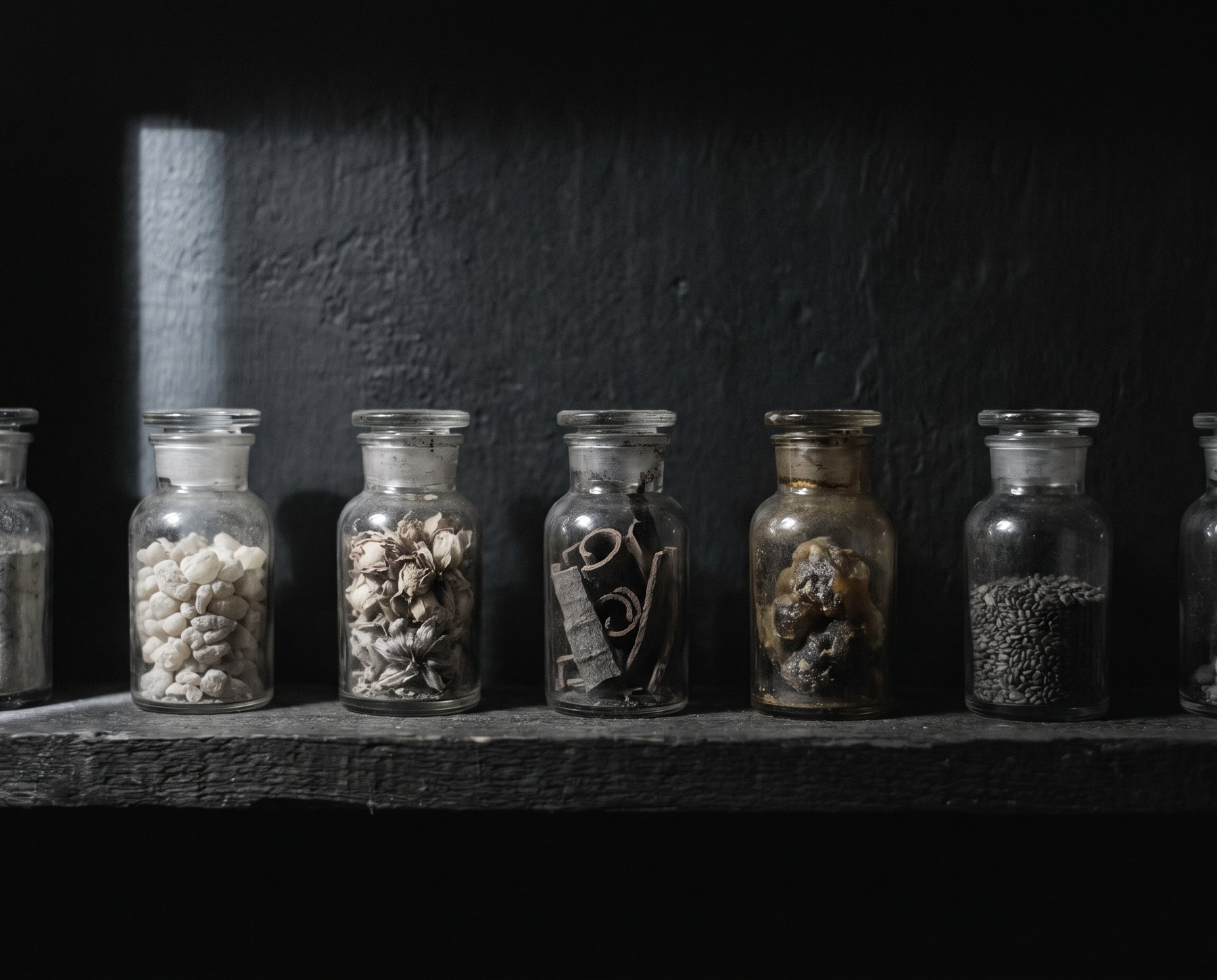
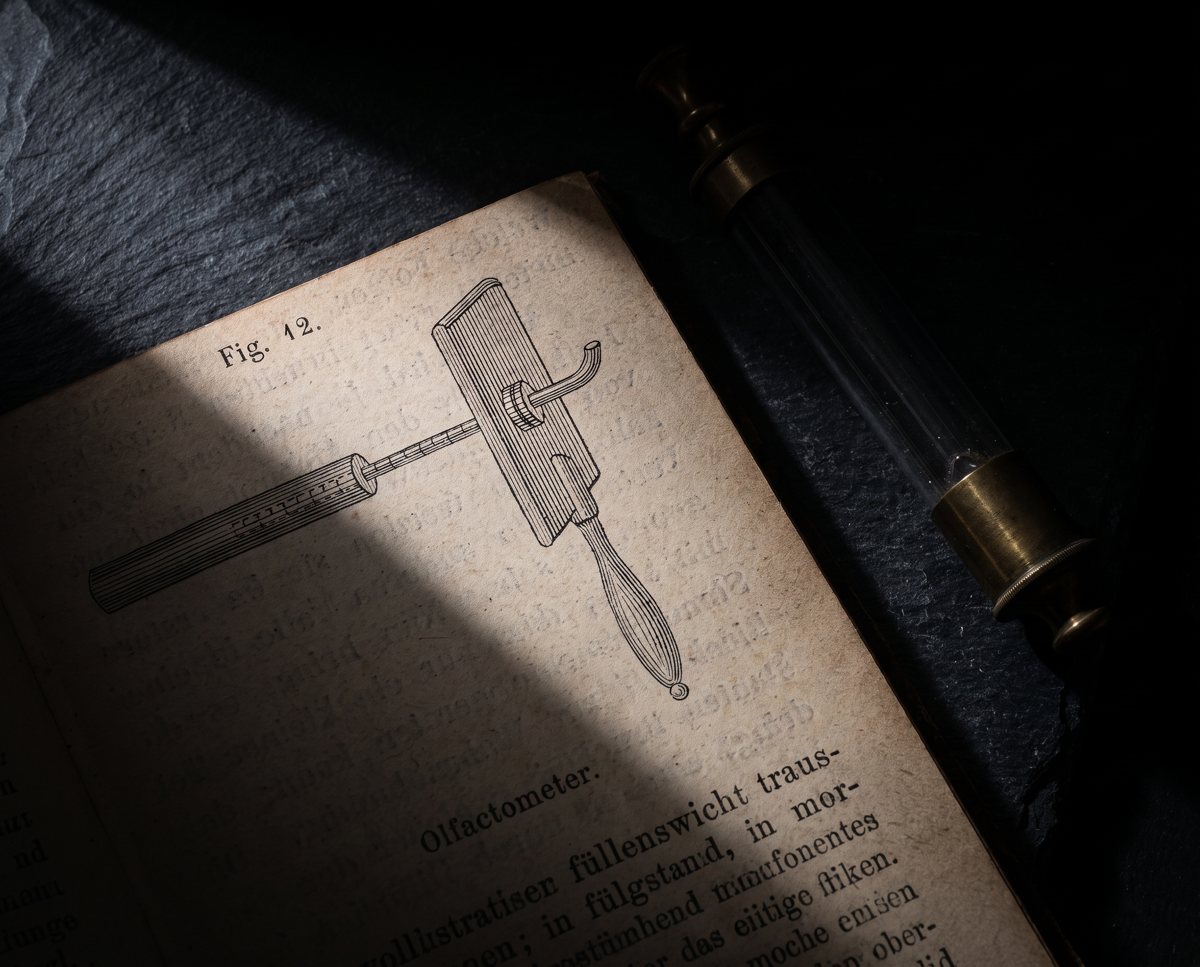
Bên trong là một tủ đồ lạ theo kiểu xưa, những ngăn kéo gỗ cũ đựng nguyên liệu thực vật, hơn một trăm cuốn sách cổ về nguyên liệu thơm, tranh khắc và bưu thiếp tô màu tay, có cái đã hơn bốn trăm năm tuổi. Có một cuốn sách biểu tượng từ thế kỷ mười sáu. Có một bàn nguyên liệu kiểu cây đàn organ của người điều hương.
Người xem được cầm lên những vật thô: cỏ vetiver, nhựa cánh kiến, bushman's candle. Họ đeo găng khi lật sách cổ. Họ được chọn mẫu trong hơn hai trăm tinh dầu chiết từ quả, hoa, cây, cỏ và nhựa.
Ngoài vườn có thêm năm mươi tinh dầu để ngửi, trong đó có những mùi động vật mang tính lịch sử, những tinh dầu đã hơn một trăm năm, và trầm hương.
Nguyên liệu như vật trưng bày
Trong một bảo tàng mỹ thuật, vật liệu thường bị giấu sau tác phẩm. Ta nhìn bức tranh, không nhìn bột màu. Ta nhìn bức tượng, không nhìn khối đá trước khi được đục.
Kho của Aftel đảo ngược thứ tự đó. Ở đây, vật liệu chính là thứ được trưng. Tinh dầu không được giới thiệu như bước trung gian trên đường đến một chai đẹp, mà như một vật đầy đủ, có nguồn gốc, có tuổi, có lịch sử sử dụng.
Điều này khiến căn nhà nhỏ ở Berkeley gần với một phòng nghiên cứu hơn là một cửa hàng. Người đến không được mời mua gì cả. Họ được mời nhìn gần hơn, ngửi lâu hơn, và mang về vài mảnh giấy thử.
Đó cũng là tinh thần của Institute for Art and Olfaction, nơi Aftel làm cố vấn: coi mùi là một thứ để hiểu và để bàn luận, không chỉ để dùng.
Berkeley: a perfumer on her own road
Mandy Aftel works in Berkeley, California. In her own words, she began making perfume from natural materials about thirty years ago. Aftelier Perfumes, her studio, uses no synthetics. Everything is blended and bottled in small batches, in a working space not open to the public.
Her route to smell was not straight. Her list of books includes titles with nothing to do with perfume: a biography of Brian Jones of the Rolling Stones, books about storytelling and conversation in daily life. Then came smell, and she stayed.
She describes how she sources materials: often smelling a dozen versions of the same oil, from different places, to choose one. Her palette includes essences aged for decades, grown old in their own way.
Since 2003 she has also made essences for cooking, for chefs and mixologists. Smell and taste, for her, are two doors into the same room.
Essence and Alchemy: rewriting the history of materials
In 2001 Aftel published Essence and Alchemy. The book is not a blending manual. It goes back through the history of natural materials: how they were extracted, what they were used for, in the kitchen, in the temple, on the body. It has been translated into eight languages and won the Richard B. Solomon Award of the Sense of Smell Institute.
Other books followed. Aroma and The Art of Flavor, written with chef Daniel Patterson, tie smell to cooking. Fragrant, in 2014, looks at the bond between smell and human appetite. Scents and Sensibilities is about solid perfume.
Read together, her books share a habit: start with the material, then the product. A flower, a strip of bark, a drop of resin. Then what people did with them.
The Institute for Art and Olfaction in Los Angeles, where she is an advisor, gives an annual award in her name. In 2022 the institute gave her its Septimus Piesse Visionary Award for her life's work.
A cottage at the end of a brick drive
The Aftel Archive of Curious Scents sits in a small cottage at the end of a brick driveway, at the same address as her studio. It opens only on Saturdays.
Inside is a cabinet of curiosities, old wooden drawers of botanical materials, more than a hundred antique books on aromatic materials, engravings and hand tinted postcards, some over four hundred years old. There is a sixteenth century book of symbols. There is a perfumer's organ.
Visitors can handle raw things: vetiver grass, benzoin resin, bushman's candle. They wear a glove to turn the pages of the old books. They choose samples from more than two hundred essences drawn from fruits, flowers, trees, grasses and resins.
In the garden there are fifty more essences to smell, among them historical animal scents, essences over a century old, and oud.
Raw material as exhibit
In an art museum, material usually hides behind the work. We look at the painting, not the pigment. We look at the statue, not the block of stone before the chisel.
Aftel's archive reverses that order. Here the material is what is shown. An essence is not presented as a step on the way to a pretty bottle, but as a complete thing, with an origin, an age, a history of use.
That makes the small house in Berkeley closer to a study room than a shop. Visitors are not asked to buy anything. They are asked to look closer, smell longer, and take home a few scent strips.
It is also the spirit of the Institute for Art and Olfaction, which Aftel advises: smell as something to understand and discuss, not only to use.
Olfactory Art