
Essays · Olfactory Art
Marcel Duchamp. Belle Haleine, Eau de Voilette.
Đổi hai chữ cái, đổi cả một người.
Swap two letters, and a person changes.
Centre Pompidou · Centre Pompidou
Một lọ nước hoa bán sẵn
Năm 1921, Marcel Duchamp lấy một lọ nước hoa của hãng Rigaud, loại bán sẵn ngoài cửa hàng. Ông không làm ra chiếc lọ. Ông không pha mùi bên trong. Ông chỉ thay cái nhãn.
Đó là cách làm của readymade, loại tác phẩm Duchamp đã theo đuổi từ nhiều năm trước: chọn một vật đã có sẵn, đặt nó vào ngữ cảnh nghệ thuật, và để việc chọn lựa ấy thành tác phẩm. Với Belle Haleine, ông đi thêm một bước. Vật được chỉnh sửa, dù rất ít. Giới nghiên cứu gọi loại này là readymade có can thiệp.
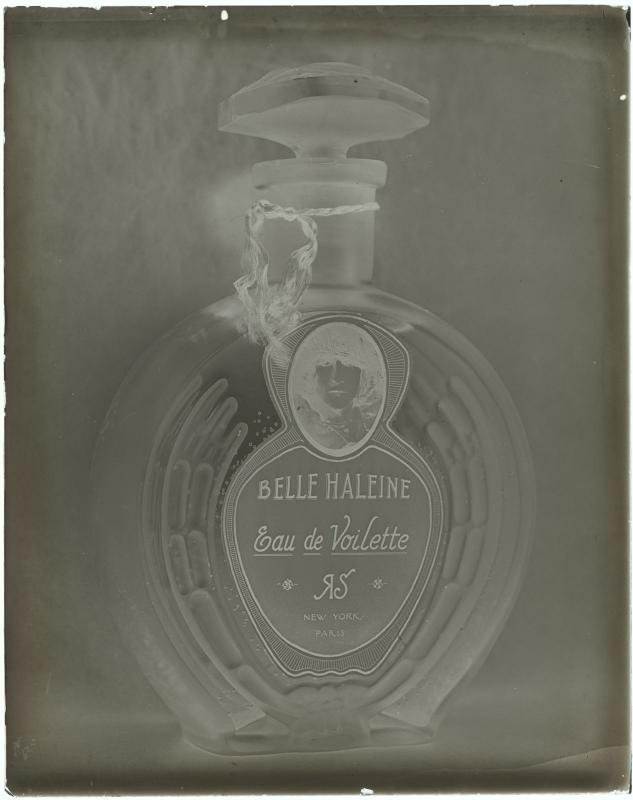
Nhãn mới được làm cùng Man Ray. Nó mang một bức ảnh chân dung do Man Ray chụp, và tên của tác phẩm, Belle Haleine, Eau de Voilette. Chiếc lọ vẫn là chiếc lọ. Nhưng bây giờ nó thuộc về một người khác.
Rrose Sélavy trên nhãn
Người trên nhãn là Rrose Sélavy, bản ngã thứ hai của Duchamp. Trong ảnh của Man Ray, Duchamp hoá trang thành một người phụ nữ. Bức ảnh không cần lời giải thích. Nó được đặt đúng chỗ mà một hãng nước hoa sẽ đặt gương mặt đại diện. Cái tên Rrose Sélavy đọc lên theo tiếng Pháp gần với một câu quen thuộc về tình yêu và cuộc sống, một lối chơi chữ mà Duchamp rất thích.
Một lọ nước hoa thương mại thường in hình người phụ nữ mà người mua mong trở thành. Duchamp giữ nguyên quy ước ấy, rồi lật nó. Người phụ nữ trên nhãn là một người đàn ông. Nước hoa, thứ hứa sẽ làm ai đó quyến rũ hơn, giờ hỏi lại: quyến rũ là của ai, và danh tính có phải chỉ là một cái nhãn dán lên không?
Centre Pompidou hiện giữ một bản âm bản trên kính của bức ảnh Man Ray chụp tác phẩm này năm 1921, khổ 12 x 9 cm, do Lucien Treillard tặng năm 1995. Tài liệu của bảo tàng xếp tác phẩm vào dòng Dada, với những từ khoá như chơi chữ, hài hước, hoá trang khác giới.
Hai chữ cái đổi chỗ
Phần chữ trên nhãn là nơi tác phẩm làm việc nhiều nhất. Trên nhãn gốc có chữ violette, hoa violet. Duchamp đảo chữ, thành voilette, tấm mạng mỏng che mặt. Eau de violette, nước hoa violet, thành eau de voilette, nước của tấm mạng.
Belle Haleine nghĩa là hơi thở đẹp. Theo Centre Pompidou, cụm này là một cách nói đùa về Belle Hélène, nàng Helen xinh đẹp. Một nhân vật huyền thoại bị thay bằng một thứ thuộc về cơ thể: hơi thở, thứ mùi mà ai cũng có và ít ai muốn nhắc tới.
Chỉ vài chữ cái đổi chỗ, và cả chiếc lọ đổi nghĩa. Hoa thành mạng che. Nàng Helen thành hơi thở. Người đàn ông thành người phụ nữ. Không có gì bị thêm vào chai. Mọi thứ diễn ra trên bề mặt.
Từ bìa tạp chí đến nghệ thuật khứu giác
Tháng 4 năm 1921, ảnh chiếc lọ xuất hiện ở giữa bìa New York Dada, tạp chí do Man Ray và Duchamp làm và chỉ ra đúng một số. Trên bìa, dòng chữ tên tạp chí và ngày tháng được in lộn ngược quanh bức ảnh. Chiếc lọ nước hoa, như vậy, trở thành gương mặt của Dada ở New York.
Belle Haleine thường được nhắc tới như một trong những tác phẩm đầu tiên của thế kỷ 20 dùng nước hoa làm chất liệu ý niệm. Nó không cho người xem ngửi gì. Nó cho họ nghĩ về việc ngửi: về cái tên, cái nhãn, cái hình ảnh đi kèm mỗi mùi hương được bán ra.
Gần một thế kỷ sau, tên tác phẩm được mượn cho một triển lãm lớn về mùi trong nghệ thuật, Belle Haleine, The Scent of Art. Việc đặt tên ấy nói lên vị trí của chiếc lọ nhỏ: điểm xuất phát của một dòng nghệ thuật mà ở đó mũi cũng là một cơ quan để suy nghĩ.
A bottle off the shelf
In 1921, Marcel Duchamp took a perfume bottle by the house of Rigaud, the kind sold in shops. He did not make the bottle. He did not compose the scent inside. He only replaced the label.
This is the logic of the readymade, which Duchamp had pursued for years: choose an existing object, place it in an art context, and let the choice be the work. With Belle Haleine he went a step further. The object was altered, if only slightly. Scholars call this an assisted or rectified readymade.
The new label was made with Man Ray. It carried a portrait he photographed and the title of the work, Belle Haleine, Eau de Voilette. The bottle was still a bottle. But now it belonged to someone else.
Rrose Sélavy on the label
The face on the label is Rrose Sélavy, Duchamp's alter ego. In Man Ray's photograph Duchamp is dressed as a woman. The picture needs no caption. It sits exactly where a perfume house would put its face. Spoken aloud in French, the name sounds close to a familiar phrase about love and life, the kind of pun Duchamp loved.
Commercial perfume often shows the woman the buyer hopes to become. Duchamp kept the convention and turned it over. The woman on the label is a man. Perfume, which promises to make someone more alluring, now asks: whose allure is it, and is identity just a label stuck on?
The Centre Pompidou holds a glass negative of Man Ray's 1921 photograph of the work, 12 x 9 cm, given by Lucien Treillard in 1995. The museum places it within Dada, noting wordplay, humour and cross dressing.
Two letters swapped
The text on the label is where the work does most. The original read violette, violet. Duchamp reversed letters to make voilette, a fine veil. Violet water became veil water.
Belle Haleine means beautiful breath. According to the Pompidou, it is a joke on Belle Hélène, beautiful Helen. A figure of myth is replaced by something bodily: breath, a smell everyone has and few mention.
A few letters move and the whole bottle changes meaning. Flower becomes veil. Helen becomes breath. A man becomes a woman. Nothing is added to the bottle. Everything happens on the surface.
From a magazine cover to olfactory art
In April 1921 a photograph of the bottle appeared at the centre of the cover of New York Dada, the magazine Man Ray and Duchamp produced in a single issue. Around it, the title and date were printed upside down. The perfume bottle became the face of New York Dada.
Belle Haleine is often cited as one of the first works of the twentieth century to use perfume as conceptual material. It gives the viewer nothing to smell. It makes them think about smelling: about the name, the label, the image that comes with every scent sold.
Nearly a century later, its title was borrowed for a major exhibition on smell in art, Belle Haleine, The Scent of Art. The borrowing says where the small bottle stands: at the start of a line of art in which the nose is also an organ of thought.

Olfactory Art