
Essays · Olfactory Art
Milica Zec, Winslow Porter. Tree VR.
Một cái cây không đi đâu cả. Nó chỉ ở lại và chịu mọi thứ.
A tree goes nowhere. It stays, and bears everything.
Courtesy the artists / Institute for Art and Olfaction · Tree (official project site)
Trồng một hạt, rồi thành cây
Trước khi đeo kính, người xem được mời gieo một hạt giống thật. Một cử chỉ nhỏ, chỉ vài giây. Rồi màn hình bật lên, và họ không còn là người nữa.
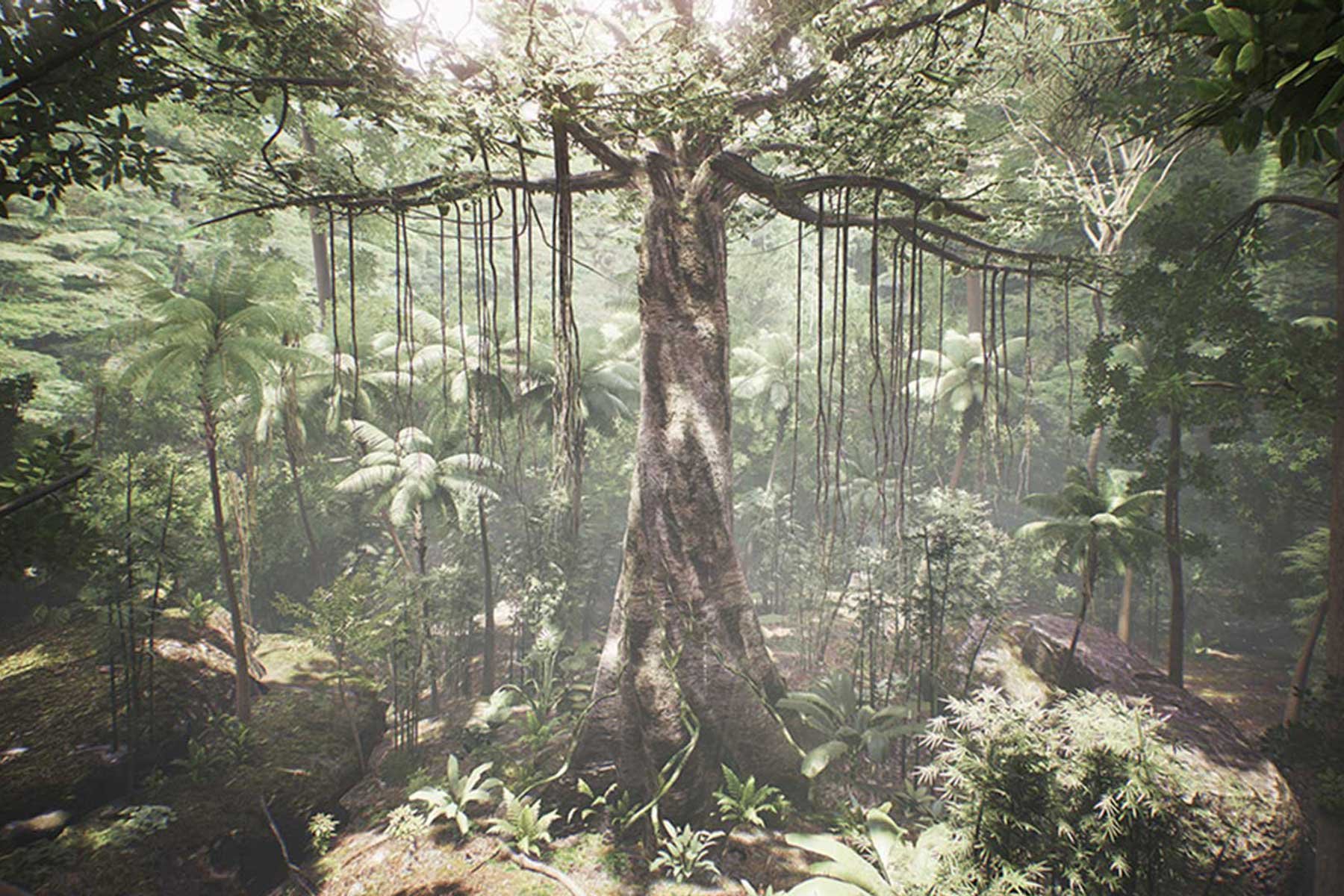
Họ bắt đầu là một mầm cây nhú khỏi mặt đất rừng mưa nhiệt đới. Hai cánh tay trở thành cành. Thân người trở thành thân cây. Họ lớn lên, xuyên qua tầng lá thấp, vươn tới tán rừng. Xung quanh, chim bay qua, mưa rơi, ánh sáng đổi theo ngày. Người xem không thể bước đi. Một cái cây không có chân.
Cả đời cây được nén lại trong vài phút. Rồi đến số phận của nó. Tác phẩm không kết thúc bằng tuổi già êm đềm. Cây ngã xuống, và người xem, đang đứng ở vị trí của cây, cảm thấy điều đó bằng cả cơ thể. Một bài phê bình được trích trên trang dự án kể lại một người xem bước ra khỏi kính và khóc, vì đã thấy mình là cái cây vừa ngã.
Tree là tác phẩm của hai đạo diễn Milica Zec và Winslow Porter, do New Reality Company sản xuất. Tác phẩm ra mắt năm 2017 tại Liên hoan phim Sundance, rồi đi qua Tribeca, Cannes và hội nghị TED ở Vancouver cùng năm.
Mùi, gió, hơi nóng
Phần hình ảnh chỉ là một nửa. Nửa còn lại dành cho những giác quan mà thực tế ảo thường bỏ qua. Theo trang chính thức của dự án, Tree dùng rung, nhiệt độ, gió từ quạt, âm thanh vòm, và một hệ thống phun mùi tự động.
Mùi được phát theo từng cảnh: mùi đất khi cây còn là mầm, mùi rừng khi cây đã cao. Phần công nghệ phun mùi được ghi công cho Emanuela Maggioni của OWidgets. Theo hồ sơ đề cử của Art and Olfaction Awards, mùi hương do Laurent Le Guernec, nhà điều chế nước hoa của IFF, tạo ra.
Vì sao cần mùi? Hình ảnh trong kính dù đẹp đến đâu vẫn có một khoảng cách: mắt biết mình đang nhìn màn hình. Mùi thì không đi qua khoảng cách ấy. Nó vào thẳng. Khi mũi ngửi thấy đất ẩm, cơ thể tự động tin rằng mặt đất ở ngay dưới chân.
Năm 2020, Tree lọt vào nhóm chung kết giải Sadakichi của Art and Olfaction Awards, giải dành cho những thử nghiệm dùng mùi hương trong nghệ thuật. Việc một tác phẩm thực tế ảo được xét cùng các sắp đặt mùi cho thấy mùi ở đây không phải hiệu ứng phụ. Nó là một phần của cấu trúc.
Từ liên hoan phim đến Davos
Sau các liên hoan phim, Tree đi đến những nơi ít ai nghĩ một tác phẩm nghệ thuật sẽ đến. Diễn đàn Kinh tế Thế giới đã đưa Tree tới các kỳ họp ở Thiên Tân năm 2018, Davos năm 2019 và 2020, và Cape Town năm 2019. Tác phẩm cũng có mặt tại Đại hội đồng Liên Hợp Quốc năm 2019 và ở Burning Man.
Dự án hợp tác với tổ chức Rainforest Alliance, với thông điệp rằng rừng là một trong những lá chắn quan trọng nhất của con người trước biến đổi khí hậu.
Có thể đọc Tree như một tác phẩm vận động. Nhưng sức nặng của nó không nằm ở thông điệp. Thông điệp về rừng đã có ở khắp nơi, trong báo cáo, trong phim tài liệu, trong số liệu. Điều Tree làm khác là đặt người xem vào đúng chỗ của cái cây, đủ lâu để họ biết một cái cây không thể tránh đi đâu.
Đổi vị trí với một loài khác
Nghệ thuật thường cho người xem đứng ngoài nhìn vào. Tree làm ngược lại. Nó bắt người xem thành đối tượng. Ta không nhìn cây. Ta là cây, và thứ ta nhìn là rừng, là mưa, là những gì đang đến.
Sự đổi chỗ ấy chỉ hiệu quả khi cơ thể bị thuyết phục. Đó là lý do các giác quan khác được đưa vào. Rung dưới chân, gió trên mặt, hơi nóng, và mùi. Mỗi thứ gỡ đi một lớp nghi ngờ.
Một tác phẩm khác cũng lấy cây làm trung tâm là GaiaMotherTree của Ernesto Neto, nơi người xem bước vào bên trong một hình cây bằng vải. Hai tác phẩm đi hai đường khác nhau, một bằng sợi đan, một bằng công nghệ, nhưng cùng đòi hỏi một việc: đến đủ gần một cái cây để quên mình đang đứng bên ngoài nó.
Plant a seed, become a tree
Before putting on the headset, viewers are asked to plant a real seed. A small gesture, a few seconds. Then the screen comes on, and they are no longer human.
They begin as a sprout breaking through the floor of a tropical rainforest. Their arms become branches. Their body becomes a trunk. They grow, pass through the understory, reach the canopy. Birds cross, rain falls, the light shifts through the day. The viewer cannot walk anywhere. A tree has no legs.
A whole life is compressed into a few minutes. Then comes its fate. The work does not end in a peaceful old age. The tree falls, and the viewer, standing in its place, feels it with the whole body. A review quoted on the project's site recalls one woman leaving the headset in tears, having become the tree that fell.
Tree is by directors Milica Zec and Winslow Porter and produced by New Reality Company. It premiered in 2017 at the Sundance Film Festival, then travelled to Tribeca, Cannes and TED in Vancouver the same year.
Smell, wind, heat
The images are only half of it. The other half belongs to senses virtual reality usually ignores. According to the project's official site, Tree uses vibration, temperature, wind from fans, surround sound, and an automated scent delivery system.
Scent is released scene by scene: earth when the tree is a sprout, forest when it has grown tall. The scent technology is credited to Emanuela Maggioni of OWidgets. According to the Art and Olfaction Awards nomination, the scent itself was created by Laurent Le Guernec, a perfumer at IFF.
Why smell? However beautiful the image in the headset, a distance remains: the eye knows it is looking at a screen. Smell does not cross that distance. It goes straight in. When the nose picks up damp earth, the body simply believes the ground is there.
In 2020 Tree was a finalist for the Sadakichi Award of the Art and Olfaction Awards, which recognises experimental work with scent. A virtual reality piece judged alongside scent installations shows that smell here is not a side effect. It is part of the structure.
From film festivals to Davos
After the festivals, Tree went where few would expect an artwork to go. The World Economic Forum brought it to meetings in Tianjin in 2018, Davos in 2019 and 2020, and Cape Town in 2019. It was also shown at the United Nations General Assembly in 2019 and at Burning Man.
The project works with the Rainforest Alliance, with the message that forests are among humanity's most important defences against climate change.
Tree can be read as an advocacy piece. But its weight does not lie in the message. Messages about forests are everywhere, in reports, documentaries, statistics. What Tree does differently is place the viewer exactly where the tree is, long enough to learn that a tree cannot step aside.
Trading places with another species
Art usually lets the viewer stand outside and look in. Tree does the reverse. It makes the viewer the subject. We do not look at the tree. We are the tree, and what we look at is the forest, the rain, whatever is coming.
That exchange only works if the body is convinced. This is why the other senses are brought in. Vibration underfoot, wind on the face, heat, and smell. Each removes a layer of doubt.
Another work centred on a tree is Ernesto Neto's GaiaMotherTree, where visitors step inside a tree form made of fabric. The two works take different routes, one through knotted cord, one through technology, but ask the same thing: to come close enough to a tree to forget you are standing outside it.
Olfactory Art