
Essays · Photography
Nan Goldin. The Ballad of Sexual Dependency.
Mỗi tấm ảnh hiện vài giây, rồi đi. Người ở lại trong ta.
Each picture stays a few seconds, then goes. The people stay.
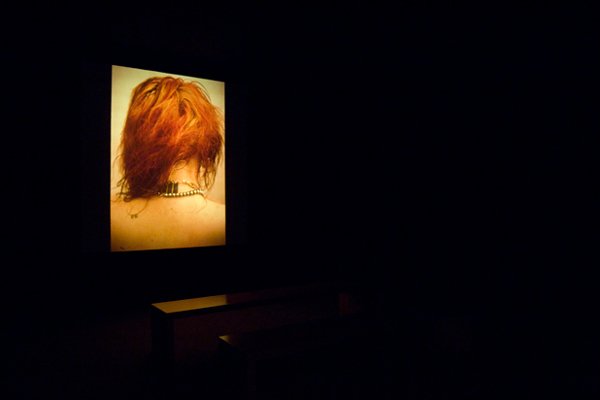
Courtesy the Museum of Fine Arts, Houston · Aperture
Một cuốn nhật ký bằng slide
The Ballad of Sexual Dependency là một buổi trình chiếu. Hơn bảy trăm ảnh màu hiện lên lần lượt trên màn, mỗi ảnh chừng ba đến bốn giây, kèm một dải nhạc. Toàn bộ kéo dài khoảng bốn mươi phút.
Ảnh được chụp từ giữa thập niên 1970 đến giữa thập niên 1980, ở Boston, ở Berlin, ở khu Lower East Side của New York. Người trong ảnh là bạn bè, người yêu, những người Goldin sống cùng và đi chơi cùng. Họ ở trong phòng ngủ, phòng tắm, quán bar, trên giường, trước gương.
Goldin từng gọi tác phẩm này là cuốn nhật ký bà cho người khác đọc. Bà không chụp từ bên ngoài như một phóng viên. Bà ở bên trong, là một phần của chính những gì bà chụp.
Tác phẩm không đứng yên. Qua nhiều năm, Goldin thay đổi thứ tự, thêm bớt ảnh, đổi nhạc. Mỗi lần chiếu là một phiên bản của cùng một cuốn nhật ký.
Nhạc là một nửa tác phẩm
Tên tác phẩm lấy từ một bài hát trong vở Nhạc kịch ba xu của Bertolt Brecht và Kurt Weill. Âm nhạc không đi kèm cho vui. Nó dẫn nhịp, đặt tâm trạng, và nối những bức ảnh đơn lẻ thành từng đoạn cảm xúc.
Dải nhạc trải từ Velvet Underground tới Maria Callas, từ James Brown tới Dean Martin, có cả Petula Clark, Dionne Warwick, Yoko Ono, Klaus Nomi, Ennio Morricone. Nhạc opera đứng cạnh nhạc soul, nhạc pop thập niên 1960 đứng cạnh nhạc post punk. Sự pha tạp ấy giống chính cộng đồng trong ảnh: nhiều nguồn gốc, nhiều giọng, sống chung trong cùng những căn phòng.
Năm 2009, nhà phê bình âm nhạc Greil Marcus viết cho tạp chí Aperture một bài về phần nhạc của The Ballad. Ông nghe lại những bài có trong đó, rồi thử tưởng tượng những bài còn thiếu, những bài có thể đã vang lên trong các căn phòng ấy. Cách đọc của ông cho thấy The Ballad có thể được nghe như một album, không chỉ được xem như một bộ ảnh.
Marcus đọc tác phẩm như lịch sử của một gia đình được dựng lại: không phải gia đình ruột thịt, mà gia đình do chính những người trong ảnh chọn nhau.
Chụp để không quên
Nan Goldin sinh năm 1953 ở Washington. Năm bà mười một tuổi, chị gái bà tự tử. Bà bắt đầu chụp ảnh từ năm mười tám tuổi. Nhiều người viết về Goldin cho rằng việc chụp liên tục những người thân yêu, với bà, là một cách để không mất họ thêm lần nữa.
Ảnh của bà không né những điều khó nói. Có tình yêu, có dục vọng, có lệ thuộc, có bạo lực, có cô đơn. Có cả chính Goldin, với vết bầm trên mặt. Không có gì được làm đẹp. Ánh đèn flash gắt, màu đậm, bố cục vội.
Goldin chụp chính mình với cùng một sự thẳng thắn như khi chụp người khác. Bà không đứng ở vị trí an toàn của người cầm máy. Điều đó làm cho những bức ảnh về người khác trở nên đáng tin hơn: người chụp cũng chịu để mình bị nhìn.
Về sau, nhiều người trong ảnh đã mất, phần lớn trong những năm đại dịch AIDS. Cuốn nhật ký vì thế thành một bản ghi chép về một cộng đồng không còn nữa.
Từ quán bar tới bảo tàng
The Ballad bắt đầu được chiếu ở những nơi rất gần với thế giới trong ảnh: câu lạc bộ, không gian nghệ thuật nhỏ ở New York. Người xem đôi khi chính là người trong ảnh.
Năm 1985, tác phẩm được đưa vào Whitney Biennial. Năm 1986, Aperture in nó thành sách. Từ một buổi chiếu cho bạn bè, nó trở thành một trong những tác phẩm nhiếp ảnh được bàn đến nhiều nhất của thời kỳ ấy.
Điều khiến nó còn sức nặng hôm nay không phải là sự táo bạo. Đó là sự gần gũi. Cũng như The Sleepers của Sophie Calle, The Ballad đưa người xem vào chỗ riêng tư nhất: chiếc giường, căn phòng, một người vừa thức dậy. Nhưng Goldin không đứng ngoài quan sát. Bà nằm trong đó.
A diary in slides
The Ballad of Sexual Dependency is a projection. More than seven hundred colour photographs appear one after another on a screen, each for about three or four seconds, set to a soundtrack. The whole runs for around forty minutes.
The pictures were taken from the mid 1970s to the mid 1980s, in Boston, in Berlin, on New York's Lower East Side. The people in them are friends, lovers, the people Goldin lived and went out with. They are in bedrooms, bathrooms, bars, on beds, in front of mirrors.
Goldin has called the work the diary she lets people read. She did not shoot from outside like a reporter. She was inside, part of what she photographed.
The work does not stand still. Over the years Goldin changed the order, added and removed pictures, changed the music. Each showing is a version of the same diary.
Music is half the work
The title comes from a song in The Threepenny Opera by Bertolt Brecht and Kurt Weill. The music is not decoration. It sets the pace and the mood, and joins single pictures into passages of feeling.
The soundtrack runs from the Velvet Underground to Maria Callas, from James Brown to Dean Martin, with Petula Clark, Dionne Warwick, Yoko Ono, Klaus Nomi, Ennio Morricone. Opera sits beside soul, sixties pop beside post punk. That mixture resembles the community in the pictures: many origins, many voices, living in the same rooms.
In 2009 the critic Greil Marcus wrote about the music of The Ballad for Aperture. He listened again to the songs in it, then imagined the ones left out, songs that might also have been playing in those rooms. His reading shows that The Ballad can be heard like an album, not only seen as a set of pictures.
Marcus reads the work as the history of a re created family: not a family of blood, but one its members chose.
Photographing so as not to forget
Nan Goldin was born in Washington in 1953. When she was eleven, her sister took her own life. She began photographing at eighteen. Many who write about Goldin suggest that photographing the people she loved, again and again, was a way of not losing anyone else.
Her pictures do not avoid the hard things. There is love, desire, dependency, violence, loneliness. There is Goldin herself, bruised in the face. Nothing is made pretty. Harsh flash, saturated colour, hurried framing.
Goldin photographs herself with the same frankness she turns on others. She does not keep the safe position of the one holding the camera. That makes her pictures of others more trustworthy: the photographer lets herself be seen too.
Later, many of the people in the pictures died, most in the years of the AIDS epidemic. The diary became a record of a community that is no longer there.
From the bar to the museum
The Ballad was first shown in places close to the world in the pictures: clubs and small art spaces in New York. Sometimes the audience were the people on screen.
In 1985 it was included in the Whitney Biennial. In 1986 Aperture published it as a book. From a showing for friends it became one of the most discussed photographic works of its time.
What gives it weight today is not daring. It is closeness. Like Sophie Calle's The Sleepers, The Ballad brings the viewer into the most private places: the bed, the room, someone just waking. But Goldin does not observe from outside. She is lying there too.
Photography