
Essays · Fashion as Design
Fashion: the 18th century, a fantasized legacy.
Một thế kỷ được nhớ bằng tưởng tượng nhiều hơn bằng dữ kiện.
A century remembered through fantasy more than fact.
© Eric Magnussen · Palais Galliera
Hơn bảy mươi dáng áo ở Galliera
Fashion: the 18th century, a fantasized legacy mở tại Palais Galliera, bảo tàng thời trang của Paris, từ ngày 14 tháng 3 đến ngày 12 tháng 7 năm 2026. Triển lãm bày hơn bảy mươi dáng áo, cùng phụ kiện, vải, tranh in, đồ hoạ và ảnh chụp.
Chủ đề không phải thời trang thế kỷ 18 đứng riêng, mà là đời sống sau đó của nó. Triển lãm theo dõi cách thời trang nữ thế kỷ 18 được diễn giải lại suốt ba thế kỷ, từ chính thời Khai sáng đến hôm nay.
Thời Khai sáng, theo cách bảo tàng mô tả, là thời của những dáng người đa dạng, vải dày và giàu, phụ kiện và kiểu tóc phô trương. Đó là chất liệu đầu tiên. Phần còn lại của triển lãm cho thấy chất liệu ấy được lấy ra dùng lại như thế nào.
Phụ trách triển lãm là Émilie Hammen, cùng Pascale Gorguet Ballesteros, người trông coi bộ sưu tập trang phục thế kỷ 17 và 18 của bảo tàng, với sự hỗ trợ của Alice Freudiger.
Chiếc áo nịt của Marie Antoinette
Giữa triển lãm có một vật hiếm: chiếc áo nịt của hoàng hậu Marie Antoinette, làm khoảng năm 1770 đến 1780. Bảo tàng nói rõ nó được bày ra như một ngoại lệ, vì vật quá mong manh.
Một chiếc áo nịt là thứ nằm dưới cùng của trang phục. Nó không được nhìn thấy khi người mặc bước ra. Nhưng nó quyết định dáng người: eo, ngực, lưng, cách đứng thẳng. Mọi lớp lụa hoa bên ngoài đều dựa trên cấu trúc ấy.
Đặt chiếc áo nịt thật này giữa những diễn giải sau này là một lựa chọn rõ ràng. Nó cho người xem một điểm tựa. Đây là kích thước thật, vải thật, đường khâu thật của một cơ thể từng sống. Mọi thứ xung quanh là cách hậu thế nhìn lại cơ thể ấy.
Marie Antoinette có lẽ là gương mặt bị tưởng tượng lại nhiều nhất của thế kỷ 18. Tên bà gắn với sự xa hoa, với váy áo, với một kết cục bi thảm. Chiếc áo nịt thì im lặng. Nó chỉ cho biết bà từng có một vòng eo, một dáng lưng, một cách đứng.
Từ couture đến văn hoá đại chúng
Luận điểm chính của triển lãm nằm ở giai đoạn sau Thế chiến thứ hai. Khi đó, couture Pháp tìm tính chính danh trong kỹ thuật lịch sử. Những đường xếp, cách dựng khung váy, cách dùng lụa của thế kỷ 18 trở thành một nguồn để các nhà mốt dựa vào.
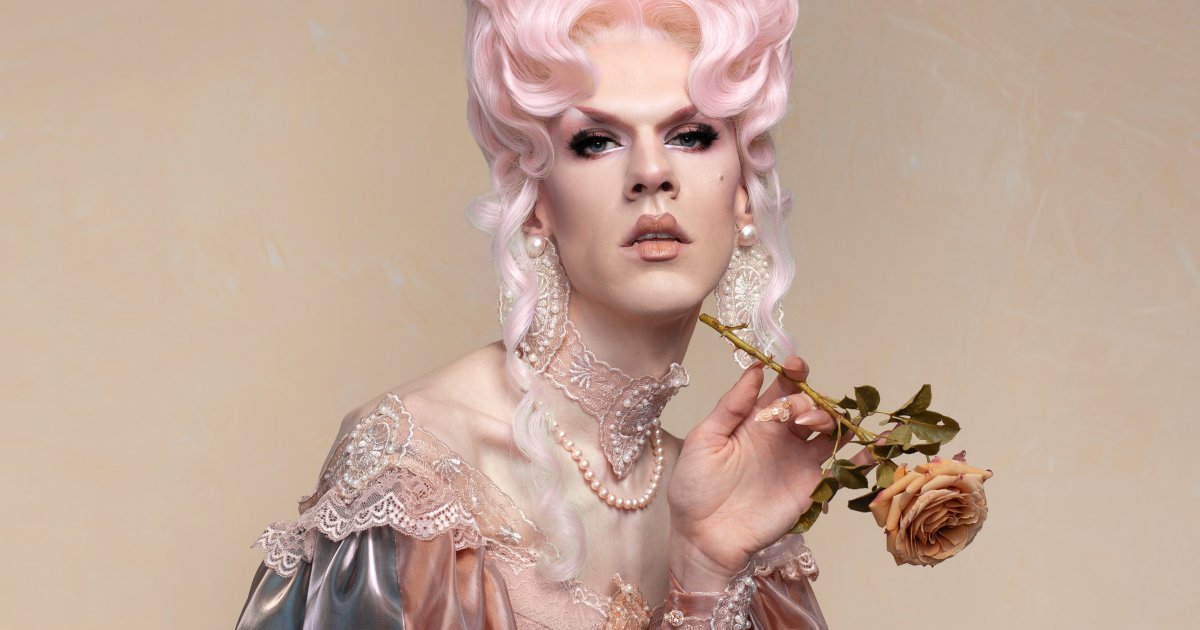
Từ đó, thẩm mỹ thế kỷ 18 trở thành một mã thị giác mà văn hoá đại chúng tiếp nhận. Người ta nhận ra nó ngay: một bộ tóc cao, một chiếc váy phồng, một nốt ruồi vẽ trên má. Triển lãm cho rằng di sản ấy dần trở thành một thẩm mỹ riêng, không cần thế kỷ 18 thật để tồn tại.
Các thiết kế đương đại trong triển lãm đến từ Chanel, Christian Dior, Louis Vuitton, Christian Lacroix, Vivienne Westwood và Dries Van Noten. Mỗi nhà lấy một phần khác nhau: một dáng váy, một hoạ tiết, một cách phối phụ kiện.
Hôm nay, mã thị giác ấy còn đi xa hơn. Triển lãm nói đến những cảm quan kitsch, camp, queer, nơi thế kỷ 18 được mượn để chơi, để phóng đại, để tự do. Một hình ảnh năm 2021 của Utica Queen, Ethan Mundt, là một ví dụ trong triển lãm.
Vì sao một thế kỷ cần được tưởng tượng
Có thể hỏi: nếu phần lớn thế kỷ 18 mà ta thấy là tưởng tượng, thì triển lãm này kể về điều gì? Câu trả lời có lẽ là: về chính chúng ta. Mỗi thời chọn một quá khứ để mặc lại, và cách chọn nói về thời ấy nhiều hơn về quá khứ.
Couture sau chiến tranh cần một nền tảng lâu đời. Điện ảnh cần một bối cảnh xa hoa dễ nhận ra. Sân khấu drag cần một hình dạng đủ lớn để phóng đại. Thế kỷ 18 đáp ứng được cả ba.
Galliera không bác bỏ những tưởng tượng ấy. Nó đặt chúng cạnh nhau, cạnh vật thật, và để người xem tự thấy khoảng cách. Người muốn đọc thêm về cách quần áo thế kỷ 18 từng gây tai tiếng ngay trong thời của nó có thể xem Tenue correcte exigée ở Musée des Arts Décoratifs.
More than seventy silhouettes at Galliera
Fashion: the 18th century, a fantasized legacy opened at Palais Galliera, the fashion museum of Paris, from 14 March to 12 July 2026. It shows more than seventy silhouettes, with accessories, textiles, prints, graphics and photographs.
The subject is not eighteenth century fashion on its own but its afterlife. The exhibition follows how women's fashion of the period has been reinterpreted over three centuries, from the Enlightenment itself to today.
The Enlightenment, as the museum describes it, was a time of varied silhouettes, rich fabrics, and exuberant accessories and hairstyles. That is the first material. The rest of the show traces how it has been taken out and used again.
The exhibition is curated by Émilie Hammen, with Pascale Gorguet Ballesteros, who looks after the museum's seventeenth and eighteenth century dress, assisted by Alice Freudiger.
Marie Antoinette's corset
At the heart of the show is a rare object: the corset of Queen Marie Antoinette, made around 1770 to 1780. The museum states it is shown as an exception, because it is so fragile.
A corset is the innermost layer of dress. It is not seen when the wearer walks out. Yet it decides the figure: waist, chest, back, how one stands. Every layer of flowered silk above rests on that structure.
Placing this real corset among later interpretations is a clear choice. It gives visitors a fixed point. Here are the actual measurements, cloth and stitches of a body that lived. Everything around it is how later generations looked back at that body.
Marie Antoinette may be the most reimagined figure of the century. Her name is tied to luxury, to dress, to a tragic end. The corset is silent. It only tells that she had a waist, a back, a way of standing.
From couture to popular culture
The exhibition's main argument lies in the years after the Second World War. French couture then sought legitimacy in historical technique. The pleating, the structure of skirts, the handling of silk from the eighteenth century became a source the houses leaned on.
From there, eighteenth century aesthetics became a visual code taken up by popular culture. It is recognised at once: tall hair, a wide skirt, a beauty spot on the cheek. The exhibition argues that this heritage grew into an aesthetic of its own, no longer needing the real century to exist.
Contemporary designs in the show come from Chanel, Christian Dior, Louis Vuitton, Christian Lacroix, Vivienne Westwood and Dries Van Noten. Each borrows something different: a skirt shape, a motif, a way of wearing accessories.
Today the code travels further still. The exhibition speaks of kitsch, camp and queer sensibilities, where the eighteenth century is borrowed to play, to exaggerate, to be free. A 2021 image of Utica Queen, Ethan Mundt, is one example in the show.
Why a century needs imagining
One might ask: if most of the eighteenth century we see is fantasy, what does this exhibition tell? Perhaps: about us. Each era chooses a past to wear again, and the choice says more about that era than about the past.
Postwar couture needed long roots. Cinema needed a luxurious setting easy to recognise. Drag needed a shape big enough to exaggerate. The eighteenth century met all three needs.
Galliera does not dismiss these fantasies. It sets them side by side, beside the real object, and lets visitors see the distance. For more on how eighteenth century clothes caused scandal in their own time, read about Tenue correcte exigée at the Musée des Arts Décoratifs.
Fashion as Design