
Essays · Olfactory Art
Racheal Crowther. HS Code 04022911.
Một mùi của sự chăm sóc, được dùng để điều khiển.
A smell of care, put to use as control.
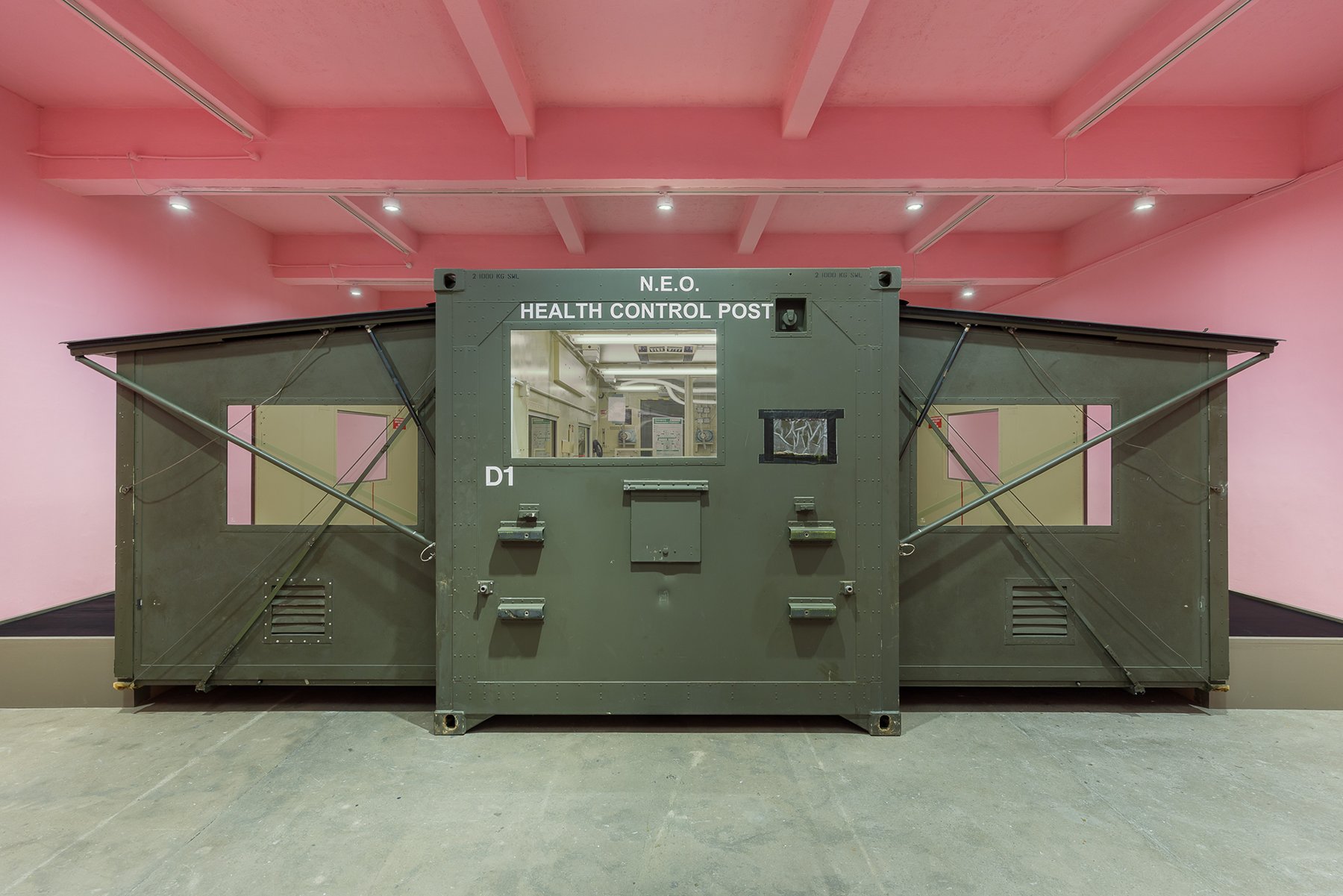
NSN 5411-99-219-4744, 2026 (installation view). Photo: Mark Blower. Courtesy the artist · ArtReview
Một căn phòng màu hồng
Năm 2026, Chisenhale Gallery ở London mở triển lãm Liquid Trust của Racheal Crowther, kéo dài tới ngày 14 tháng Sáu. Người bước vào gặp một căn phòng lạ.
Tường sơn màu hồng kẹo, một sắc có tên Baker Miller Pink, từng được dùng trong các cơ sở cải huấn ở Mỹ. Cửa sổ bị bít bằng ván. Đèn trần trắng, lạnh, kiểu phòng khám.
Gần nửa gian phòng bị chiếm bởi một vật lớn: NSN 5411-99-219-4744, làm năm 2026. Đó là một đơn vị y tế lưu động từng được quân đội Anh sử dụng, được liệt kê như một trạm kiểm soát. Nó có hai cánh, trên các ngăn tủ còn nhãn đã phai và những dòng hướng dẫn quy trình. Ở giữa là một buồng theo dõi kín, chỉ nhìn được qua kính.
Mắt không tìm thấy gì để ngửi. Nhưng không khí thì không trung tính.
Mã hải quan của một mùi
Tác phẩm thứ hai không nhìn thấy được. HS Code 04022911, cũng làm năm 2026, là một mùi Crowther làm cùng một nhà hương. Nó được thả ra từ những máy phân phối giấu kín trong phòng.
Tựa đề là mã hải quan của sữa bột có đường dành cho trẻ em. Một con số khô khốc, loại dùng để phân loại hàng hoá qua cửa khẩu.
Theo bài phê bình của Sonja Teszler trên ArtReview, mùi này chứa hexadecanal, một chất có trên da đầu trẻ sơ sinh, cùng những hợp chất được liên hệ với oxytocin. Nó lần theo đời sống của sữa bột: từ một phụ phẩm của ngành sữa, thành khẩu phần quân đội, rồi thành phụ gia công nghiệp.
Như vậy, một mùi duy nhất mang theo cả một lịch sử. Sự nuôi dưỡng, chiến tranh, và nhà máy, cùng nằm trong một hơi thở ngọt lợ.
Đáng chú ý là Crowther không cho người xem thấy nguồn mùi. Không có lọ, không có máy đặt trên bệ. Ở những tác phẩm mùi khác, người xem thường được mời lại gần một vật để ngửi. Ở đây thì ngược lại: mùi tìm đến người xem, và họ không có chỗ nào để lùi ra.
Người xem không được hỏi có muốn ngửi hay không. Mùi đã ở đó trước khi họ vào. Đó là một phần của tác phẩm.
Khi sự chăm sóc thành công cụ
Nhiều cuộc bàn luận nghệ thuật gần đây nói về sự chăm sóc như một điều tốt đẹp cần được đề cao. Teszler cho rằng Crowther lật ngược cách nói ấy. Triển lãm nhìn vào cách nhà nước, doanh nghiệp và quân đội dùng sự nuôi dưỡng, sự bảo vệ làm công cụ điều khiển hành vi.
Màu hồng trên tường, trạm y tế quân đội, mùi da trẻ sơ sinh: mỗi thứ đều mang vẻ dịu dàng, và mỗi thứ đều từng được dùng để quản lý con người. Sự gần gũi trở thành phương tiện theo dõi và kỷ luật.
Mùi là công cụ tinh vi nhất trong số đó. Màu có thể nhìn thấy và nghi ngờ. Một cỗ máy có thể được đọc nhãn. Nhưng một mùi quen thuộc đi thẳng vào cơ thể, qua hơi thở, trước khi ta kịp hỏi nó từ đâu tới.
Bài phê bình còn chỉ ra một điểm khó chịu. Trạm y tế ấy được mua qua quy trình thanh lý tài sản dư của Bộ Quốc phòng Anh, và tiền thu về quay lại phục vụ hoạt động quân sự. Tác phẩm vì thế tự thừa nhận mình nằm bên trong chính hệ thống nó phê phán.
Crowther không đưa ra lối thoát. Triển lãm chỉ để người xem đứng trong căn phòng hồng ấy, hít thở một mùi ngọt, và nhận ra mình đã tin nó từ hơi đầu tiên.
A pink room
In 2026, Chisenhale Gallery in London presented Racheal Crowther's exhibition Liquid Trust, running until 14 June. Visitors walked into a strange room.
The walls were painted bubblegum pink, a shade called Baker Miller Pink, once used in correctional facilities in the United States. The windows were boarded. The overhead lights were white and clinical.
Almost half the gallery was taken up by one large object: NSN 5411-99-219-4744, made in 2026. It is a mobile medical unit formerly used by the British military, listed as a control post. It has two wings, with faded labels and procedural instructions still on the cabinets. At its centre is a sealed monitoring booth, visible only through glass.
Nothing in the room could be smelled with the eyes. But the air was not neutral.
The customs code of a smell
The second work cannot be seen. HS Code 04022911, also from 2026, is a scent Crowther made with a perfumer. It is released from dispensers hidden in the room.
The title is the customs code for sweetened infant milk powder. A dry number, the kind used to classify goods at a border.
According to Sonja Teszler's review in ArtReview, the scent contains hexadecanal, a compound found on newborns' scalps, along with compounds linked to oxytocin. It traces the life of milk powder: from a by-product of the dairy industry, to military ration, to industrial additive.
A single smell carries a whole history. Nourishment, war and the factory, all in one cloying breath.
Notably, Crowther does not let visitors see where the smell comes from. No bottle, no device on a plinth. In many scent works, viewers are invited to lean towards an object. Here it is the reverse: the smell finds the viewer, and there is nowhere to step back to.
Visitors were not asked whether they wanted to smell it. The smell was there before they arrived. That is part of the work.
When care becomes a tool
Much recent talk in art treats care as a good to be celebrated. Teszler argues that Crowther turns this around. The exhibition looks at how states, corporations and armies use nurture and protection as tools for controlling behaviour.
The pink walls, the military medical unit, the smell of a newborn's skin: each looks gentle, and each has been used to manage people. Intimacy becomes a means of surveillance and discipline.
Smell is the subtlest of these tools. A colour can be seen and doubted. A machine can have its label read. A familiar smell goes straight into the body, through breath, before we can ask where it came from.
The review points out one more uncomfortable fact. The unit was acquired through the British Ministry of Defence's surplus sales, and the proceeds return to military operations. The work admits that it sits inside the very system it criticises.
Crowther offers no way out. The exhibition only leaves visitors standing in that pink room, breathing a sweet smell, realising they trusted it from the first breath.
Olfactory Art