
Essays · Olfactory Art
Tania Bruguera. 10,148,451.
Nước mắt đến trước khi câu chuyện kịp đến.
The tears arrive before the story does.
Photograph: Benedict Johnson · Tate
Một con số làm tựa đề
Từ 2 tháng 10 năm 2018 đến 24 tháng 2 năm 2019, Turbine Hall của Tate Modern ở London dành cho Tania Bruguera. Đây là Hyundai Commission, chương trình mời mỗi năm một nghệ sĩ làm tác phẩm cho sảnh tuabin khổng lồ của bảo tàng.
Tựa đề tác phẩm là một con số, và con số ấy không đứng yên. Nó được tính bằng số người đã di cư từ nước này sang nước khác trong năm trước, cộng với số người di cư thiệt mạng được ghi nhận từ đầu năm đến thời điểm đó. Dữ liệu lấy từ Missing Migrants Project của Tổ chức Di cư Quốc tế. Mỗi lần dữ liệu cập nhật, tựa đề thay đổi.
Như vậy tên tác phẩm không phải một ý tưởng, mà là một bản đếm. Nó lớn dần trong suốt thời gian triển lãm. Người xem đến vào tháng 10 và người xem đến vào tháng 2 không đứng trước cùng một tựa đề.
Bruguera sinh năm 1968 ở Cuba. Bà là nghệ sĩ và nhà hoạt động, làm việc với trình diễn, sắp đặt, phim và những can thiệp tại chỗ. Bà gọi thực hành của mình là Arte Útil, nghệ thuật hữu dụng: nghệ thuật phải làm được một việc gì đó trong đời sống, chứ không chỉ để ngắm.
Khuôn mặt hiện ra nhờ thân nhiệt
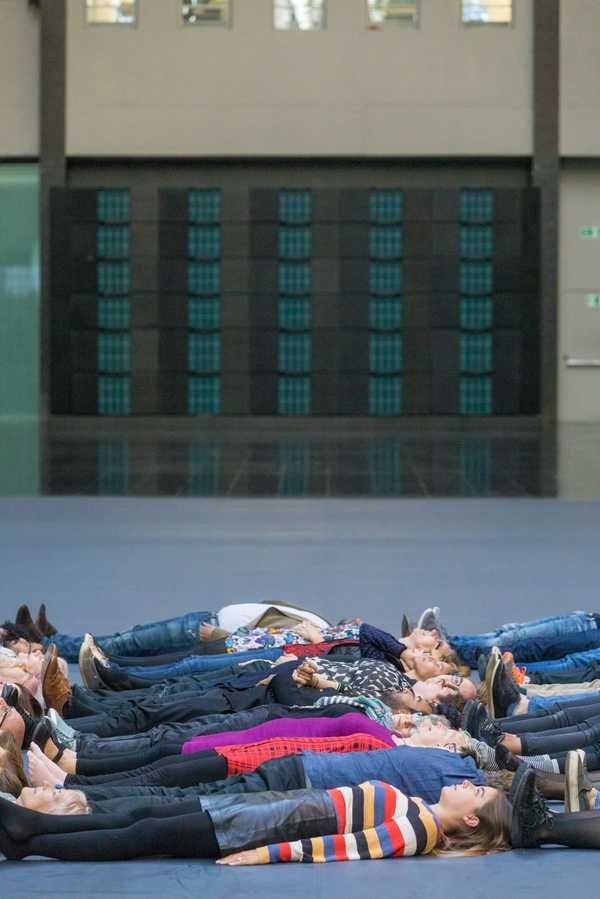
Khi bước vào Turbine Hall, người xem gặp một sàn nhà rộng và tối. Sàn được làm bằng vật liệu cảm nhiệt. Một người đứng hay nằm lên đó để lại một vệt ấm, và vệt ấm làm màu sàn thay đổi.
Dưới lớp màu tối là chân dung của Yousef, một thanh niên người Syria đã di cư đến London. Một người thì chỉ làm hiện được một mảnh nhỏ. Muốn thấy khuôn mặt, cần rất nhiều người cùng nằm xuống, cùng áp lưng, áp tay lên sàn, và ở lại đủ lâu.
Tức là khuôn mặt của một người lạ chỉ có thể hiện ra khi những người lạ khác hợp sức. Và nó cũng biến mất ngay khi họ đứng dậy.
Trong sảnh còn có âm thanh tần số thấp. Nó không thành giai điệu. Nó rung trong lồng ngực nhiều hơn là vang trong tai, tạo nên một không khí bất an. Bảo tàng để sẵn nút bịt tai cho ai cần.
Căn phòng làm người ta khóc
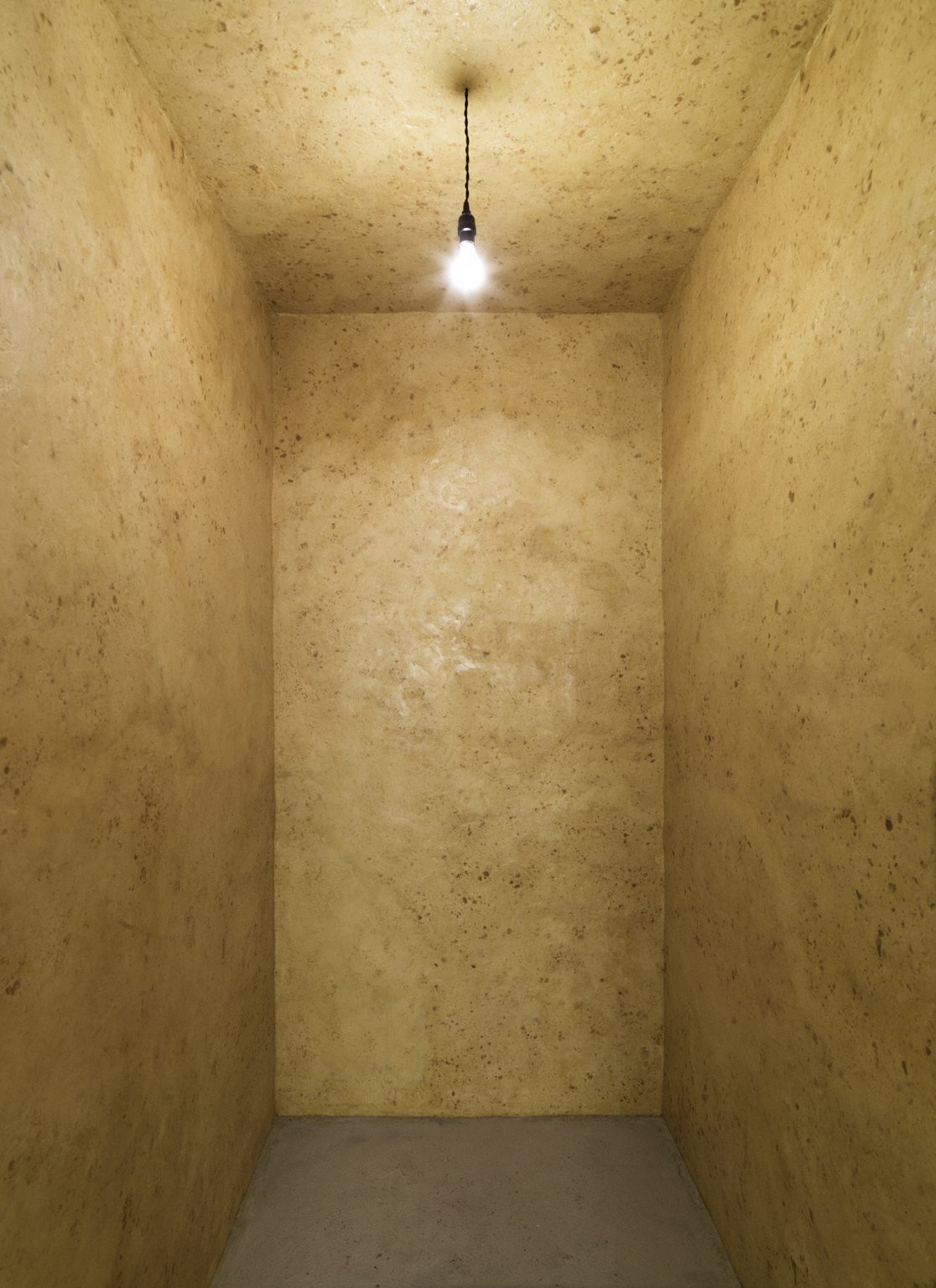
Bên cạnh sảnh lớn có một căn phòng nhỏ. Trong không khí của phòng có phát tán một hợp chất hữu cơ khiến mắt cay và chảy nước. Người xem bước vào, và sau một lúc, họ khóc.
Bruguera gọi hiệu ứng ấy là sự đồng cảm bị ép buộc. Đó là một cụm từ gai góc. Đồng cảm vốn được xem là điều tự nguyện: ta nghe một câu chuyện, ta hiểu, ta xúc động. Ở đây thứ tự bị đảo. Cơ thể phản ứng trước, không cần câu chuyện nào. Nước mắt có thật, dù lý do của nó là hoá học.
Căn phòng đặt ra một câu hỏi khó chịu cho người xem. Nếu nước mắt có thể bị gây ra bằng một chất trong không khí, thì những giọt nước mắt ta rơi khi xem tin tức về người di cư có khác gì không? Và nếu ta chỉ khóc khi bị ép, thì đồng cảm của ta nằm ở đâu?
Đây là chỗ mùi và không khí trở thành chất liệu chính. Bruguera không vẽ nỗi buồn. Bà đưa nó vào phổi người xem.
Một tác phẩm vượt ra ngoài sảnh
10,148,451 không dừng ở Turbine Hall. Bruguera làm việc với 21 người sống và làm việc trong khu vực mã bưu chính của Tate Modern. Nhóm này được gọi là Tate Neighbours. Họ đổi tên toà Boiler House của bảo tàng trong một năm, theo tên Natalie Bell, một nhà hoạt động cộng đồng ở địa phương. Họ cũng viết một bản tuyên ngôn, xuất hiện trên trang đăng nhập wifi miễn phí của bảo tàng.
Như vậy tác phẩm có hai cực. Một cực là con số toàn cầu, quá lớn để hình dung. Cực kia là một nhóm hàng xóm, một cái tên, một trang wifi. Ở giữa là cơ thể người xem: hơi ấm trên sàn, nước mắt trong căn phòng nhỏ.
Bruguera không đề nghị một giải pháp. Bà đo khoảng cách giữa con số và con người, rồi buộc người xem đứng vào khoảng cách ấy bằng chính thân thể mình. Những ai quan tâm đến cách mùi và không khí được dùng trong nghệ thuật có thể đọc thêm bài về nghệ thuật khứu giác của Penta.
A number for a title
From 2 October 2018 to 24 February 2019, the Turbine Hall at Tate Modern in London belonged to Tania Bruguera. This was the Hyundai Commission, which each year invites one artist to make a work for the museum's vast turbine hall.
The title is a number, and the number does not hold still. It is the count of people who migrated from one country to another the year before, plus the migrant deaths recorded so far that year. The data came from the International Organization for Migration's Missing Migrants Project. Each time the data was updated, the title changed.
So the name of the work is not an idea but a tally. It grew over the course of the show. A visitor in October and a visitor in February did not stand before the same title.
Bruguera was born in Cuba in 1968. She is an artist and activist who works in performance, installation, film and site specific interventions. She calls her practice Arte Útil, useful art: art that should do something in life, not only be looked at.
A face revealed by body heat
Entering the Turbine Hall, visitors met a wide, dark floor made of heat sensitive material. Anyone who stood or lay on it left a warm patch, and the warmth changed the colour of the floor.
Beneath the dark surface was a portrait of Yousef, a young Syrian man who had migrated to London. One person could reveal only a small piece. To see the face, many people had to lie down together, press backs and hands to the floor, and stay long enough.
In other words, the face of one stranger could appear only when other strangers joined forces. And it faded as soon as they stood up.
The hall also held a low frequency sound. It never became a melody. It vibrated in the chest more than it rang in the ear, and it made the space uneasy. The museum offered ear defenders to anyone who wanted them.
The room that made people cry
Beside the hall was a small room. An organic compound dispersed in its air made the eyes sting and water. Visitors went in, and after a while, they cried.
Bruguera called this forced empathy. It is a thorny phrase. Empathy is supposed to be voluntary: we hear a story, we understand, we are moved. Here the order is reversed. The body reacts first, with no story at all. The tears are real, even if their cause is chemical.
The room leaves an awkward question. If tears can be produced by something in the air, are the tears we shed over the news of migrants any different? And if we only cry when made to, where does our empathy live?
This is where air and smell become the main material. Bruguera does not paint sorrow. She puts it into the visitor's lungs.
A work beyond the hall
10,148,451 did not stop at the Turbine Hall. Bruguera worked with 21 people who lived or worked in Tate Modern's postcode, a group called Tate Neighbours. For one year they renamed the museum's Boiler House after Natalie Bell, a local community activist. They also wrote a manifesto that appeared on the museum's free wifi sign in page.
So the work had two poles. One is a global number, too large to picture. The other is a group of neighbours, a name, a wifi page. Between them stands the visitor's body: warmth on the floor, tears in the small room.
Bruguera offers no solution. She measures the distance between the number and the person, then makes visitors stand in that distance with their own bodies. Readers curious about how air and smell are used in art can turn to Penta's essay on olfactory art.
Olfactory Art