
Essays · Fashion as Design
Fashioned from Nature.
Mỗi bộ áo đều bắt đầu ở một nơi xa chiếc tủ.
Every garment begins somewhere far from the wardrobe.
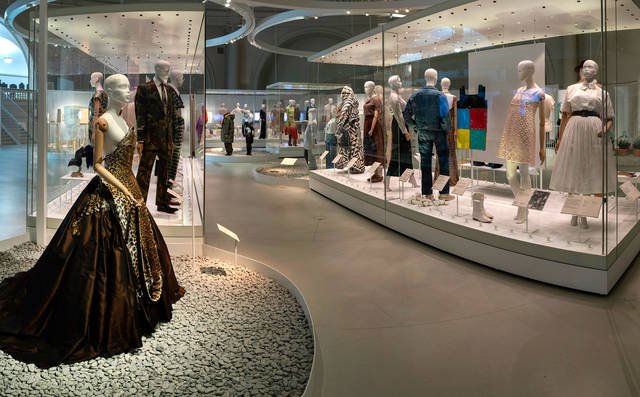
© Victoria and Albert Museum, London · Victoria and Albert Museum (V&A)
Áo và mẫu vật
Fashioned from Nature mở tại V&A South Kensington ngày 21 tháng 4 năm 2018 và kéo dài đến ngày 27 tháng 1 năm 2019. Bảo tàng giới thiệu đây là triển lãm đầu tiên ở Anh tìm hiểu mối quan hệ phức tạp giữa thời trang và thiên nhiên, từ năm 1600 đến hôm nay.
Cách trưng bày là điều khác thường. Trang phục thời thượng được đặt cạnh mẫu vật lịch sử tự nhiên, thú nhồi, sợi thực vật và sợi động vật chưa qua xử lý. Mục đích được nêu rõ: mời người xem nghĩ về chất liệu của thời trang và về nguồn gốc quần áo của chính họ.
Đặt một chiếc áo cạnh một con chim là một cử chỉ đơn giản. Nhưng nó làm lộ ra điều thường bị giấu đi. Ở cửa hàng, quần áo đến như thể tự nhiên mà có. Ở đây, mỗi chiếc áo được trả về nguồn.
Thiên nhiên trên bề mặt vải
Những món thế kỷ 18 cho thấy thiên nhiên như hoạ tiết. Một chiếc áo gilê của Pháp làm trong thập niên 1780, lụa thêu những con khỉ, lót vải lanh. Một bộ mantua và váy lót thập niên 1760, lụa đỏ dệt nổi chỉ bạc mạ vàng, bạc, xanh và nâu thành hoa lá. Thiên nhiên ở đây là thứ được vẽ lại bằng chỉ.
Thế kỷ 19 dùng thẳng thân thể con vật. Chiếc váy muslin bằng bông của Anh, làm khoảng năm 1868 đến 1869, được trang trí bằng cánh bọ cánh cứng và chỉ kim loại. Vỏ cánh ánh xanh lục thay cho hạt cườm. Một chiếc váy có đuôi khoảng năm 1890, sa tanh lụa đen viền ren làm bằng máy, dệt hoa hồng và hoa lá.
Thế kỷ 20 thêm những chất liệu con người chế ra. Năm 1936, Alix, người sau này được biết đến với tên Madame Grès, làm một chiếc áo khoác dạ hội bằng giấy bóng kính màu hồng nhạt, xếp thành hình cánh quạt, đính ngọc trai giả. Năm 1946, Lucienne Rabaté làm cho nhà mũ Reboux một chiếc mũ da lộn cắm lông chim trĩ monal Himalaya, loài có tên khoa học Lophophorus impejanus.
Tên khoa học của con chim được ghi ngay trong chú thích. Một chi tiết nhỏ, nhưng nó nói rằng chiếc mũ không chỉ là mũ. Nó còn là dấu vết của một loài sống ở một vùng núi cụ thể.
Từ nguồn gốc đến trách nhiệm
Phần cuối triển lãm chuyển từ vẻ đẹp sang câu hỏi. Năm 1989, Katharine Hamnett làm bộ Clean Up or Die cho nam: áo khoác da đen đinh tán kim loại hình đầu lâu và chữ. Tên bộ đồ đã là một lời kêu gọi.
Các nhà thiết kế đương đại tìm cách khác. Bruno Pieters cho nhãn Honest By làm năm 2017 một bộ vest quần vải bông và polyester dệt chữ. Katie Jones làm một bộ đồ từ da vụn và sợi dệt thừa năm 2017. Stella McCartney góp một bộ đồ mùa đông 2017. Chiếc váy Calvin Klein trong chương trình Green Carpet Challenge, làm từ vật liệu tái chế, được Emma Watson mặc đến Met Gala năm 2016. G-Star RAW trưng bộ áo khoác và quần jeans năm 2018 bằng denim đạt chứng nhận Cradle to Cradle mức Vàng.
Có cả những thử nghiệm xa hơn. Diana Scherer ở Hà Lan làm chiếc váy Rootbound #2 năm 2017, một tác phẩm đứng giữa làm vườn và may mặc.
Triển lãm không đưa ra đáp án. Nó đặt hai thứ cạnh nhau, vẻ đẹp của vật và cái giá của nó, và để người xem tự nhìn. Một chiếc váy cánh bọ đẹp. Nó cũng là những con bọ. Cả hai điều cùng đúng.
Garments and specimens
Fashioned from Nature opened at V&A South Kensington on 21 April 2018 and ran until 27 January 2019. The museum presented it as the first UK exhibition to explore the complex relationship between fashion and nature, from 1600 to the present.
The display was unusual. Fashionable dress stood beside natural history specimens, taxidermy, and unprocessed plant and animal fibres. The stated aim was to invite visitors to think about the materials of fashion and the sources of their own clothes.
Placing a coat next to a bird is a simple gesture. But it reveals what is usually hidden. In a shop, clothes arrive as if from nowhere. Here each garment was returned to its source.
Nature on the surface of cloth
The eighteenth century pieces show nature as pattern. A French waistcoat from the 1780s, silk embroidered with monkeys, backed with linen. A mantua and petticoat from the 1760s in red silk brocaded with silver gilt, silver, blue and brown flowers. Nature here is drawn again in thread.
The nineteenth century used the animal body directly. A British cotton muslin day dress from around 1868 to 1869 is decorated with beetle wing cases and metal thread. Green iridescent shells take the place of beads. A skirt with train from around 1890 in black silk satin, trimmed with machine made lace and brocaded with roses.
The twentieth century added materials people invented. In 1936 Alix, later known as Madame Grès, made an evening coat of pale pink cellophane in fan shapes with imitation pearls. In 1946 Lucienne Rabaté made a suede hat for Reboux trimmed with Himalayan monal pheasant feathers, the species Lophophorus impejanus.
The bird's scientific name appears in the caption. A small detail, but it says the hat is not only a hat. It is also the trace of a species living in a particular range of mountains.
From source to responsibility
The final part moved from beauty to questions. In 1989 Katharine Hamnett made the Clean Up or Die menswear ensemble: a black leather jacket with metal studwork forming a skull and text. The title is already a call.
Contemporary designers look for other routes. Bruno Pieters made a trouser suit for Honest By in 2017 in cotton and polyester cloth woven with text. Katie Jones made an outfit from leather off cuts and surplus yarn in 2017. Stella McCartney contributed a Winter 2017 ensemble. A Calvin Klein dress from the Green Carpet Challenge, made from recycled materials, was worn by Emma Watson to the Met Gala in 2016. G-Star RAW showed a 2018 jacket and jeans in denim certified Cradle to Cradle at Gold level.
Some experiments went further. Diana Scherer in the Netherlands made the Rootbound #2 dress in 2017, a work standing between gardening and dressmaking.
The exhibition offered no answer. It placed two things side by side, the beauty of an object and its cost, and let visitors look. A beetle wing dress is beautiful. It is also beetles. Both are true.

Fashion as Design