
Essays · Olfactory Art
Vanillin. Vani không cần quả.
Cùng một mùi, nhiều nơi sinh ra.
One smell, many birthplaces.
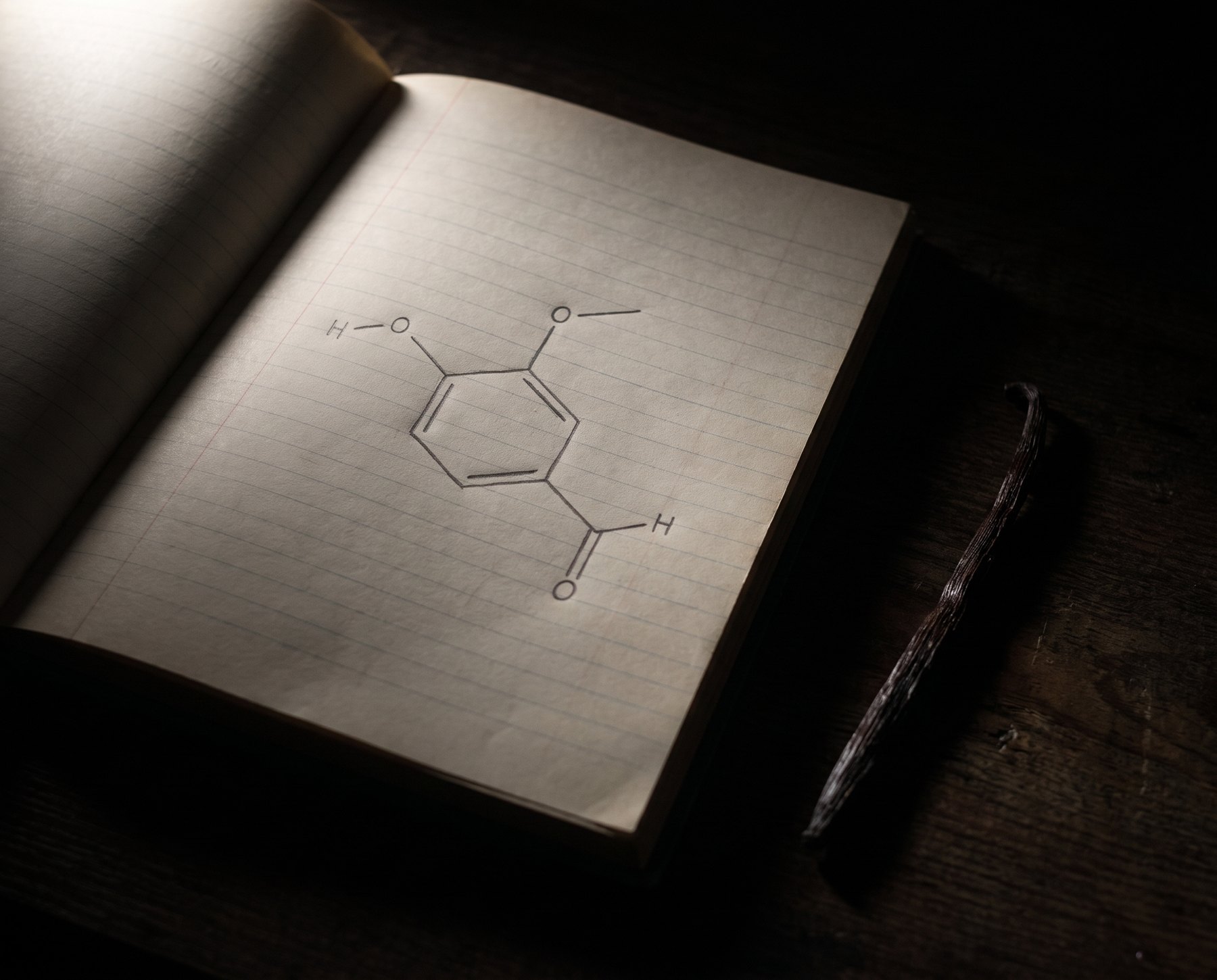
Một bông lan, một năm chờ, một phân tử
Quả vani là quả của một loài lan leo, gốc ở Mexico và Trung Mỹ. Hoa nở một ngày rồi tàn. Ở những nơi không có loài ong bản địa làm việc ấy, như Madagascar hay đảo Réunion, người trồng phải thụ phấn từng bông bằng tay, với một que nhỏ.
Quả hái xuống còn xanh và gần như không có mùi. Mùi vani chỉ đến sau nhiều tháng: nhúng nước nóng, ủ cho đổ mồ hôi, phơi nắng ban ngày, cuộn lại ban đêm, rồi để khô chậm. Trong quá trình ấy, các hợp chất gắn với đường trong quả dần tách ra, và vanillin được giải phóng. Có khi nó kết thành những tinh thể trắng nhỏ trên vỏ quả.
Mùi vani tự nhiên gồm hàng trăm hợp chất. Nhưng vanillin là phân tử chính, thứ người ta nhận ra đầu tiên. Năm 1858, nhà hoá học Pháp Nicolas Gobley tách được vanillin tinh khiết từ quả vani.
Cho tới lúc đó, muốn có mùi vani thì phải có quả vani. Và quả vani thì hiếm, lâu, và phụ thuộc vào một bông hoa chỉ mở trong một ngày.
Tiemann và Haarmann, vani từ rừng thông
Năm 1874, hai nhà hoá học Đức, Ferdinand Tiemann và Wilhelm Haarmann, xác định cấu trúc của vanillin và tìm ra cách tổng hợp nó. Nguyên liệu của họ là coniferin, một hợp chất có trong nhựa và phần vỏ non của cây lá kim.
Hãy hình dung sự dịch chuyển ấy. Mùi của một quả lan nhiệt đới, từng phải đi tàu từ Ấn Độ Dương sang châu Âu, giờ có thể đến từ cây thông ở miền trung nước Đức. Không có hoa. Không có mùa khô. Không có bàn tay thụ phấn.
Tiemann và Haarmann xây nhà máy vanillin đầu tiên ở Holzminden, một thị trấn bên sông Weser. Công ty về sau mang tên Haarmann & Reimer, theo tên Haarmann và nhà hoá học Karl Reimer. Ngày nay chính địa điểm ấy là trụ sở của Symrise, công ty coi năm 1874 là năm khởi đầu của mình.
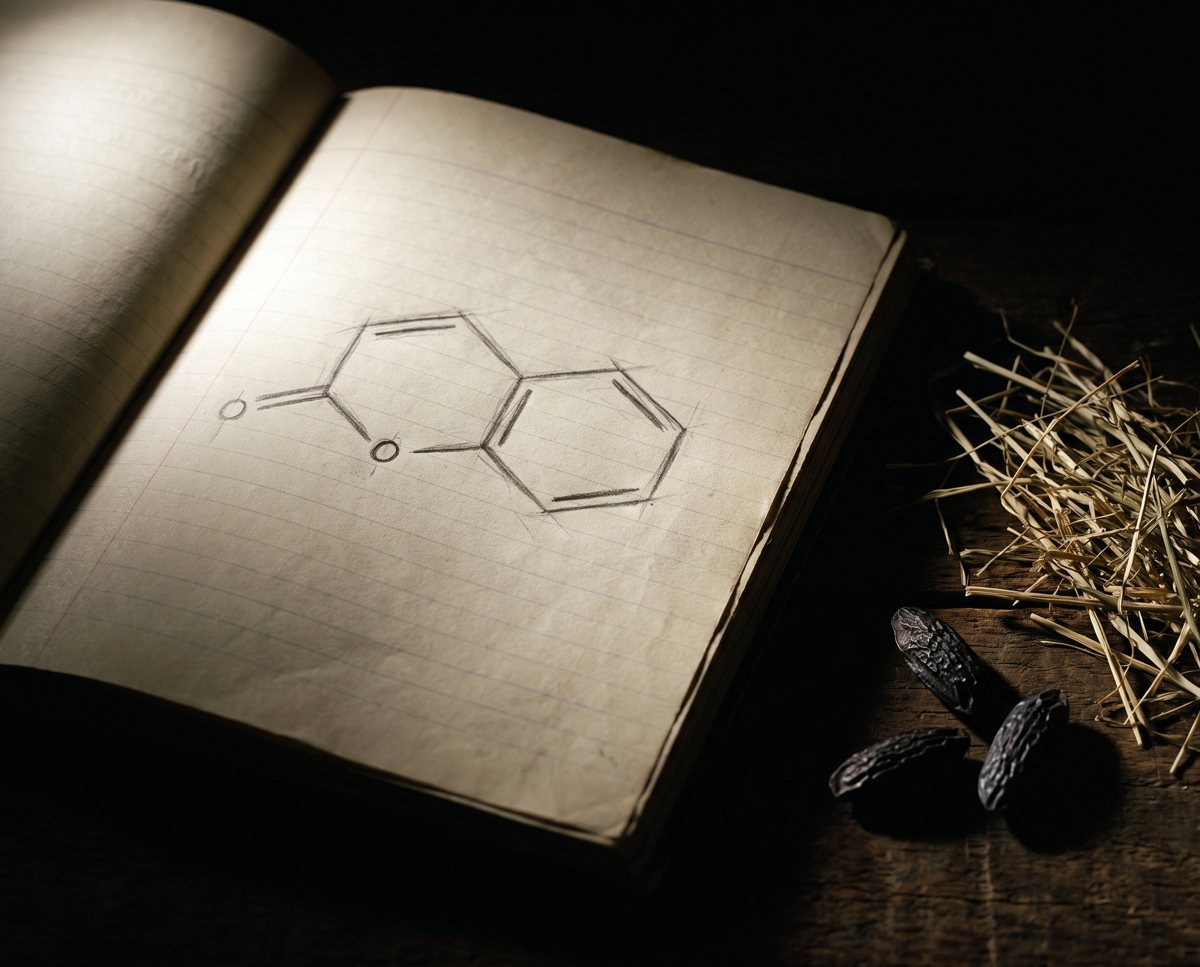
Vài năm sau, người làm nước hoa bắt đầu dùng vanillin ở liều mà quả vani không cho phép. Jicky của Guerlain năm 1889 dùng cả vanillin tổng hợp lẫn coumarin tổng hợp. Về sau, người ta tìm ra những con đường khác để làm vanillin, từ đinh hương, từ phụ phẩm của ngành giấy, từ dầu mỏ. Mỗi con đường một nguồn, cùng một phân tử.
Vanillin trong gỗ, trong rượu, trong giấy
Vanillin không chỉ sống trong quả vani. Nó có mặt ở bất cứ đâu có lignin, chất làm cho thành tế bào gỗ cứng lại, bị phân huỷ chậm.
Khi thùng gỗ sồi được hơ lửa ở mặt trong, lignin bị bẻ gãy và vanillin hình thành. Rượu nằm trong thùng nhiều năm sẽ hút dần phân tử ấy. Một phần của cái ngọt mà người ta thấy ở whiskey hay rượu vang ủ gỗ đến từ đây, không phải từ quả vani nào.
Giấy cũ cũng vậy. Giấy làm từ bột gỗ chứa lignin, và theo thời gian, lignin phân rã thành nhiều hợp chất nhỏ, trong đó có vanillin. Một phần mùi ngòn ngọt, ấm, của thư viện lâu năm là mùi của giấy đang già đi.
Lá thuốc lá sấy, hạt cà phê rang, vỏ bánh mì nướng đều có dấu vết vanillin. Ở mỗi nơi, nó là kết quả của một quá trình: lửa, thời gian, sự khô dần.
Dấu vết của cái gì?
Nếu một mùi có thể đến từ quả lan, từ thùng rượu, từ trang sách, từ rừng thông, thì mùi ấy thuộc về ai?
Người ta thường gọi vanillin tổng hợp là vani giả. Nhưng phân tử thì không giả. Nó giống hệt vanillin trong quả vani, đến từng nguyên tử. Cái khác là những gì đi kèm: hàng trăm hợp chất nhỏ khác trong quả vani, thời gian ủ, bàn tay người trồng, vùng đất. Vanillin tổng hợp là mùi vani không có những thứ đi kèm ấy.
Có một cách nhìn khác. Vanillin có lẽ chưa bao giờ là mùi riêng của quả vani. Nó là mùi của một kiểu biến đổi: khi vật chất già đi, khô đi, đi qua lửa, nó để lại cái ngọt này. Quả vani chỉ là nơi ta gặp nó rõ nhất.
Ngày nay vanillin nằm trong danh sách mở rộng các chất phải ghi trên nhãn mỹ phẩm ở châu Âu. Cũng như mọi dấu vết khác, nó được đặt tên, được đo, được theo dõi. Nhưng khi ngửi, không ai nhìn thấy nguồn của nó. Người ngửi tự chọn câu chuyện.
An orchid, a year of waiting, a molecule
The vanilla pod is the fruit of a climbing orchid native to Mexico and Central America. The flower opens for one day. Where no native bee does the work, as in Madagascar or Réunion, growers pollinate each flower by hand with a small stick.
The pod is picked green and almost odourless. The smell comes only after months: dipped in hot water, left to sweat, laid in the sun by day, wrapped at night, then dried slowly. In the process, compounds bound to sugars in the pod are released, and vanillin with them. Sometimes it forms small white crystals on the skin.
Natural vanilla contains hundreds of compounds. But vanillin is the main one, the first thing we recognise. In 1858 the French chemist Nicolas Gobley isolated pure vanillin from the pod.
Until then, the smell of vanilla required a vanilla pod. And pods were scarce, slow, and dependent on a flower open for a single day.
Tiemann and Haarmann, vanilla from the pines
In 1874 two German chemists, Ferdinand Tiemann and Wilhelm Haarmann, determined the structure of vanillin and found a way to make it. Their starting material was coniferin, a compound found in the sap and young bark of conifers.
Picture the shift. The smell of a tropical orchid fruit, once shipped from the Indian Ocean to Europe, could now come from pine trees in central Germany. No flower. No dry season. No hand pollination.
Tiemann and Haarmann built the first vanillin factory in Holzminden, a town on the Weser. The firm later took the name Haarmann & Reimer, after Haarmann and the chemist Karl Reimer. The same site is now the headquarters of Symrise, which counts 1874 as its founding year.
Within a few years perfumers were using vanillin at doses no pod could supply. Guerlain's Jicky of 1889 used both synthetic vanillin and synthetic coumarin. Later, other routes to vanillin were found, from clove oil, from paper industry byproducts, from petroleum. Each route a different source, one molecule.
Vanillin in wood, in spirits, in paper
Vanillin does not live only in the pod. It appears wherever lignin, the material that stiffens wood cell walls, slowly breaks down.
When the inside of an oak barrel is toasted over fire, lignin is broken and vanillin forms. Spirit resting in the barrel for years draws it in. Part of the sweetness found in whisky or oak aged wine comes from here, not from any vanilla pod.
Old paper too. Paper made from wood pulp contains lignin, and over time lignin breaks into smaller compounds, vanillin among them. Part of the warm, faintly sweet smell of an old library is the smell of paper ageing.
Dried tobacco, roasted coffee, toasted bread crust all carry traces of vanillin. In each case it is the result of a process: fire, time, slow drying.
A trace of what?
If one smell can come from an orchid, a barrel, a page, a pine forest, whose smell is it?
Synthetic vanillin is often called fake vanilla. But the molecule is not fake. It is identical, atom for atom, to the vanillin in the pod. What differs is everything around it: hundreds of other small compounds, months of resting, the grower's hands, the soil. Synthetic vanillin is the smell of vanilla without its company.
There is another way to see it. Perhaps vanillin was never the pod's own smell. It is the smell of a kind of change: when matter ages, dries, passes through fire, it leaves this sweetness behind. The pod is simply where we meet it most clearly.
Today vanillin is on Europe's expanded list of substances to be named on cosmetic labels. Like any trace, it is named, measured, tracked. But when we smell it, no one sees its source. The person smelling chooses the story.
Olfactory Art