
Essays · Olfactory Art
Bjarne Melgaard, Bjørn Kristian Hilberg. Abuse Is the Beauty of the Working Class.
Một mùi được pha ngay trong phòng, và một mùi nằm vỡ dưới sàn.
One scent made in the room, and another lying broken on the floor.
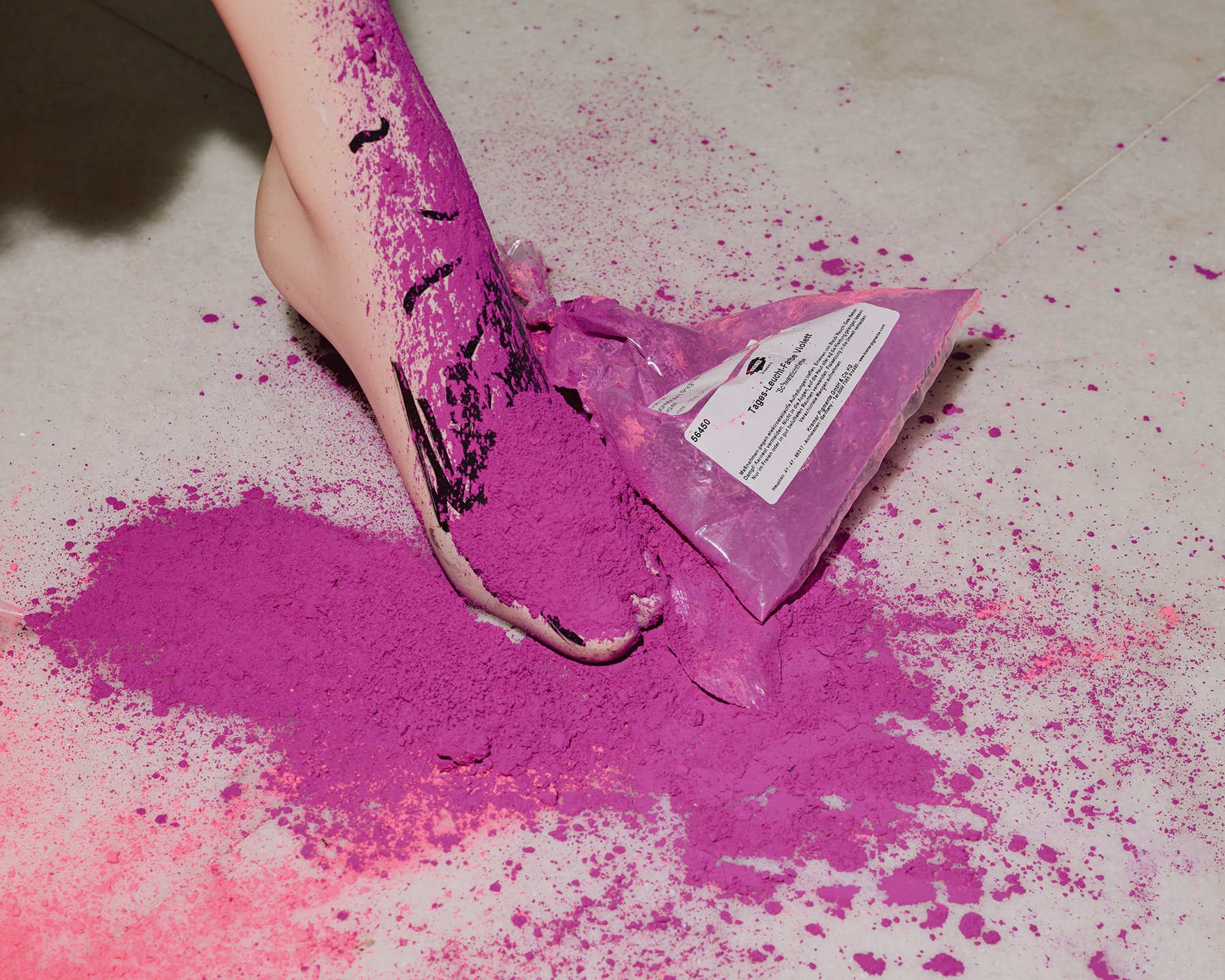
Photo: Ethan Floro. Courtesy the artists and VI, VII, Oslo · ArtReview
Một buổi ra mắt trong gallery
Từ 25 tháng Mười đến 15 tháng Mười hai năm 2024, gallery VI, VII ở Oslo được dựng như nơi ra mắt một dòng nước hoa. Dòng ấy tên The End. Người làm là Bjarne Melgaard, nghệ sĩ Na Uy, cùng Bjørn Kristian Hilberg, người sáng lập nhà hương Na Uy Malbrum.
Trong phòng có một phòng thí nghiệm mùi đang hoạt động thật. Cốc chiết, bình lọc, máy chiết rót, những chai hoá chất đóng sẵn. Ba lọ nước hoa đã hoàn thành đứng trên các phiến đá cẩm thạch và đá vôi: Joey, Speedball, Stabfrenzy Forever. Một mùi thứ tư, Crispo, đang được làm ngay trong thời gian triển lãm.
Trên tường chiếu một đoạn phim quảng cáo cho thương hiệu, ghép hoạt hình với đoạn phim tìm lại. Đó là ngôn ngữ quen thuộc của ngành làm đẹp: sản phẩm, bệ trưng, video, tên gọi. Nhưng mọi thứ đều hơi lệch.
Tên triển lãm, Abuse Is the Beauty of the Working Class, đã báo trước sự lệch ấy. Nó đặt cạnh nhau hai từ không ai muốn thấy trên một hộp nước hoa: sự hành hạ, và giai cấp lao động.
Bốn cái tên trên nhãn
Tên các mùi không phải tên hoa hay tên thành phố. Joey là lời tưởng nhớ Joey Stefano, một diễn viên phim người lớn đã qua đời. Theo bài phê bình của Matthew Rana trên ArtReview, mùi này ngọt, gợi hoa loa kèn hoặc kẹo cao su. Crispo đặt theo tên Andrew Crispo, một người buôn tranh đã mất, với hoắc hương và hoa violet.
Hai cái tên còn lại nghe như tiếng lóng của đường phố và của bạo lực. Chúng không cần giải thích. Đặt trên nhãn một lọ nước hoa, chúng đủ làm người đọc khựng lại.
Rồi có thêm một mùi nữa, không tên. Những lọ tinh chất bị đập vỡ trên sàn gallery, để lại một mùi hoa đậm, ngột ngạt, lan khắp phòng. Mùi này không được bán. Nó chỉ tồn tại ở đó, trong những tuần triển lãm mở cửa, rồi bay đi.
Xung quanh là những vật quen thuộc trong thế giới của Melgaard. Tranh mực vẽ những hình người bị quái vật nuốt, nhiều bức vẽ lên giấy tờ pháp lý. Ma nơ canh. Những bức tranh giống bia mộ, dán đầy vật vụn. Mỹ phẩm, chai nước hoa vỡ, thuốc kê đơn tâm thần, thú nhồi bông.
Hàng xa xỉ và mùi của sự cùng quẫn
Melgaard từng làm việc với thời trang, và ở đó, theo Rana, ông lật ngược những quy ước của ngành. Với nước hoa, bài phê bình cho rằng thái độ của ông có phần kính cẩn hơn. Ông thật sự làm ra một dòng mùi, cùng một nhà hương thật, trong một phòng thí nghiệm thật.
Nhưng cách trưng bày khiến món hàng xa xỉ mang theo một hơi cùng quẫn. Rana nối triển lãm với những căng thẳng giai cấp và với việc người làm nghệ thuật tự bóc lột chính mình. Bài viết cũng nhắc tới những khó khăn tài chính và pháp lý mà Melgaard đã trải qua.
Điều đáng nhớ là triển lãm không dừng ở nỗi đau của một cá nhân. Những cái tên trên lọ, những bức vẽ trên giấy tờ pháp lý, những viên thuốc, tất cả chỉ ra một điều rộng hơn: có những hệ thống tiêu hao con người, rồi đóng gói phần còn lại thành thứ đẹp để bán.
Nước hoa là vật hợp nhất để nói điều đó. Nó là món xa xỉ nhỏ nhất, dễ mua nhất, gần da nhất. Nó hứa hẹn một phiên bản đẹp hơn của người dùng. The End nhận lời hứa ấy, rồi viết tên người chết lên nhãn.
Người bước vào VI, VII mùa đông năm ấy có lẽ đã mang theo trên áo một chút mùi hoa từ sàn nhà. Họ không mua gì. Nhưng họ vẫn mang một vết ra về.
A launch inside a gallery
From 25 October to 15 December 2024, the gallery VI, VII in Oslo was staged as the launch of a perfume line. The line was called The End. It was made by the Norwegian artist Bjarne Melgaard with Bjørn Kristian Hilberg, founder of the Norwegian perfume house Malbrum.
The room held a scent laboratory that actually worked. Beakers, percolators, filling machines, bottled chemicals. Three finished perfumes stood on slabs of marble and limestone: Joey, Speedball, Stabfrenzy Forever. A fourth, Crispo, was being developed during the show.
A brand trailer was projected on the wall, mixing animation with found footage. It was the familiar language of the beauty business: product, plinth, video, name. But everything was slightly off.
The title, Abuse Is the Beauty of the Working Class, announced that from the start. It put side by side two words nobody wants on a perfume box: abuse, and the working class.
Four names on the label
The scents are not named after flowers or cities. Joey is a tribute to Joey Stefano, an adult film actor who has died. According to Matthew Rana's review in ArtReview, it is sweet, recalling lilies or bubblegum. Crispo is named after the late dealer Andrew Crispo, and carries patchouli and violets.
The other two names sound like street slang and violence. They need no explanation. Printed on a perfume label, they are enough to make a reader stop.
Then there was one more smell, without a name. Vials of essence smashed on the gallery floor left a thick, stifling floral smell across the room. It was not for sale. It existed only there, for the weeks the show was open, and then it was gone.
Around it were things familiar from Melgaard's world. Ink drawings of figures devoured by monsters, many on legal documents. Mannequins. Paintings like tombstones, crusted with ephemera. Beauty products, broken perfume bottles, psychiatric medication, stuffed animals.
Luxury goods with a smell of desperation
Melgaard has worked with fashion, and there, Rana writes, he turned the industry's codes upside down. With perfume the review finds him more reverent. He really did make a line of scents, with a real perfumer, in a real lab.
Yet the staging gave the luxury product a hint of desperation. Rana links the show to class tension and to the way artists exploit themselves. He also mentions the financial and legal difficulties Melgaard has faced.
What stays is that the exhibition does not stop at one person's pain. The names on the bottles, the drawings on legal papers, the pills: all point to something wider. There are systems that use people up, then package what is left as something beautiful to sell.
Perfume is the right object to say this. It is the smallest luxury, the easiest to buy, the closest to the skin. It promises a better version of whoever wears it. The End accepts that promise, then writes the names of the dead on the label.
Visitors who walked into VI, VII that winter probably carried a little of the floor's floral smell out on their coats. They bought nothing. But they left with a stain.
Olfactory Art