
Essays · Olfactory Art
Charlotte Eta Mumm. Pulse.
Một điêu khắc thở theo nhịp của nước.
A sculpture that breathes to the rhythm of water.
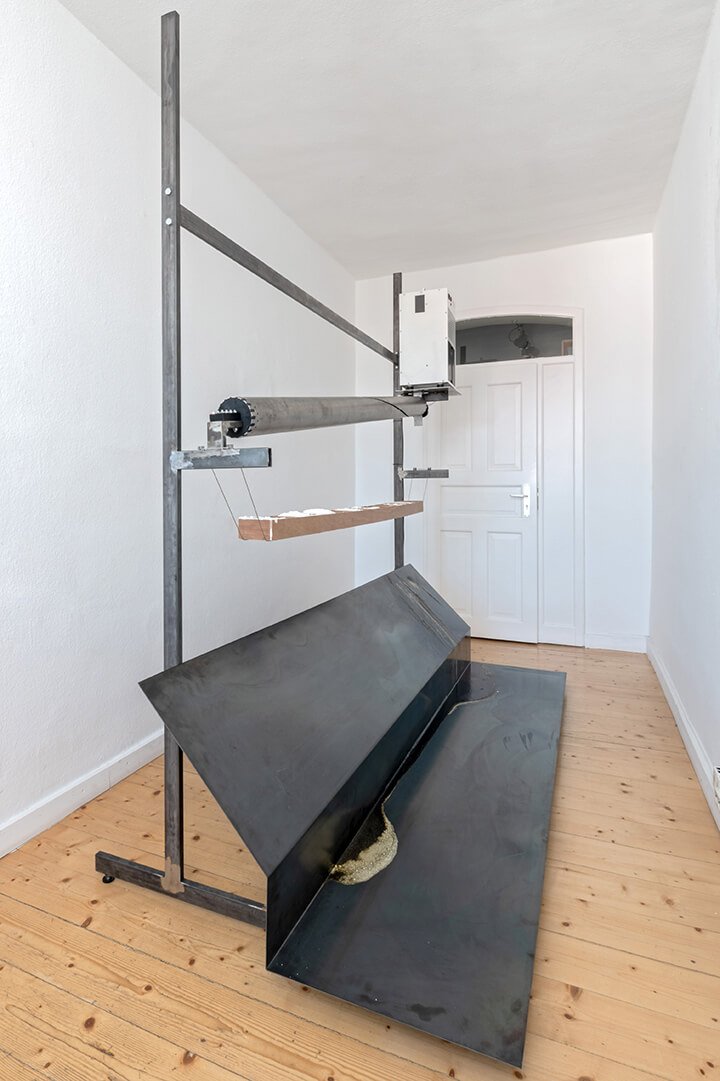
© Charlotte Eta Mumm · Charlotte Eta Mumm (official site)
Một cỗ máy nhỏ giọt
Năm 2021, Charlotte Eta Mumm làm triển lãm cá nhân Pulse tại Galerie Tanit ở Munich. Tác phẩm trung tâm mang cùng tên: một điêu khắc lớn bằng thép và gỗ, cao 242 cm, rộng 120 cm, dài 252 cm.
Danh sách chất liệu của nó đọc giống một bảng kê kỹ thuật hơn là một bảng kê điêu khắc: thép, gỗ, một máy hút ẩm, bột sủi, mười tám mùi hương, nước. Mỗi thứ có một việc.
Máy hút ẩm kéo hơi nước ra khỏi không khí trong phòng. Nước ấy chảy vào một hệ ống tròn. Trên đường đi, nó gặp bột sủi đã được tẩm mùi. Bột sủi lên, và mùi được thả ra. Không có nút bấm, không có người điều khiển. Tác phẩm tự chạy theo lượng nước nó gom được.
Vì vậy, như nghệ sĩ mô tả, tác phẩm không bao giờ giống nhau, luôn ở trong trạng thái đổi thay. Mùi của hôm nay không phải mùi của hôm qua. Điêu khắc đứng yên, nhưng phần mùi của nó thì sống theo thời gian.
Mười tám mùi của thành phố
Mười tám mùi trong Pulse gợi đến đô thị. Đó là những mùi thoáng qua, loại mùi ta gặp khi đi bộ qua một con phố rồi quên ngay sau đó. Chúng không được trưng bày như những mẫu thử đặt cạnh nhau. Chúng xuất hiện trong không gian theo từng đợt, như chúng vẫn xuất hiện ngoài đường.
Phần mùi được phát triển cùng nghệ sĩ khứu giác Frank Bloem. Phần kỹ thuật của điêu khắc được làm cùng Lefki Mevissen. Mumm không coi mùi là một thứ phụ thêm cho hình khối. Mùi là một thành phần điêu khắc, ngang với thép và gỗ, chỉ khác ở chỗ nó chiếm không gian bằng không khí thay vì bằng khối lượng.
Cách trưng bày này đổi vai trò của người xem. Người ta không đứng trước tác phẩm để nhìn một lần rồi đi. Người ta đi quanh nó, đứng lại, quay lại sau một lúc, và nhận ra căn phòng đã có mùi khác. Tác phẩm đòi thời gian, giống một thành phố đòi thời gian trước khi ta hiểu nó.
Sống chung theo nhịp riêng
Treo cùng điêu khắc là loạt tranh Phases and Parallels. Mumm vẽ bằng nhiều chất liệu trên vải, căng trên những phù điêu gỗ. Hình trong tranh là những thành phố tưởng tượng.
Ý tưởng nối tranh với điêu khắc đến từ loạt bài giảng của Roland Barthes tại Collège de France năm 1976 và 1977 về chuyện sống chung. Barthes tự hỏi liệu có thể có một cộng đồng mà ở đó mỗi người sống theo nhịp của riêng mình, và vẫn tôn trọng nhịp riêng của người khác.
Pulse đặt câu hỏi ấy vào vật chất. Mười tám mùi là mười tám nhịp. Không mùi nào chiếm cả căn phòng mãi. Mỗi mùi có lúc đến, có lúc lùi lại cho mùi khác. Nước nhỏ giọt là nhịp chung, còn từng mùi giữ tốc độ riêng của nó.
Một thành phố cũng vận hành như thế. Hàng nghìn đời sống đi qua nhau trên cùng một con đường, mỗi đời sống để lại một vệt mùi rồi đi tiếp. Không ai điều phối. Nhưng tổng thể vẫn có một nhịp.
Vì sao Pulse đáng nhớ
Năm 2022, Pulse được Institute for Art and Olfaction đưa vào vòng chung kết giải Sadakichi, dành cho tác phẩm thử nghiệm với mùi. Điều làm nó khác nằm ở chỗ nó để môi trường điều khiển mùi. Độ ẩm của căn phòng, số người thở trong đó, thời tiết bên ngoài, tất cả đều ảnh hưởng đến lượng nước và vì vậy đến lượng mùi.
Tác phẩm không hứa một mùi hoàn chỉnh. Nó hứa một quá trình. Người xem ra về mang theo một mảnh của quá trình ấy, một vài mùi họ tình cờ ngửi được trong lúc họ có mặt. Người khác đến sau sẽ mang về những mảnh khác.
A dripping machine
In 2021 Charlotte Eta Mumm held a solo exhibition, Pulse, at Galerie Tanit in Munich. At its centre stood a work of the same name: a large sculpture of steel and wood, 242 cm high, 120 cm wide and 252 cm long.
Its list of materials reads more like a technical sheet than a sculptor's: steel, wood, a dehumidifier, fizzing powder, eighteen scents, water. Each has a job.
The dehumidifier pulls moisture out of the room's air. That water runs into a circular tube system, where it meets scented fizzing powder. The powder fizzes, and the smell is released. No switch, no operator. The work runs on whatever water it collects.
As the artist describes it, the piece is never the same and always in flux. Today's smell is not yesterday's. The sculpture stands still, while its scent lives in time.
Eighteen smells of a city
The eighteen scents in Pulse evoke the city. They are fleeting smells, the kind met on a walk down a street and forgotten a moment later. They are not displayed side by side like samples. They move through the space in waves, as they do outdoors.
The scent was developed with the olfactory artist Frank Bloem, and the sculpture's technical side with Lefki Mevissen. Mumm does not treat smell as an add on to form. Smell is a sculptural element, on a level with steel and wood, except that it occupies space as air instead of mass.
This changes the visitor's role. You do not look once and leave. You walk around, pause, come back a while later, and notice the room smells different. The work asks for time, the way a city asks for time before it can be understood.
Living together at one's own pace
Alongside the sculpture hung the series Phases and Parallels: mixed media on fabric stretched over wooden reliefs, showing imagined cities.
The thread linking paintings and sculpture comes from Roland Barthes's 1976 to 1977 lectures at the Collège de France on living together. Barthes asked whether a community could exist in which everyone lives by their own rhythm and still respects the rhythms of others.
Pulse puts that question into matter. Eighteen scents, eighteen rhythms. None holds the room for good. Each arrives, then steps back for another. The dripping water is the shared beat; each smell keeps its own tempo.
A city works like this. Thousands of lives cross on the same street, each leaving a streak of smell before moving on. No one coordinates it. Yet the whole has a pulse.
Why Pulse stays with you
In 2022 the Institute for Art and Olfaction named Pulse a finalist for the Sadakichi Award for experimental work with scent. What sets it apart is that it lets the environment run the smell. The room's humidity, the number of people breathing in it, the weather outside: all affect the amount of water, and so the amount of scent.
The work promises no finished smell. It promises a process. Each visitor leaves with a fragment of it, the few scents they happened to catch while there. Someone who comes later takes home different fragments.
Olfactory Art