
Essays · Fashion as Design
Christian Dior, couturier du rêve.
Một cái tên, và bảy người đọc lại nó.
One name, and seven people reading it again.
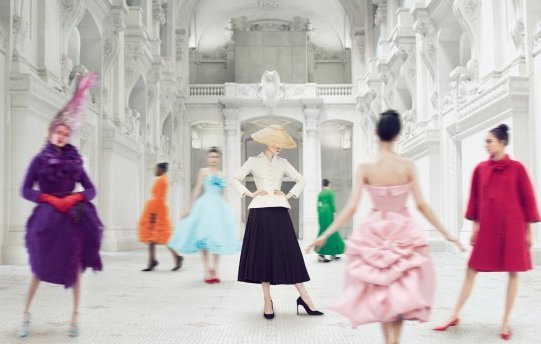
© Emma Summerton · Musée des Arts Décoratifs (MAD Paris)
Bảy mươi năm trong một bảo tàng
Từ ngày 5 tháng 7 năm 2017 đến ngày 7 tháng 1 năm 2018, Musée des Arts Décoratifs ở Paris tổ chức Christian Dior, couturier du rêve, nhân dịp nhà Dior tròn bảy mươi năm. Hai giám tuyển là Florence Müller, giám tuyển nghệ thuật dệt và thời trang của Denver Art Museum, và Olivier Gabet, giám đốc bảo tàng. Thiết kế không gian do Nathalie Crinière đảm nhận.
Lần đầu tiên, các khu thời trang của bảo tàng và gian chính được nối lại thành một lộ trình, rộng gần 3.000 mét vuông. Trong đó có hơn 300 bộ váy haute couture, làm từ năm 1947 tới lúc triển lãm mở cửa.
Bên cạnh váy là những thứ ít khi được nhìn thấy: các bản toile trắng dùng để thử dáng trong xưởng, ảnh thời trang, bản phác thảo, thư từ, ghi chép, tài liệu quảng cáo, mũ, trang sức, túi, giày, lọ nước hoa. Phần lớn đến từ kho Dior Héritage và chưa từng được trưng bày ở Paris.
Lần hồi cố trước đó về Dior tại Paris diễn ra năm 1987, cũng ở bảo tàng này, và chỉ gói trong mười năm Dior tự tay làm, từ 1947 đến 1957.
Trước khi là thợ may, là người bán tranh
Triển lãm mở đầu bằng đời sống của Christian Dior: tuổi thơ ở Granville, những năm hai mươi ông bước vào giới tiền phong Paris, thời gian ông vẽ minh hoạ thời trang trước khi vào nghề may.
Có một đoạn ít người nhớ. Từ năm 1928 đến 1934, Dior điều hành một phòng tranh cùng bạn bè, ban đầu với Jacques Bonjean, sau với Pierre Colle. Ông trưng bày những nghệ sĩ lớn tuổi đã thành danh bên cạnh những người trẻ cùng thế hệ mình: Giacometti, Dalí, Calder, Leonor Fini, Max Jacob, Jean Cocteau, Christian Bérard.
Phần này được gọi là bảo tàng tưởng tượng của Christian Dior. Tranh, tượng, đồ nội thất và vật trang trí được đặt cạnh váy áo, để người xem thấy váy của Dior chứa đầy tham chiếu tới hội hoạ, điêu khắc, giấy dán tường, vải bọc, đồ sứ. Ông sưu tầm đồ cổ, sưu tầm Art Nouveau, say mê thế kỷ mười tám, và mê làm vườn.
Nathalie Crinière dựng các chủ đề thành những bối cảnh nối tiếp: một phòng tranh, một xưởng may, một con phố, một phòng riêng, những chuyến đi, một khu vườn.
Sáu người đọc lại
Ở gian chính, một lộ trình theo thời gian đi qua bảy mươi năm, từ 1947 tới 2017. Mở đầu là bộ Bar, bộ đồ đen trắng đã thành hình ảnh của New Look. Về bộ đồ ấy, Penta có một bài riêng: Christian Dior. Bar Suit.
Dior mất năm 1957. Sau ông, sáu phòng trưng bày dành cho sáu giám đốc nghệ thuật. Yves Saint Laurent, lựa chọn táo bạo vì ông còn rất trẻ. Marc Bohan, một lựa chọn điềm tĩnh hơn. Gianfranco Ferré với vẻ phô trương. John Galliano với những năm đầy kịch tính. Raf Simons với tinh thần tối giản. Và Maria Grazia Chiuri, người phụ nữ đầu tiên giữ vị trí ấy, mang theo một cái nhìn nữ quyền về thời trang.
Mỗi phòng cho thấy cùng một câu hỏi: làm sao giữ được tinh thần của một người đã mất, mà vẫn sống trong thời của mình? Không ai trả lời giống ai.
Xưởng may và phòng khiêu vũ
Giữa triển lãm có một xưởng may thật, nơi thợ may làm việc giữa người mẫu, bản vẽ và toile. Haute couture ở đây được cho thấy như một nghề: đo, cắt, ướm, sửa, lặp lại.
Cuối cùng, gian chính biến thành một phòng khiêu vũ. Những bộ váy dạ hội được đặt cạnh nhau, vài bộ lần đầu cùng xuất hiện ở Paris. Một số từng được Vương phi Grace xứ Monaco, Công nương Diana, Charlize Theron, Jennifer Lawrence mặc.
Trong số đó có một bộ tên Soirée Brillante, được tìm ra nhờ quá trình nghiên cứu cho triển lãm. Nó từng được giới thiệu chính tại Musée des Arts Décoratifs vào tháng 11 năm 1955, khi Dior còn sống. Hôm thứ Tư 30 tháng 11 năm ấy, người mẫu của Dior mặc váy dạ hội đi giữa đồ nội thất và vật trang trí trong buổi khai mạc một triển lãm của bảo tàng. Sáu mươi hai năm sau, bộ váy trở lại đúng căn nhà ấy.
Seventy years in a museum
From 5 July 2017 to 7 January 2018, the Musée des Arts Décoratifs in Paris staged Christian Dior, couturier du rêve for the house's seventieth anniversary. The curators were Florence Müller, textile and fashion curator at the Denver Art Museum, and Olivier Gabet, the museum's director. The scenography was by Nathalie Crinière.
For the first time, the museum's fashion galleries and its nave were joined into one route, almost 3,000 square metres. It held over 300 haute couture gowns, from 1947 to the year of the show.
Beside the gowns were things rarely seen: white atelier toiles used for fittings, fashion photographs, sketches, letters, notes, advertising, hats, jewellery, bags, shoes, perfume bottles. Most came from Dior Héritage and had never been shown in Paris.
The previous Paris retrospective of Dior was in 1987, at the same museum, and covered only the ten years Dior designed himself, 1947 to 1957.
Before the couturier, a dealer
The exhibition opens with Dior's life: childhood in Granville, the 1920s when he found the Paris avant-garde, his work as a fashion illustrator before he entered couture.
One chapter is often forgotten. From 1928 to 1934 Dior ran an art gallery with friends, first Jacques Bonjean, then Pierre Colle. He hung established older artists beside young ones of his own generation: Giacometti, Dalí, Calder, Leonor Fini, Max Jacob, Jean Cocteau, Christian Bérard.
This part was framed as Christian Dior's imaginary museum. Paintings, sculpture, furniture and decorative objects stood beside the clothes, showing gowns full of references to painting, sculpture, wallpaper, upholstery, porcelain. He collected antiques and Art Nouveau, loved the eighteenth century, and loved gardening.
Crinière staged the themes as a sequence of settings: a gallery, an atelier, a street, a boudoir, journeys, a garden.
Six readers
In the nave, a chronological route crossed seventy years, 1947 to 2017. It opened with the Bar suit, the black and white ensemble that became the image of the New Look. Penta has a separate essay on it: Christian Dior. Bar Suit.
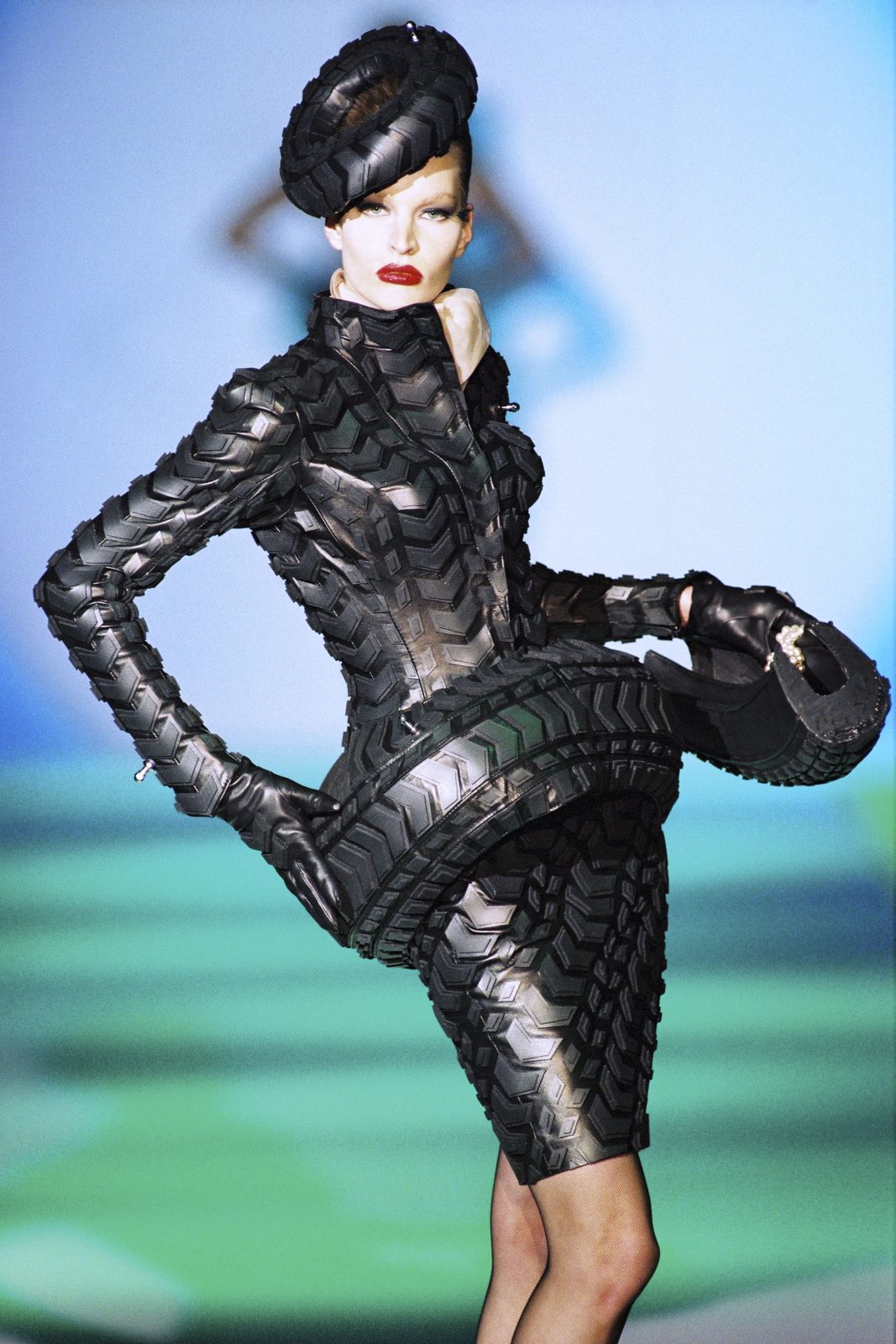
Dior died in 1957. Six galleries followed for six artistic directors. Yves Saint Laurent, a daring choice because he was so young. Marc Bohan, a more measured one. Gianfranco Ferré, flamboyant. John Galliano, dramatic years. Raf Simons, a minimal statement. And Maria Grazia Chiuri, the first woman in the role, with a feminist view of fashion.
Each room asked the same question: how do you keep the spirit of someone gone and still live in your own time? No two answers matched.
Atelier and ballroom
Midway through there was a working atelier, seamstresses among models, sketches and toiles. Couture was shown as a trade: measure, cut, fit, correct, repeat.
At the end, the nave became a ballroom. Evening gowns stood together, some seen side by side in Paris for the first time. Some had been worn by Princess Grace of Monaco, Princess Diana, Charlize Theron, Jennifer Lawrence.
Among them was a dress called Soirée Brillante, found through research for the show. It had been presented at the Musée des Arts Décoratifs itself in November 1955, in Dior's lifetime. On Wednesday 30 November that year, his models walked in evening dress among furniture and objets d'art at the opening of a museum exhibition. Sixty-two years later, the dress came back to the same house.
Fashion as Design