
Essays · Contemporary Art
Felix Gonzalez-Torres. "Untitled" (Portrait of Ross in L.A.).
Một bức chân dung có thể vơi đi.
A portrait can grow smaller.
Felix Gonzalez-Torres Foundation · Felix Gonzalez-Torres Foundation
Một đống kẹo trong góc phòng
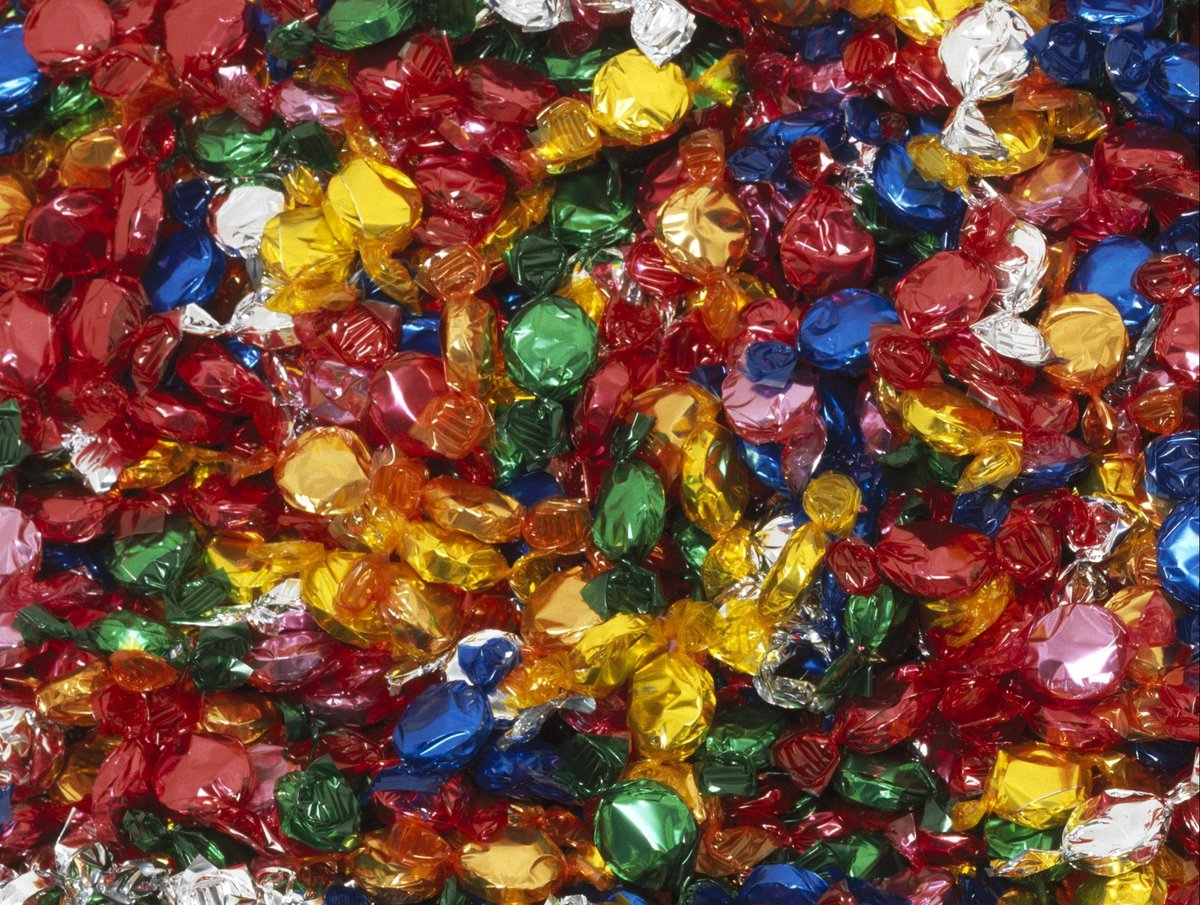
Ở góc một phòng trưng bày, trên sàn, là một đống kẹo. Kẹo bọc giấy bóng nhiều màu, loại sản xuất hàng loạt, bán ở bất cứ đâu. Không có bệ, không có kính. Nhãn trên tường ghi: "Untitled" (Portrait of Ross in L.A.), 1991.
Người xem được phép cúi xuống lấy một viên. Nhiều người ngần ngại, nhìn quanh xem có ai ngăn không. Trong bảo tàng, người ta quen với việc không được chạm vào gì. Nhưng ở đây, việc lấy đi là một phần của tác phẩm.
Theo Felix Gonzalez-Torres Foundation, chất liệu của tác phẩm được ghi là kẹo bọc giấy nhiều màu, nguồn cung không giới hạn. Kích thước thay đổi theo mỗi lần sắp đặt. Chỉ có một con số cố định: khối lượng lý tưởng 175 pound, khoảng 79 kg.
Tác phẩm hiện thuộc bộ sưu tập của Art Institute of Chicago, và đã được trưng bày ở nhiều bảo tàng trên thế giới.
Ross
Ross trong tên tác phẩm là Ross Laycock, người bạn đời của nghệ sĩ. Ross qua đời năm 1991 vì những biến chứng liên quan đến AIDS. Gonzalez-Torres qua đời năm 1996, cũng vì AIDS.
Con số 175 pound thường được hiểu là cân nặng lý tưởng của Ross khi còn khoẻ. Art Institute of Chicago viết thận trọng hơn: con số ấy có thể ứng với cân nặng trung bình của một người đàn ông trưởng thành, hoặc cân nặng lý tưởng của người được nhắc tên. Nghệ sĩ không giải thích thêm. Khoảng mơ hồ ấy cũng là một phần tác phẩm.
Những năm đầu thập niên 1990, ở Mỹ, AIDS là một đại dịch và cũng là một điều bị im lặng. Người bệnh gầy đi trông thấy. Gonzalez-Torres không cho người xem thấy thân thể ấy. Ông cho họ thấy một đống kẹo nhỏ dần qua từng ngày, và để họ tự hiểu.
Cái tên của tác phẩm luôn bắt đầu bằng "Untitled", đặt trong ngoặc kép. Phần trong ngoặc đơn mới là chỗ ông cho người xem một chìa khoá. Portrait of Ross in L.A. Một người, một thành phố.
Lấy đi và bổ sung
Khi khách lấy kẹo, đống kẹo thay đổi hình dạng. Có ngày nó thấp hẳn, có ngày gần như hết. Rồi bảo tàng có thể bổ sung, đưa nó trở lại gần khối lượng ban đầu. Theo mô tả của Art Institute of Chicago, những thay đổi này đến từ hai phía: người xem chọn có tương tác hay không, còn nhân viên bảo tàng đưa ra quyết định về việc bổ sung, cách bày và vị trí.
Như vậy tác phẩm có hai nhịp. Một nhịp hao hụt, do từng người lấy đi một viên. Một nhịp nối dài, do bảo tàng đổ thêm kẹo vào. Không nhịp nào thắng hẳn. Bức chân dung không bao giờ biến mất, nhưng cũng không bao giờ đứng yên.
Đây là điều khiến tác phẩm khác một tượng đài. Tượng đài bằng đá thì muốn tồn tại mãi. Bức chân dung bằng kẹo thì chấp nhận mình bị mang đi, và tồn tại nhờ được làm lại.
Vì sao một viên kẹo nặng đến vậy
Viên kẹo là vật nhỏ nhất có thể nghĩ ra. Nó rẻ, ngọt, trẻ con. Khi ngậm, nó tan trong vài phút. Chính vì nhẹ như vậy, nó mang được một điều rất nặng mà không cần lời.
Người lấy kẹo trở thành một phần của câu chuyện dù không biết. Họ làm bức chân dung nhỏ đi. Họ cũng mang một mảnh của nó ra khỏi bảo tàng, ra phố, về nhà. Ký ức về Ross, theo cách ấy, được chia cho hàng nghìn người lạ.
Có những tác phẩm khác cũng giữ lại người đã khuất bằng những gì mong manh, như kho lưu trữ nhịp tim của Christian Boltanski. Nhưng ít tác phẩm nào để người xem mang người đã khuất theo mình, trong miệng, trong túi áo, một cách giản dị như thế.
A pile of candy in a corner
In the corner of a gallery, on the floor, is a pile of candy. Sweets in shiny wrappers of many colours, the mass produced kind sold anywhere. No plinth, no glass. The wall label reads: "Untitled" (Portrait of Ross in L.A.), 1991.
Visitors may bend down and take one. Many hesitate. In a museum, one is used to touching nothing. Here, taking something away is part of the work.
The Felix Gonzalez-Torres Foundation lists the medium as candies in variously coloured wrappers, endless supply. The dimensions vary with each installation. Only one figure is fixed: an ideal weight of 175 pounds, about 79 kilograms.
The work is in the collection of the Art Institute of Chicago and has been shown in many museums around the world.
Ross
The Ross in the title is Ross Laycock, the artist's partner. Ross died in 1991 of complications related to AIDS. Gonzalez-Torres died in 1996, also of AIDS.
The figure of 175 pounds is often read as Ross's ideal weight when he was well. The Art Institute of Chicago is more careful: the number may correspond to the average weight of an adult man, or to the ideal weight of the person named. The artist offered no further explanation. That uncertainty is part of the work.
In the early 1990s in the United States, AIDS was an epidemic and also a silence. People who were ill visibly lost weight. Gonzalez-Torres did not show that body. He showed a pile of candy shrinking day by day, and left viewers to understand.
The title always begins with "Untitled", in quotation marks. The part in parentheses is where he hands the viewer a key. Portrait of Ross in L.A. A person, a city.
Taking and replenishing
As visitors take candy, the pile changes shape. Some days it is much lower, some days nearly gone. The museum may then replenish it, bringing it back close to the original weight. As the Art Institute of Chicago describes it, these changes come from two sides: visitors choose whether to interact, and museum staff decide on replenishment, configuration and placement.
So the work has two rhythms. One of loss, as each person takes a piece. One of continuation, as the museum pours in more. Neither wins outright. The portrait never disappears, but it never stands still either.
This is what separates it from a monument. A stone monument wants to last forever. A portrait made of candy accepts being carried away, and survives by being made again.
Why a piece of candy weighs so much
A sweet is about the smallest thing one can imagine. Cheap, sugary, childish. In the mouth it dissolves in minutes. Because it is so light, it can carry something very heavy without a word.
Whoever takes a candy becomes part of the story without knowing it. They make the portrait smaller. They also carry a piece of it out of the museum, into the street, home. Ross's memory is, in this way, shared among thousands of strangers.
Other works also hold on to the dead through fragile things, such as Christian Boltanski's archive of heartbeats. But few let the viewer carry the absent person with them, in the mouth, in a coat pocket, as simply as this.
Contemporary Art