
Essays · Fashion as Design
Frida Kahlo. Making Her Self Up.
Một người tự dựng mình mỗi sáng, bằng vải, phấn và thạch cao.
A person built herself each morning, from cloth, powder and plaster.
© Nickolas Muray Photo Archives · Victoria and Albert Museum (V&A)
Năm mươi năm sau cánh cửa
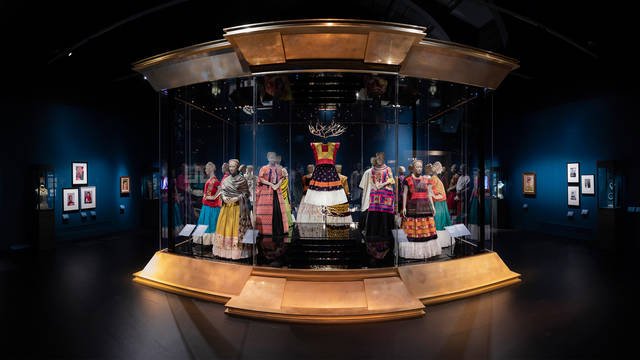
Frida Kahlo: Making Her Self Up mở tại V&A South Kensington, London, ngày 16 tháng 6 năm 2018 và đóng ngày 18 tháng 11 cùng năm. Trung tâm triển lãm là một bộ sưu tập quần áo và đồ dùng cá nhân của nữ hoạ sĩ Mexico.
Những món đồ ấy đã bị khoá kín suốt năm mươi năm sau khi bà mất năm 1954. Theo V&A, đây là lần đầu bộ sưu tập được trưng bày bên ngoài Mexico. Phần lớn hiện vật thuộc Museo Frida Kahlo, cùng với kho lưu trữ Diego Rivera và Frida Kahlo do Banco de México quản lý.
Mục đích triển lãm là nhìn lại đời Kahlo qua những vật riêng tư nhất. Không phải qua tiểu sử, không phải qua huyền thoại. Qua những thứ bà mặc, bôi, đeo, dùng mỗi ngày.
Điều ấy đổi vị trí người xem. Ta không đứng trước một nghệ sĩ nổi tiếng. Ta đứng trước tủ đồ của một người.
Vải, phấn và thạch cao
Phần lớn là quần áo Mexico. Những chiếc huipil, áo chui đầu bằng vải bông, thêu móc xích bằng máy. Váy bông in hoa có thêu và có holán, dải bèo ở gấu. Váy sa tanh thêu móc xích hoạ tiết hoa. Một chiếc áo khoác bông Guatemala mặc cùng huipil của người Mazatec và một chiếc váy dài chấm đất. Kiểu trang phục huipil và váy dài này gắn với phụ nữ Tehuana, và Kahlo mặc nó như một lựa chọn có chủ ý.
Rồi đồ trang điểm, tất cả có từ trước năm 1954. Một hộp phấn Revlon với bông phấn và phấn má màu Clear Red. Lớp sơn phủ móng Seal-fast. Sơn móng Lastron màu Frosted Snow Pink và Frosted Pink Lightening. Một thỏi son tên Everything's Rosy. Những cái tên in trên vỏ, đọc lên nghe như một bài thơ nhỏ của thập niên 1950.
Và những vật khó nhìn hơn. Một chân giả đi kèm chiếc bốt da, bốt được đắp lụa thêu hoạ tiết Trung Hoa. Một chiếc áo nịt chỉnh hình bằng thạch cao, được chính Kahlo vẽ và trang trí. Những vật ấy nói về một cơ thể cần được nâng đỡ. Nhưng chúng không bị giấu. Chúng được biến thành bề mặt để vẽ, để thêu, để đẹp theo cách của bà.
Tự dựng một hình ảnh
Cạnh các vật là ảnh và tranh. Nickolas Muray chụp Kahlo năm 1939 trong chiếc áo sa tanh xanh, và một tấm khác cùng năm với một tượng nhỏ Olmec. Một bức ảnh khoảng năm 1926 có dòng đề tặng ở mặt sau, ghi tháng 4 năm 1929, gửi Diego, ký Frieda.
Hai bức tự hoạ được nhắc tên: Self-portrait on the Border between Mexico and the United States of America năm 1932, và Self-portrait with red and gold dress năm 1941. Trong tranh, Kahlo mặc đúng những bộ đồ nằm trong tủ kính gần đó. Tranh và vật soi vào nhau.
Theo cách V&A trình bày, Kahlo dựng hình ảnh công khai của mình một cách có chủ ý, qua quần áo, trang sức, cách tự trình bày trong ảnh và trong tranh. Mỗi sáng mặc huipil, đánh phấn, tô son là một phần của cùng một tác phẩm dài.
Điều Making Her Self Up để lại không phải là câu chuyện về nỗi đau, dù nỗi đau có mặt. Đó là câu chuyện về sự lựa chọn. Một người không chọn được cơ thể mình, nhưng chọn được cách khoác lên nó. Và những lựa chọn ấy, cất kín năm mươi năm, vẫn còn nguyên màu khi mở ra.
Fifty years behind a door
Frida Kahlo: Making Her Self Up opened at V&A South Kensington, London, on 16 June 2018 and closed on 18 November that year. At its centre was a collection of clothing and personal belongings of the Mexican painter.
These things had been locked away for fifty years after her death in 1954. According to the V&A, this was the first time the collection had been shown outside Mexico. Most objects belong to the Museo Frida Kahlo, with the Diego Rivera and Frida Kahlo Archives held by the Banco de México.
The aim was to look at Kahlo's life through her most intimate belongings. Not through biography, not through legend. Through what she wore, applied, and used every day.
That shifts where the visitor stands. We are not before a famous artist. We are before one person's wardrobe.
Cloth, powder and plaster
Most of it was Mexican dress. Cotton huipils, the tunic garment, with machine embroidered chain stitch. Printed cotton skirts with embroidery and a holán, the ruffle at the hem. Satin skirts with chain stitched flowers. A Guatemalan cotton coat worn with a Mazatec huipil and a floor length skirt. This combination of huipil and long skirt is tied to the Tehuana women, and Kahlo wore it as a deliberate choice.
Then cosmetics, all from before 1954. A Revlon compact and powder puff with blusher in Clear Red. Seal-fast top coat. Lastron nail varnishes in Frosted Snow Pink and Frosted Pink Lightening. A lipstick called Everything's Rosy. The names on the packaging read like a small poem of the 1950s.
And harder things. A prosthetic leg with a leather boot, the boot appliquéd with silk embroidered in Chinese motifs. A plaster corset, painted and decorated by Kahlo herself. These speak of a body that needed support. But they were not hidden. They became surfaces to paint, to embroider, to make beautiful in her own way.
Building an image
Photographs and paintings stood beside the objects. Nickolas Muray photographed Kahlo in 1939 in a blue satin blouse, and again that year with an Olmec figurine. A photograph from about 1926 carries an inscription on the back dated April 1929, to Diego, signed Frieda.
Two self portraits were named: Self-portrait on the Border between Mexico and the United States of America, 1932, and Self-portrait with red and gold dress, 1941. In the paintings Kahlo wears clothes like those lying in the nearby cases. Painting and object reflect each other.
As the V&A presented it, Kahlo built her public image with intent, through dress, adornment, and the way she presented herself in photographs and in paint. Each morning's huipil, powder and lipstick was part of one long work.
What Making Her Self Up leaves is not a story of pain, though pain is present. It is a story of choice. A person cannot choose her body, but she can choose how to clothe it. And those choices, locked away for fifty years, still held their colour when the door opened.
Fashion as Design