
Essays · Fashion as Design
Kimono: Kyoto to Catwalk.
Một dáng áo thẳng, đi qua nhiều tay mà không mất mình.
One straight garment, passing through many hands, still itself.
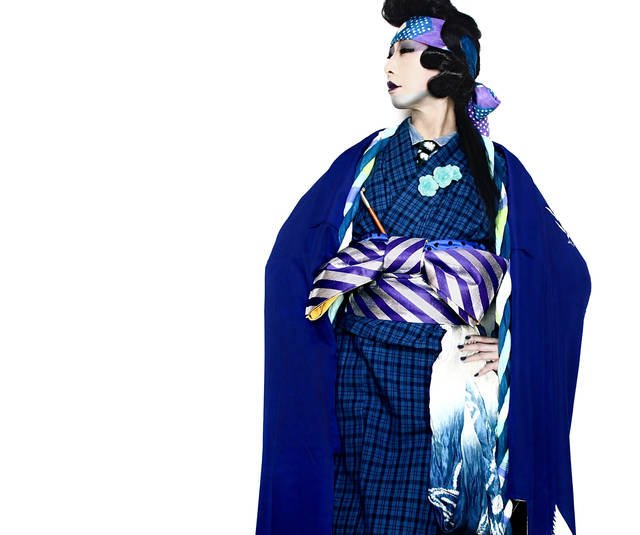
© Image Courtesy of the Joshibi University of Art and Design Art Museum · Victoria and Albert Museum (V&A)
Ba thế kỷ trong một triển lãm
Kimono: Kyoto to Catwalk mở tại V&A ngày 27 tháng 8 năm 2020 và đóng cửa ngày 25 tháng 10 cùng năm. Bảo tàng giới thiệu kimono như một biểu tượng thời trang luôn chuyển động, không phải một bộ đồ truyền thống đứng yên trong tủ kính.
Khung thời gian của triển lãm bắt đầu từ thập niên 1660 và kéo đến hôm nay. Phạm vi cũng rộng: tầm quan trọng của kimono ở Nhật Bản, và ở phần còn lại của thế giới. Hai hướng ấy chạy song song suốt các phòng.
Ở đầu bên Nhật là những chiếc áo từ Kyoto. Một chiếc uchikake, áo khoác ngoài cho thiếu nữ, làm khoảng năm 1800 đến 1830, có lẽ ở Kyoto, hoạ tiết xoáy cam và trắng, hoa cam trên nền trắng. Một chiếc furisode, kimono tay dài cho phụ nữ trẻ, khoảng năm 1905 đến 1920, cũng có lẽ từ Kyoto, với cành cây, sóng biển xanh, hoa và lá đỏ.
Bên cạnh áo là tranh. Một bản khắc gỗ của Utagawa Kunisada I, khoảng 1847 đến 1852, vẽ một người phụ nữ mặc kimono đen xám, tay cầm những xấp vải đỏ và tím. Một bản khắc của Katsukawa Shunsen, khoảng 1804 đến 1818, có con rồng đen trên lưng áo. Một cuộn tranh treo tên Kaidan, cầu thang, của Kobayakawa Kiyoshi năm 1935: người phụ nữ bước xuống bậc, quàng quanh cổ một con mèo lông xù.
Chiếc áo đi xa
Phần thứ hai của câu chuyện là những nơi kimono đến. Một bức chân dung của Gerard Hoet vẽ năm 1678 ở Hà Lan cho thấy Anna Elizabeth van Reede mặc một chiếc áo kiểu kimono đen hoa, tay nhúng vào bát nước. Chiếc áo đã vượt biển, vào phòng khách châu Âu, và được vẽ lại như một thứ quý.
Ở Paris khoảng năm 1913, Paul Poiret làm một chiếc áo choàng lụa vàng óng, thắt nơ lỏng ở hông. Dáng rộng, thẳng, không bó eo. Cartier làm một hộp trang điểm theo hình inrō, chiếc hộp nhỏ nhiều ngăn người Nhật đeo ở thắt lưng: hai hộp vàng khắc hoa, tua đen, mở ra có gương.
Rồi đến điện ảnh. Bộ trang phục Obi-Wan Kenobi mà Alec Guinness mặc trong Star Wars năm 1977, do John Mollo thiết kế, là một chiếc áo dài màu kem nâu, thắt đai nâu sẫm. Nhiều khán giả có lẽ chưa từng nghĩ đó là một chiếc áo có họ hàng với kimono. Triển lãm đặt nó vào cùng câu chuyện.
Những vật ấy không sao chép kimono. Chúng mượn một phần: dáng thẳng, đường cổ chéo, cái đai, cái hộp. Mỗi lần mượn, chiếc áo gốc lại được nhìn thêm từ một phía.
Trở về Nhật, và ra sàn diễn
Triển lãm không dừng ở chuyện phương Tây nhìn Nhật. Nó cho thấy các nhà thiết kế Nhật tự làm mới kimono. Chiếc kimono Beyond của Moriguchi Kunihiko năm 2005 dùng đen, trắng và xám, hoạ tiết ô vuông và hình thoi, gần với đồ hoạ hơn là hoa lá. Bộ kimono của HIROCOLEDGE, do Hiroko Takahashi thiết kế năm 2009, phủ chấm tròn và kẻ sọc đen trắng.
Rồi một chiếc áo khoác quấn của Duro Olowu, làm ở Anh năm 2015, vàng, đen và tím, chấm bi xếp thành sọc, một bông hoa ở eo. Dáng quấn của kimono đi vào một ngôn ngữ màu hoàn toàn khác.
Đặt cạnh nhau, những vật này làm một việc mà một bộ sưu tập theo niên đại khó làm được. Chúng cho thấy kimono không phải một di vật. Nó là một dáng áo còn đang được dùng, được hỏi lại, được mặc ra đường.
Có lẽ vì thế tên triển lãm nói về một quãng đường, từ Kyoto đến sàn diễn. Không phải từ quá khứ đến hiện tại, mà từ một thành phố đến một cái bục nơi người ta bước đi. Chiếc áo luôn gắn với chuyển động. Nó được may để người mặc bước, cúi, ngồi, và để vải rơi theo.
Three centuries in one exhibition
Kimono: Kyoto to Catwalk opened at the V&A on 27 August 2020 and closed on 25 October that year. The museum presented the kimono as a fashion icon in constant motion, not a traditional costume fixed behind glass.
The exhibition's span began in the 1660s and ran to the present, looking at the kimono's importance in Japan and in the rest of the world. Those two directions ran side by side through the rooms.
On the Japanese side were garments from Kyoto. An uchikake, an outer kimono for a young woman, made around 1800 to 1830, probably in Kyoto, with swirling orange and white and orange flowers on white. A furisode, the long sleeved kimono for young women, around 1905 to 1920, also probably from Kyoto, with branches, blue waves, flowers and red leaves.
Beside the garments were pictures. A woodblock print by Utagawa Kunisada I, around 1847 to 1852, showing a woman in black and grey holding lengths of red and purple cloth. A print by Katsukawa Shunsen, around 1804 to 1818, with a black dragon on the back of a robe. A hanging scroll called Kaidan, staircase, by Kobayakawa Kiyoshi, 1935: a woman descending steps with a fluffy cat draped around her neck.
The garment travels
The second part of the story is where the kimono went. A portrait by Gerard Hoet, painted in the Netherlands in 1678, shows Anna Elizabeth van Reede in a black floral kimono style robe, her hand in a bowl of water. The garment had crossed the sea, entered a European interior, and been painted as something precious.
In Paris around 1913 Paul Poiret made a golden silk mantle with a loose bow at the hip. Wide, straight, no waist. Cartier made a vanity case in the shape of an inro, the small tiered box worn at the sash in Japan: two engraved gold boxes with black tassels, opening onto mirrors.
Then cinema. The Obi-Wan Kenobi costume worn by Alec Guinness in Star Wars in 1977, designed by John Mollo, is a long cream and brown robe with a dark brown belt. Many viewers may never have thought of it as a relative of the kimono. The exhibition put it in the same story.
None of these objects copy the kimono. They borrow a part: the straight cut, the crossed collar, the sash, the box. Each borrowing lets the original be seen from one more side.
Back to Japan, and onto the catwalk
The exhibition did not stop at the West looking at Japan. It showed Japanese designers renewing the kimono themselves. The Beyond kimono by Moriguchi Kunihiko, 2005, in black, white and grey, uses squares and diamonds, closer to graphics than to flowers. A kimono ensemble by HIROCOLEDGE, designed by Hiroko Takahashi in 2009, is covered in black and white dots and stripes.
Then a wrap coat by Duro Olowu, made in England in 2015, in yellow, black and purple, polka dots set in stripes, a flower at the waist. The wrap of the kimono enters an entirely different language of colour.
Placed together, these objects do something a strictly chronological display rarely does. They show that the kimono is not a relic. It is a garment still in use, still questioned, still worn in the street.
Perhaps that is why the title names a route, from Kyoto to the catwalk. Not from past to present, but from a city to a runway where people walk. The garment has always been tied to movement, made so the wearer can step, bow, sit, and let the cloth fall.
Fashion as Design