
Essays · Fashion as Design
Iris van Herpen. Sculpting the Senses.
Một chiếc váy mang hình của lực đã đi qua nó.
A dress takes the shape of the forces that passed through it.
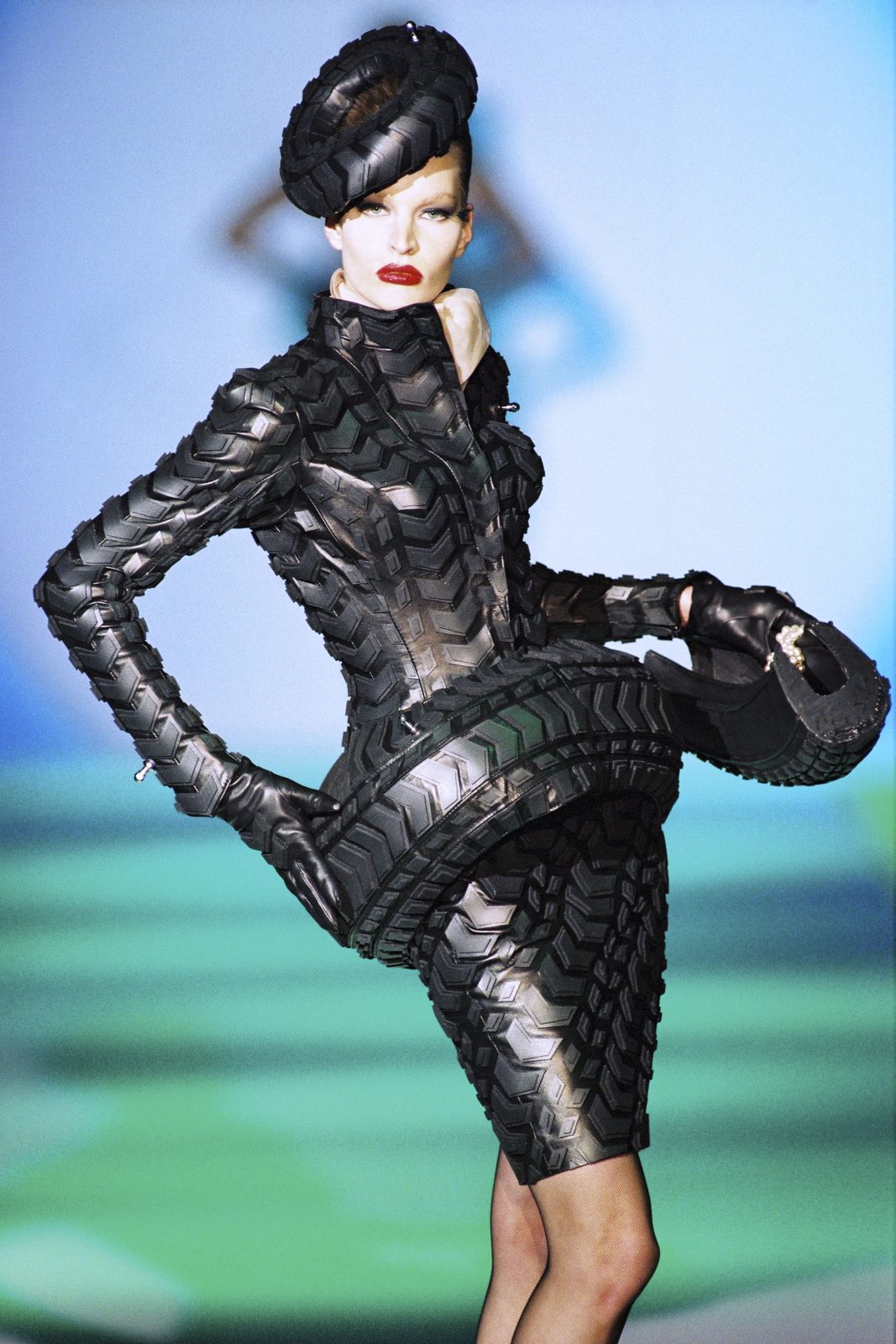
Hơn một trăm bộ váy ở Paris
Từ ngày 29 tháng 11 năm 2023 đến ngày 28 tháng 4 năm 2024, Musée des Arts Décoratifs ở Paris tổ chức Iris van Herpen. Sculpting the Senses, trong các phòng trưng bày Christine và Stephen A. Schwarzman. Hai giám tuyển là Cloé Pitiot và Louise Curtis. Không gian do Studio Nathalie Crinière thiết kế.
Triển lãm tập hợp hơn một trăm bộ haute couture của Iris van Herpen. Nhưng váy không đứng một mình. Chúng được đặt cạnh tác phẩm nghệ thuật đương đại, thiết kế, và cả những vật thuộc về khoa học tự nhiên, như một phòng sưu tập của nhà vạn vật học.
Iris van Herpen sinh năm 1984 ở Wamel, Hà Lan. Năm 2007, bà lập nhà mốt mang tên mình. Năm 2011, bà gia nhập Chambre Syndicale de la Haute Couture ở Paris, tổ chức của giới may cao cấp Pháp.
Chín phần, chín cách nhìn
Triển lãm chia thành chín phần. Sensory sea life, sự sống biển. Water and dreams, nước và giấc mơ. Forces behind the forms, những lực phía sau hình dáng. Skeletal embodiment, cơ thể như bộ xương. Growth systems, những hệ thống đang lớn. Synaesthesia, cảm giác chồng lên nhau. Alchemic atelier, xưởng giả kim. Cabinet of curiosities, tủ kỳ vật. Cosmic bloom, bông hoa vũ trụ.
Đọc danh sách ấy, người ta thấy nguồn của van Herpen nằm ngoài thời trang. Bà nhìn biển, nhìn xương, nhìn cách vật sống phát triển. Rồi bà hỏi: một chiếc váy có thể làm theo những quy luật đó không?
Câu trả lời của bà là những hình dáng khó gọi tên. Váy như sóng đông cứng lại. Áo như bộ xương mỏng bao lấy người. Những lớp vải trong suốt chồng lên nhau như màng của một sinh vật dưới nước.
Vật liệu và cách làm
Danh sách kỹ thuật trong triển lãm dài như một phòng thí nghiệm. In 3D. Cắt laser. Thổi thuỷ tinh. Plexiglas tạo hình bằng nhiệt. Suminagashi, kỹ thuật vẽ mực loang trên mặt nước của Nhật Bản. Dệt bằng lực điện từ. Da trong suốt được đúc bằng tay.
Suminagashi là một ví dụ dễ hiểu. Người làm thả mực lên mặt nước, để mực loang theo dòng và theo hơi thở, rồi đặt tờ giấy lên để giữ lại hoa văn. Không ai vẽ hoa văn ấy. Nước vẽ nó. Người làm chỉ chọn lúc nào thì dừng lại. Nhiều chiếc váy trong triển lãm gợi đúng tinh thần ấy.
Một số bộ đồ được làm cùng những người ngoài giới may. Chẳng hạn một chiếc áo thân bằng polyamide in 3D theo phương pháp thiêu kết laser, làm cùng Daniel Widrig và công ty Materialise. Với van Herpen, máy móc không thay bàn tay. Nó mở ra những hình dáng bàn tay không tự làm được, rồi bàn tay lại hoàn thiện chúng.
Điều đáng nói là những kỹ thuật ấy không được phô ra như công nghệ. Chúng biến mất vào hình dáng. Người xem thấy nước, thấy xương, thấy rễ cây, trước khi nghĩ tới máy in.
Những người đứng cạnh
Van Herpen chọn đứng cạnh nhiều nghệ sĩ và nhà thiết kế khác. Trong triển lãm có tác phẩm của Philip Beesley, Collectif Mé, Wim Delvoye, Kate MccGwire, Kohei Nawa, Casey Curran, Rogan Brown, Neri Oxman, Ren Ri, Ferruccio Laviani, Tomáš Libertíny, David Spriggs, Kim Keever, cùng biên đạo múa Damien Jalet và kiến trúc sư Jacques Rougerie.
Mỗi người mang một góc nhìn riêng về vật chất và chuyển động. Đặt cạnh nhau, chúng cho thấy van Herpen không đứng riêng ở góc của thời trang. Bà thuộc về một cuộc trò chuyện rộng hơn về cách con người học hình dáng từ tự nhiên.
Mối quan hệ giữa thời trang và thế giới tự nhiên cũng là chủ đề của một triển lãm khác tại London: Fashioned from Nature.
Over a hundred dresses in Paris
From 29 November 2023 to 28 April 2024, the Musée des Arts Décoratifs in Paris showed Iris van Herpen. Sculpting the Senses in its Christine and Stephen A. Schwarzman galleries. The curators were Cloé Pitiot and Louise Curtis. The space was designed by Studio Nathalie Crinière.
It gathered over a hundred haute couture pieces by Iris van Herpen. But the dresses did not stand alone. They were placed beside contemporary art, design, and objects from natural science, like a naturalist's collection room.
Iris van Herpen was born in 1984 in Wamel, the Netherlands. She founded her house in 2007 and joined the Chambre Syndicale de la Haute Couture in Paris in 2011.
Nine sections, nine ways of looking
The exhibition had nine sections. Sensory sea life. Water and dreams. Forces behind the forms. Skeletal embodiment. Growth systems. Synaesthesia. Alchemic atelier. Cabinet of curiosities. Cosmic bloom.
Read the list and you see that van Herpen's sources lie outside fashion. She looks at the sea, at bone, at how living things develop. Then she asks: can a dress follow those rules?
Her answers are shapes that are hard to name. Dresses like frozen waves. Bodices like a thin skeleton around the body. Transparent layers stacked like the membranes of something that lives under water.
Materials and making
The list of techniques reads like a laboratory. 3D printing. Laser cutting. Glass blowing. Thermoformed Plexiglas. Suminagashi, the Japanese art of marbling ink on water. Electromagnetic weaving. Transparent leather cast by hand.
Suminagashi is an easy example. Ink is floated on water, left to drift with the current and the breath, then paper is laid on it to hold the pattern. No one draws the pattern. The water draws it. The maker only chooses when to stop. Many of the dresses here carry that same spirit.
Some pieces were made with people from outside dressmaking, such as a bodice in 3D-printed polyamide made by laser sintering, with Daniel Widrig and Materialise. For van Herpen, the machine does not replace the hand. It opens shapes the hand cannot make alone, and then the hand finishes them.
What matters is that the techniques are not shown off as technology. They disappear into the shape. You see water, bone, roots, before you think of a printer.
Those standing alongside
Van Herpen chose to stand beside many other artists and designers. The exhibition included work by Philip Beesley, Collectif Mé, Wim Delvoye, Kate MccGwire, Kohei Nawa, Casey Curran, Rogan Brown, Neri Oxman, Ren Ri, Ferruccio Laviani, Tomáš Libertíny, David Spriggs, Kim Keever, with the choreographer Damien Jalet and the architect Jacques Rougerie.
Each brings their own view of matter and movement. Together they show that van Herpen does not stand alone in a corner of fashion. She belongs to a wider conversation about how people learn shape from nature.
The relationship between fashion and the natural world was also the subject of an exhibition in London: Fashioned from Nature.
Fashion as Design