
Essays · Olfactory Art
La esencia de un cuadro. Una exposición olfativa.
Một bức tranh vẽ mùi, giờ được ngửi lại.
A painting of smell, smelled again.
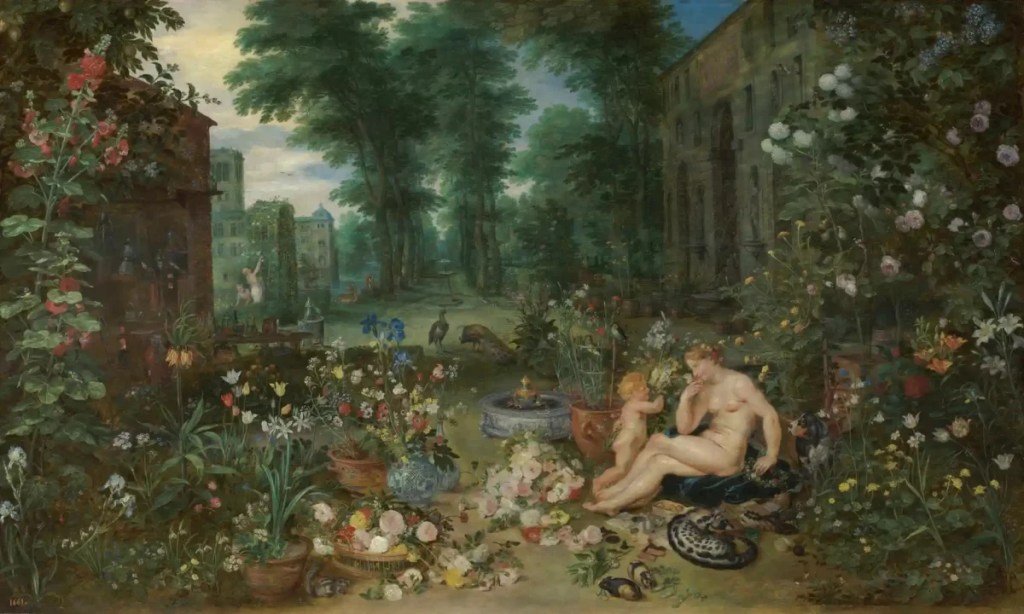
'The Sense of Smell', Jan Brueghel the Elder and Peter Paul Rubens. Courtesy Prado Museum · ARTnews
Một bức tranh về cái mũi
Bức Khứu giác được vẽ khoảng năm 1617 đến 1618. Nó thuộc loạt Ngũ quan, năm bức tranh về năm giác quan mà Jan Brueghel the Elder vẽ cùng người bạn của mình, Peter Paul Rubens. Brueghel vẽ khung cảnh và đồ vật. Rubens vẽ các nhân vật ngụ ngôn.
Trong tranh, một người phụ nữ ngồi giữa khu vườn, bên cạnh là một thần Cupid nhỏ cầm hoa. Xung quanh là hoa, rất nhiều hoa, mọc trong luống, cắm trong bình, rơi trên đất. Phía sau có dụng cụ chưng cất, bình lọ, găng tay. Đó là thế giới mùi của một triều đình châu Âu đầu thế kỷ 17.
Loạt Ngũ quan không chỉ là tranh ngụ ngôn. Nó còn là bức chân dung của một thứ khẩu vị. Những gì triều đình thời ấy thích ngửi, thích nghe, thích nếm đều được xếp đặt trên mặt tranh, như một tủ sưu tập mở cửa.
Bảo tàng Prado ở Madrid giữ cả loạt tranh này. Năm 2022, bảo tàng chọn riêng bức Khứu giác làm đề tài cho một triển lãm nhỏ và khác thường: La esencia de un cuadro, tức Tinh chất của một bức tranh.
Mười mùi, một nhà điều hương
Triển lãm do giám tuyển Alejandro Vergara của Prado thực hiện. Người tạo mùi là nhà điều hương Gregorio Sola, làm việc cho tập đoàn Puig. Nhiệm vụ của ông là đọc bức tranh bằng mũi, rồi chọn ra những mùi mà nó gợi đến.
Kết quả là mười mùi. Có mùi của những bông hoa trong tranh: hoa cam, nhài, hồng, thuỷ tiên, huệ, và một loài hoa người Tây Ban Nha gọi là lirio. Có mùi cây sung. Có mùi găng tay tẩm hương, một món đồ thời thượng ở các triều đình thời ấy. Có mùi cầy hương, chất xạ lấy từ con vật, vốn là một nguyên liệu quen thuộc của nghề làm nước hoa xưa. Và có một mùi mang tên chính bức tranh: Alegoría, mùi ngụ ngôn.
Người xem không cầm lọ lên ngửi. Mùi được đưa ra qua bốn thiết bị khuếch tán đặt cạnh bức tranh, dùng công nghệ AirParfum do Puig phát triển. Theo các bài báo về triển lãm, công nghệ này cho phép ngửi nhiều mùi liên tiếp mà khứu giác không bị quá tải.
Mười mùi ấy không phải là mùi thật của năm 1617. Không ai biết chắc hoa hồng thời đó ngửi thế nào, hay găng tay được tẩm bằng gì. Đó là mười cách đọc bức tranh, viết bằng một thứ ngôn ngữ khác.
Khi hội hoạ cần thêm một giác quan
Bảo tàng tranh là nơi của mắt. Người ta đứng cách tường một khoảng, nhìn, rồi đi tiếp. Các giác quan khác gần như bị gác lại. Không chạm, không nếm, và thường là không ngửi gì ngoài mùi sàn gỗ, mùi đám đông.
Triển lãm của Prado thử đảo điều đó trong một phòng. Bức tranh vẫn ở đó, không đổi. Nhưng cạnh nó có một lớp thông tin khác, không nhìn được. Người xem ngửi hoa cam, rồi quay lại tìm bông hoa cam trên tranh. Mắt đi theo mũi.
Có một điều thú vị. Brueghel vẽ những bông hoa từ nhiều mùa khác nhau cùng nở trong một khu vườn, điều không thể có ngoài đời. Mười mùi đặt cạnh nhau cũng vậy: chúng chưa từng cùng nhau trong một không gian thật. Cả bức tranh lẫn các mùi đều là những bộ sưu tập dựng lên, không phải bản sao của thực tế.
Ý tưởng mùi hương đi cùng tác phẩm nghệ thuật không mới. Nhưng với một bảo tàng lớn như Prado, đặt mùi cạnh một kiệt tác thế kỷ 17 là một bước đáng kể. Nó thừa nhận rằng một bức tranh về khứu giác sẽ luôn thiếu đi thứ mà nó muốn nói đến.
Loạt Ngũ quan cũng nhắc rằng giác quan từng là một đề tài lớn của hội hoạ châu Âu. Nhiều hoạ sĩ khác vẽ khứu giác bằng một người và một bình hoa, như cậu bé với chậu hoa của Ribera. Brueghel thì vẽ cả một khu vườn. Prado, bốn thế kỷ sau, cho khu vườn ấy một hơi thở.
A painting about the nose
The Sense of Smell was painted around 1617 to 1618. It belongs to the Five Senses, a series of five paintings that Jan Brueghel the Elder made with his friend Peter Paul Rubens. Brueghel painted the setting and the objects. Rubens painted the allegorical figures.
A woman sits in a garden beside a small Cupid holding flowers. Around her are flowers, a great many of them, growing in beds, standing in vases, fallen on the ground. Behind are distilling apparatus, bottles, gloves. It is the smell world of a European court in the early seventeenth century.
The series is more than allegory. It is a portrait of a taste. What that court liked to smell, hear and taste is laid out across the canvas like an open cabinet of collections.
The Museo del Prado in Madrid holds the whole series. In 2022 it chose The Sense of Smell as the subject of a small, unusual exhibition: La esencia de un cuadro, The Essence of a Painting.
Ten smells, one perfumer
The exhibition was curated by the Prado's Alejandro Vergara. The smells were made by the perfumer Gregorio Sola, who works for Puig. His task was to read the painting with his nose and choose the smells it suggests.
The result was ten smells. Some come from the flowers in the picture: orange blossom, jasmine, rose, narcissus, tuberose, and a flower the Spanish list calls lirio. One is the fig tree. One is perfumed gloves, a fashionable item at the courts of the time. One is civet, the animal musk long used in older perfumery. And one carries the name of the painting's mode: Alegoría.
Visitors did not pick up bottles. The smells were released through four diffusers beside the painting, using AirParfum, a system developed by Puig that, according to press reports, lets people smell many scents in turn without tiring the nose.
These are not the real smells of 1617. No one knows for certain how a rose smelled then, or what the gloves were soaked in. They are ten readings of the painting, written in another language.
When painting needs another sense
A picture gallery belongs to the eye. People stand back from the wall, look, and move on. The other senses are set aside. No touching, no tasting, and usually no smell beyond wooden floors and crowds.
The Prado tried to reverse that in one room. The painting stayed as it was. But beside it was another layer of information, one that could not be seen. A visitor smells orange blossom, then turns back to find the orange flower on the canvas. The eye follows the nose.
There is a nice parallel. Brueghel painted flowers from different seasons blooming together in one garden, which could never happen in life. The ten smells are the same: they never shared a real space. Both the painting and the scents are assembled collections, not copies of reality.
Pairing smell with art is not a new idea. But for a museum like the Prado, placing scent beside a seventeenth century masterpiece was a real step. It admitted that a painting about smell will always lack the very thing it describes.
The Five Senses also reminds us that the senses were once a major subject of European painting. Other painters showed smell with one figure and a pot of flowers, like Ribera's boy with his flowers. Brueghel painted a whole garden. Four centuries later, the Prado let that garden breathe.
Olfactory Art