
Essays · Olfactory Art
Ancient Splendor: Roman Art in the Time of Trajan.
Cẩm thạch còn lại. Mùi thì phải dựng lại.
The marble remains. The smell must be rebuilt.
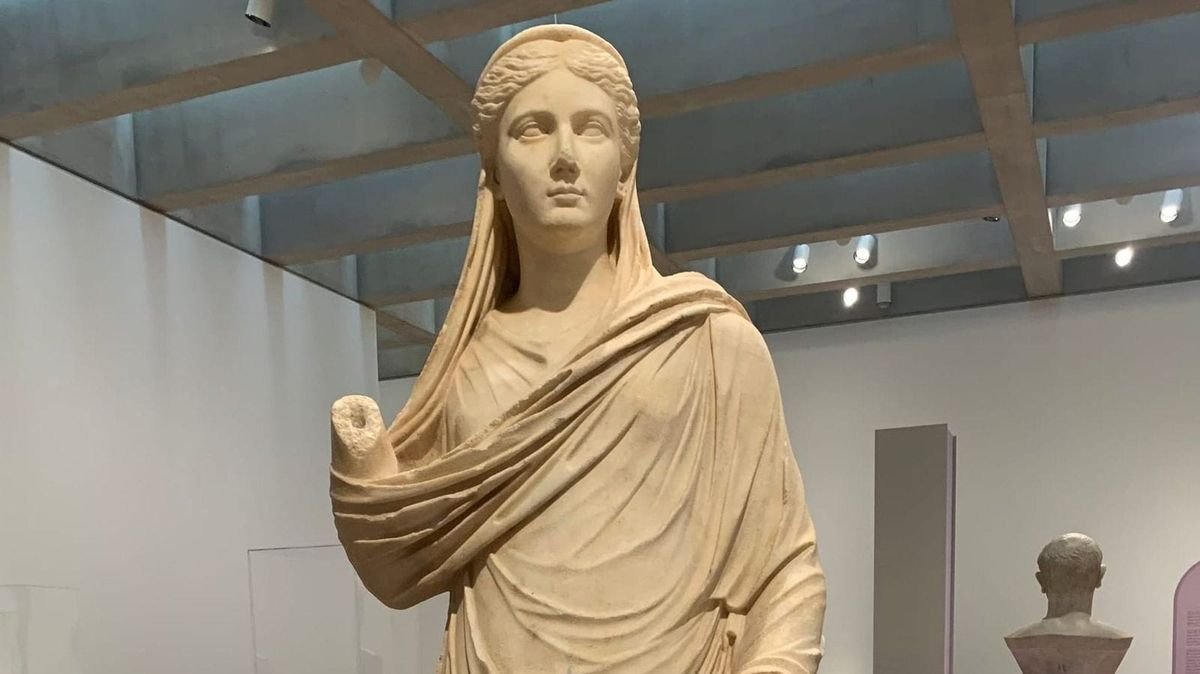
Image courtesy the Saint Louis Art Museum · Hyperallergic
Một hoàng đế và những người quanh ông
Trajan trị vì Rome từ năm 98 đến năm 117. Ông là người thứ hai trong nhóm mà sử sách về sau gọi là Năm Hoàng đế Tốt, một giai đoạn đế chế mở rộng, xây dựng nhiều và khá yên ổn so với những gì đến trước và sau đó.
Ancient Splendor: Roman Art in the Time of Trajan là triển lãm tại Saint Louis Art Museum, Missouri, kéo dài đến ngày 16 tháng 8 năm 2026. Triển lãm do Lucrezia Ungaro, giám tuyển khảo cổ của thành phố Rome, tổ chức, với Hannah Segrave là giám tuyển phụ trách tại bảo tàng.
Hiện vật đến từ nhiều nơi ở Ý: Vatican, khu khảo cổ Ostia Antica, Bảo tàng Quốc gia La Mã, Bảo tàng Khảo cổ Quốc gia Naples. Có một tượng cẩm thạch của chính Trajan, tạc vào khoảng cuối thế kỷ 1 đầu thế kỷ 2. Có một tượng bán thân cỡ lớn của Plotina, vợ ông, niên đại khoảng năm 112 đến 114. Có tượng Sabina trong vai nữ thần Ceres, một tượng Apollo khoả thân, trang sức bằng vàng, thuỷ tinh và ngọc lục bảo, và một bức bích hoạ vẽ cảnh Paris phân xử.
Nhìn danh sách ấy, ta có thể nghĩ đây là một triển lãm về quyền lực. Nhưng cách triển lãm nhấn vào lại khác: không phải chiến tranh và chinh phục, mà là đời sống giác quan của thời Trajan. Những gì người La Mã đeo, ăn, xức lên người.
Những hộp mùi
Giữa các phòng tượng có những trạm mùi. Người xem mở một chiếc hộp và cúi xuống ngửi. Các mùi này được dựng lại bởi Alexy Karenowska, giám đốc công nghệ của Institute for Digital Archaeology, một tổ chức chuyên dùng công nghệ để tái hiện di sản.
Một hộp chứa dầu thơm làm từ hoa hồng và mật ong. Dầu thơm là một phần quen thuộc của đời sống La Mã: người ta xức lên da, lên tóc, sau khi tắm. Mật ong và hoa hồng là những nguyên liệu mà thế giới Địa Trung Hải thời ấy có trong tay.
Một hộp khác chứa garum. Đó là nước cá lên men, gần với nước mắm mà người Việt biết rõ, và là gia vị phổ biến bậc nhất của bếp La Mã. Đặt garum cạnh dầu hoa hồng là một lựa chọn thẳng thắn. Rome không chỉ có mùi của đền thờ và nhà tắm. Nó có mùi của cá, của muối, của những chum ủ ngoài nắng.
Không có mùi nào trong số đó được giữ lại nguyên vẹn. Mọi mùi cổ được dựng lại đều phải dựa vào những gì còn sót: văn bản, đồ đựng, hiểu biết về nguyên liệu. Mỗi hộp mùi vì vậy là một giả thuyết. Một cách đoán có căn cứ về một điều đã mất. Ở Pompeii, Sissel Tolaas cũng đang đi tìm mùi của một thành phố La Mã, theo một đường khác: từ đất và vật liệu còn lại tại chỗ.
Cẩm thạch trắng là một sự hiểu lầm
Ta quen nghĩ về nghệ thuật La Mã như một thế giới trắng. Tượng trắng, cột trắng, sàn trắng. Nhưng hình ảnh đó phần lớn là kết quả của thời gian: màu sơn bong đi, mùi bay mất, chỉ đá còn lại. Rome lúc đang sống thì đầy màu, đầy mùi, đầy tiếng ồn.
Những hộp mùi ở St. Louis không sửa được toàn bộ sự hiểu lầm ấy. Chúng chỉ mở một khe nhỏ. Người xem đứng trước bức tượng bán thân của Plotina, rồi ngửi một thứ dầu có thể đã được xức lên da một người phụ nữ cùng thời. Khoảng cách hai nghìn năm không biến mất, nhưng nó có thêm một chiều.
Điều đáng nhớ ở triển lãm là nó chấp nhận rằng mũi cũng là một công cụ khảo cổ. Mắt cho ta hình dạng. Mũi cho ta đời sống bên trong hình dạng ấy: một buổi tắm, một bữa ăn, một con đường chợ.
Tượng Trajan sẽ còn đứng đó rất lâu sau khi triển lãm đóng cửa. Những hộp mùi thì sẽ được cất đi. Có lẽ điều đó cũng đúng với chính Rome: thứ bền là đá, thứ sống là mùi.
An emperor and those around him
Trajan ruled Rome from 98 to 117. He was the second of those later called the Five Good Emperors, a period in which the empire expanded, built a great deal and was fairly stable compared with what came before and after.
Ancient Splendor: Roman Art in the Time of Trajan is on view at the Saint Louis Art Museum, Missouri, until 16 August 2026. It was organised by Lucrezia Ungaro, archaeological curator of the city of Rome, with Hannah Segrave as the curator in charge at the museum.
The objects come from across Italy: the Vatican, the archaeological site of Ostia Antica, the National Roman Museum, the National Archaeological Museum of Naples. There is a marble statue of Trajan himself, carved around the turn of the first and second centuries. There is a colossal bust of Plotina, his wife, dated to around 112 to 114. There is Sabina as the goddess Ceres, a nude Apollo, jewellery in gold, glass and emerald, and a fresco of the judgment of Paris.
From that list one might expect a show about power. But the emphasis lies elsewhere: not on war and conquest, but on the sensory life of Trajan's time. What Romans wore, ate, and rubbed onto their skin.
The scent boxes
Between the rooms of statues there are scent stations. Visitors open a box and lean in. The smells were reconstructed by Alexy Karenowska, director of technology at the Institute for Digital Archaeology, an organisation that uses technology to recreate heritage.
One box holds a perfumed oil made with rose and honey. Scented oil was a familiar part of Roman life, applied to skin and hair after bathing. Honey and rose were materials the Mediterranean world of the time had to hand.
Another box holds garum. This is fermented fish sauce, close to the nuoc mam Vietnamese people know well, and one of the most common seasonings in the Roman kitchen. Placing garum beside rose oil is a frank choice. Rome did not smell only of temples and baths. It smelled of fish, of salt, of jars fermenting in the sun.
None of these smells survived intact. Every reconstructed ancient smell has to rely on what remains: texts, vessels, knowledge of the materials. Each box is therefore a hypothesis. An informed guess about something lost. At Pompeii, Sissel Tolaas is also searching for the smell of a Roman city, by another route: from the soil and materials still on site.
White marble is a misunderstanding
We tend to think of Roman art as a white world. White statues, white columns, white floors. But that picture is mostly the work of time: paint flaked away, smells faded, only stone remained. Living Rome was full of colour, smell and noise.
The scent boxes in St. Louis do not correct the whole misunderstanding. They open a small gap. A visitor stands before the bust of Plotina, then smells an oil that might have been rubbed onto the skin of a woman of her time. The two thousand years do not vanish, but they gain another dimension.
What stays with you is the show's acceptance that the nose is also an archaeological tool. The eye gives us form. The nose gives us the life inside that form: a bath, a meal, a market street.
The statue of Trajan will stand long after the exhibition closes. The scent boxes will be packed away. Perhaps that is true of Rome itself: stone is what lasts, smell is what lived.
Olfactory Art