
Essays · Olfactory Art
Olivia Giacobetti. Một cái cây và cả bóng của nó.
Không vẽ cái cây. Vẽ không khí quanh nó.
Not the tree. The air around it.
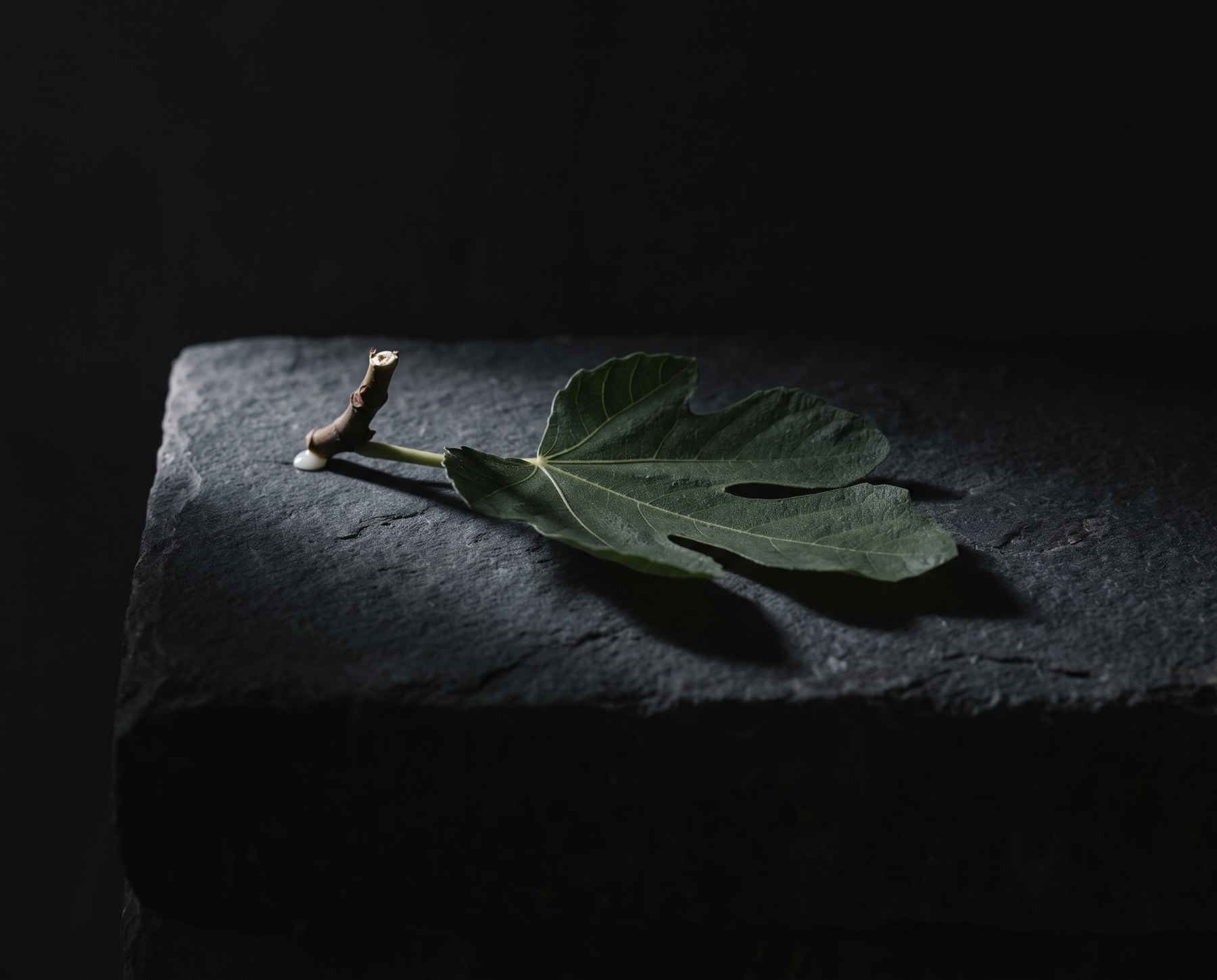
Premier Figuier: cây sung như một nơi
Năm 1994, L'Artisan Parfumeur ra mắt Premier Figuier, do Olivia Giacobetti làm. Cái tên nói thẳng chủ đề: cây sung, cây vả. Không phải một bông hoa, không phải một loại gỗ quý. Một cái cây quen thuộc ở những khu vườn quanh Địa Trung Hải, mọc sát tường, tán rộng, lá to như bàn tay.
Trước đó, nước hoa hiếm khi chọn một cái cây ăn trái làm chủ đề. Hoa hồng, hoa nhài, đàn hương, rêu sồi là những cái tên quen. Cây sung thì không. Nó không có hoa để ngắm, vì hoa của nó nằm kín bên trong trái. Nó chỉ có lá, nhựa, gỗ và trái chín.
Chính vì vậy, Premier Figuier không thể là bản sao của một bông hoa. Nó buộc phải là bản ghi của một nơi. Người ngửi không đứng trước một vật đặt trên bàn. Họ đứng dưới một tán lá, vào một buổi trưa, với mặt trời ở đâu đó phía trên.
Mùi cây sung sau đó xuất hiện ở nhiều nhà khác. Diptyque có Philosykos, cũng do Giacobetti làm, ra đời vài năm sau. Cây sung dần thành một chủ đề riêng trong nước hoa. Nhưng chai đầu tiên vẫn giữ một điều: nó bắt đầu từ việc nhìn kỹ một cái cây, không từ một công thức có sẵn.
Lá, nhựa, gỗ: một vật nhiều mặt
Một cây sung có nhiều mùi cùng lúc. Lá sung khi vò ra có mùi xanh, hơi đắng, hơi ngọt như cỏ khô. Cuống lá bẻ ra rỉ một thứ nhựa trắng như sữa, dính tay, có mùi riêng. Vỏ cây và cành có mùi gỗ nhạt. Trái chín có mùi ngọt, mềm, gần với mật.
Premier Figuier không chọn một trong những mặt ấy. Nó giữ nhiều mặt cùng lúc, và để chúng nằm cạnh nhau. Người ngửi có thể nhận ra lá trước, rồi nhựa, rồi gỗ. Hoặc ngược lại. Thứ tự không cố định, như khi đi vòng quanh một cái cây và mỗi bước lại thấy một phía khác.
Đó là một cách nhìn vật rất gần với nhiếp ảnh: không có góc nào là góc duy nhất. Một cái cây không phải là một hình. Nó là tổng của mọi lần nhìn.
Cách làm ấy cũng khác với lối quen của nước hoa đương thời. Không có một khối hoa lớn ở giữa để mọi thứ xoay quanh. Chỉ có những mảnh của một cái cây, đặt thưa ra, đủ để người ngửi tự ráp lại.
Những mùi thưa: khoảng trống như vật liệu
Giacobetti được biết đến với những mùi trong và nhẹ. Người ta hay tả chúng là thoáng, như có không khí ở bên trong. Năm 2000, bà làm En Passant cho Éditions de Parfums Frédéric Malle, một mùi hoa tử đinh hương đi cùng mùi lúa mì và mùi nước. Năm 2017, En Passant là một trong mười mùi đương đại được chọn cho triển lãm Perfume ở Somerset House, London.
Ở những mùi ấy, khoảng trống là một vật liệu. Nó không được lấp đầy. Nó được giữ lại, như khoảng lặng trong một bản nhạc, như phần giấy trắng trên một bản vẽ bằng mực.
Một mùi dày thì nói nhiều. Một mùi thưa thì để người khác nói. Giacobetti chọn cách thứ hai, và vì vậy mùi của bà thường gắn với một nơi, một mùa, một khoảnh khắc đi ngang qua, hơn là với một bông hoa cụ thể.
Tên chai En Passant, trong tiếng Pháp, nghĩa là đi ngang qua. Nó nói đúng cách những mùi này hiện ra: không đứng yên trước mặt người ngửi, mà lướt qua, để lại một vệt.
Không khí quanh vật
Nhìn lại, Premier Figuier và những mùi sau của Giacobetti có chung một ý: vật không bao giờ đứng một mình. Cái cây đứng trong không khí, trong ánh nắng, cạnh một bức tường. Mùi của nó là mùi của tất cả những thứ ấy cộng lại.
Đó là lý do một mùi cây sung có thể gợi cả một mùa hè. Nó không chỉ ghi lại lá và nhựa. Nó ghi lại nhiệt độ của buổi trưa, độ ẩm của đất, bóng râm dưới tán cây.
Trong lịch sử nước hoa, có những chai đổi cách dùng phân tử, có những chai đổi cách đặt tên. Premier Figuier đổi cách nhìn. Nó cho thấy một mùi có thể là chân dung của một nơi, không chỉ là chân dung của một vật.
Giacobetti vẽ không khí quanh vật. Và không khí ấy, hơn ba mươi năm sau, vẫn còn ngửi được.
Premier Figuier: the fig tree as a place
In 1994 L'Artisan Parfumeur released Premier Figuier, made by Olivia Giacobetti. The name states the subject plainly: the fig tree. Not a flower, not a precious wood. A tree familiar from gardens around the Mediterranean, growing against walls, broad in its crown, with leaves the size of a hand.
Until then, perfume had rarely taken a fruit tree as its subject. Rose, jasmine, sandalwood and oakmoss were the familiar names. The fig was not. It has no flowers to look at, because its flowers are hidden inside the fruit. It has only leaves, sap, wood and ripe fruit.
So Premier Figuier could not be a copy of a flower. It had to be a record of a place. The person smelling it does not stand before an object on a table. They stand under a canopy, at midday, with the sun somewhere overhead.
Fig later appeared at many other houses. Diptyque has Philosykos, also by Giacobetti, released a few years later. Fig became a theme of its own. But the first bottle keeps one thing: it began with looking closely at a tree, not with a ready formula.
Leaf, sap, wood: an object with many sides
A fig tree has several smells at once. Crushed leaves smell green, a little bitter, a little sweet like hay. A snapped stem weeps a milky white sap, sticky, with a smell of its own. Bark and branches smell faintly of wood. Ripe fruit smells soft and sweet, close to honey.
Premier Figuier does not pick one of these sides. It holds several at once and lets them sit next to each other. You might notice the leaf first, then the sap, then the wood. Or the other way round. The order is not fixed, like walking around a tree and seeing a different side with each step.
It is a way of looking close to photography: no angle is the only angle. A tree is not one image. It is the sum of every look.
It also departs from the habits of its day. There is no large floral mass in the middle for everything to circle. Only pieces of a tree, spaced out, enough for the person smelling to put them together.
Sparse scents: the gap as material
Giacobetti is known for clear, light scents, often described as airy, as if they had air inside them. In 2000 she made En Passant for Éditions de Parfums Frédéric Malle, a lilac that travels with the smell of wheat and water. In 2017 En Passant was one of ten contemporary scents chosen for the Perfume exhibition at Somerset House in London.
In these scents the gap is a material. It is not filled. It is kept, like a rest in music, like the white paper left around an ink drawing.
A dense scent says a lot. A sparse one lets others speak. Giacobetti chose the second way, and so her work tends to attach to a place, a season, a passing moment, more than to one particular flower.
En Passant means in passing. The name describes how these scents appear: they do not stand still in front of you. They pass by and leave a trail.
The air around the object
Looking back, Premier Figuier and Giacobetti's later work share one idea: an object never stands alone. A tree stands in air, in sunlight, beside a wall. Its smell is all of those things together.
That is why a fig scent can bring back a whole summer. It records not only leaf and sap, but the heat of midday, the damp of the soil, the shade under the branches.
In the history of perfume, some bottles changed how molecules were used, some changed how scents were named. Premier Figuier changed how to look. It showed that a scent can be the portrait of a place, not only of an object.
Giacobetti paints the air around things. More than thirty years on, that air can still be smelled.

Olfactory Art