
Essays · Olfactory Art
Peter de Cupere. Air Polluter.
Mỗi nút bấm là một phần của không khí chung.
Each button is a share of the common air.
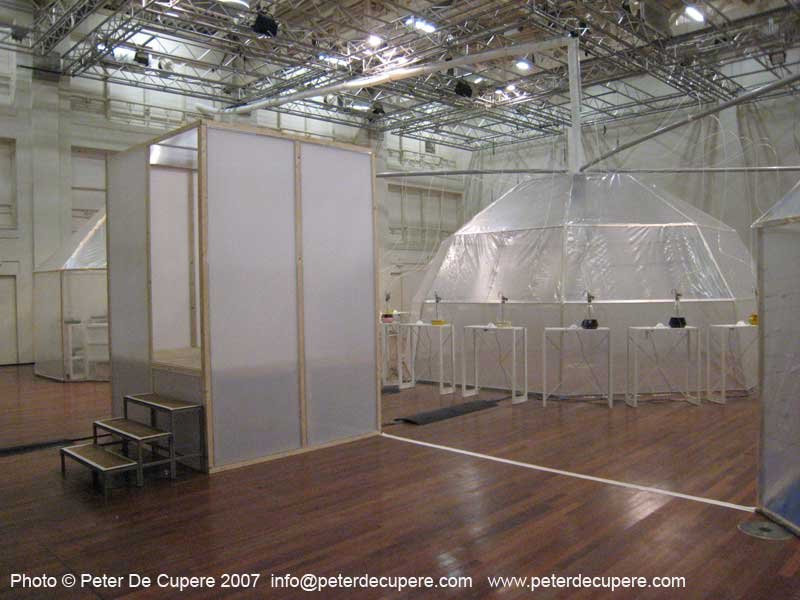
© Peter de Cupere · Peter de Cupere (official artist site)
Một bảng điều khiển ở cửa vào
Air Polluter là một sắp đặt mùi tương tác của Peter de Cupere, nghệ sĩ người Bỉ. Tác phẩm là trọng tâm của triển lãm cá nhân cùng tên tại De Brakke Grond ở Amsterdam, Hà Lan. Triển lãm khai mạc chiều ngày 8 tháng 6 năm 2007 và mở cửa từ 9 tháng 6 đến 15 tháng 7.
Ở đầu sắp đặt có một bảng điều khiển. Từ đó, người xem có thể kích hoạt mùi dễ chịu hoặc mùi khó chịu. Nói cách khác, mỗi người tự quyết định mình góp bao nhiêu vào việc làm bẩn không khí trong phòng.
Mùi được chia vào hai khu, nghệ sĩ gọi là hai Smell Field, hay hai trường mùi. Một trường sạch, một trường bẩn. Cách chia không dựa trên hoá học. Nó dựa trên cách xã hội thường đánh giá từng loại mùi.
Khi bước vào triển lãm, mỗi người nhận một chiếc hộp rỗng. Ở điểm cuối của sắp đặt, họ đổ đầy hộp bằng thứ không khí đã được tạo ra trong phòng.
Hai trường mùi, sạch và bẩn
Trường mùi sạch chứa những mùi người ta thường thấy dễ chịu. Có mùi của tự nhiên: cỏ, gỗ, hoa, đất. Có mùi thực phẩm: trái cây, thịt và cá vừa nấu, cả chất tạo mùi và hương vị nhân tạo. Có mùi nước hoa, trong đó có mùi của sản phẩm giặt giũ.
Có một chi tiết đáng chú ý trong nhóm sạch: mùi cơ thể người, như mồ hôi mới có pheromone. Nghệ sĩ giải thích lựa chọn ấy. Ở nơi công cộng, mồ hôi thường bị coi là tiêu cực. Nhưng trong đời sống riêng, khi đó là mồ hôi của người thân hay người yêu, nó thường được cảm nhận là dễ chịu, thậm chí gợi cảm.
Trường mùi bẩn chứa khí thải xe, mùi lốp cao su, nhựa đường, dầu bẩn, nhiên liệu, mùi lên men và mùi phân.
Đặt hai danh sách cạnh nhau, ranh giới giữa chúng không hẳn rõ ràng. Mồ hôi nằm bên sạch. Lên men nằm bên bẩn, dù nhiều món ăn ngon nhất là sản phẩm của lên men. Hương vị nhân tạo nằm bên sạch, dù nó cũng là sản phẩm của nhà máy. Việc chia phe cho thấy ta đánh giá mùi theo thói quen và bối cảnh nhiều hơn theo bản thân mùi.
Chiếc hộp không ai tự đổ đầy
Phần tinh tế nhất của Air Polluter nằm ở cuối. Người xem đã có thể bấm nút, thả mùi này, tắt mùi kia. Nhưng những người khác trong phòng cũng đang làm y như vậy. Họ bật mùi mình muốn, tắt mùi mình không thích. Vì thế, không khí mà mỗi người đổ vào hộp chỉ phần nào là do họ quyết định.
Đây là một mô hình thu nhỏ của ô nhiễm không khí ngoài đời. Mỗi người có một chút quyền chọn: đi xe gì, đốt gì, dùng gì. Nhưng bầu không khí ta thở là tổng của mọi lựa chọn trong thành phố. Không ai hoàn toàn có lỗi. Cũng không ai hoàn toàn vô can.
Tác phẩm không dạy bảo. Nó không nói nút nào là nút đúng. Nó chỉ trao cho người xem quyền điều khiển, rồi cho họ thấy giới hạn của quyền ấy. Kết quả được mang về trong một chiếc hộp, như một mẫu thử của buổi chiều hôm đó, trong căn phòng đó, với những người đó.
Air Polluter ra đời năm 2007. Những năm sau, không khí bẩn còn quay lại nhiều lần trong thực hành của De Cupere. Nhưng ở tác phẩm này, câu hỏi được đặt gọn nhất: khi ai cũng có một nút bấm, không khí chung thuộc về ai?
A control panel at the entrance
Air Polluter is an interactive smell installation by the Belgian artist Peter de Cupere. It was the centrepiece of his solo exhibition of the same name at De Brakke Grond in Amsterdam. The show opened on the evening of 8 June 2007 and ran from 9 June to 15 July.
At the start of the installation stands a control panel. From it, visitors can release pleasant or unpleasant smells. In other words, each person decides how much they contribute to polluting the air in the room.
The smells are split between two zones, which the artist calls Smell Fields. One clean, one dirty. The split is not chemical. It rests on how society usually judges each kind of smell.
On entering, each visitor receives an empty container. At the end of the installation, they fill it with the air that has been made in the room.
Two fields, clean and dirty
The Clean Smell Field holds smells people tend to find pleasant. Natural ones: grass, wood, flowers, earth. Food: fruit, freshly cooked meat and fish, artificial flavourings and aromas. Perfumes, including the scents of laundry products.
One detail stands out among the clean: human body smell, such as fresh sweat with pheromones. The artist explains the choice. In public, sweat usually has a negative connotation. In private, when it belongs to a relative or a lover, it is often felt as pleasant, even arousing.
The Dirty Smell Field holds exhaust, tyre rubber, asphalt, polluted oil, fuels, fermentation and excrement.
Side by side, the two lists do not divide cleanly. Sweat is on the clean side. Fermentation is on the dirty side, though many of the best foods are fermented. Artificial flavourings count as clean, though they come from factories too. The split shows that we judge smells by habit and context more than by the smells themselves.
A container no one fills alone
The subtlest part of Air Polluter comes at the end. Visitors could press buttons, release one smell, shut off another. But others in the room are doing the same, switching on what they like, switching off what they dislike. So the air each person pours into their container is only partly their own choice.
It is a small model of air pollution outside. Each of us has some choice: what we drive, what we burn, what we use. But the air we breathe is the sum of every choice in the city. No one is wholly to blame. No one is wholly innocent.
The work does not lecture. It does not say which button is right. It hands visitors control, then shows them its limits. The result goes home in a container, a sample of that afternoon, in that room, with those people.
Air Polluter dates from 2007. Dirty air would return often in De Cupere's practice. But here the question is at its plainest: when everyone has a button, whose air is it?
Olfactory Art