
Essays · Olfactory Art
Peter de Cupere. Smoke Flowers.
Ta cúi xuống tìm mùi hoa. Hoa trả lại mùi của chính ta.
We lean in for the smell of a flower. It hands us back our own.
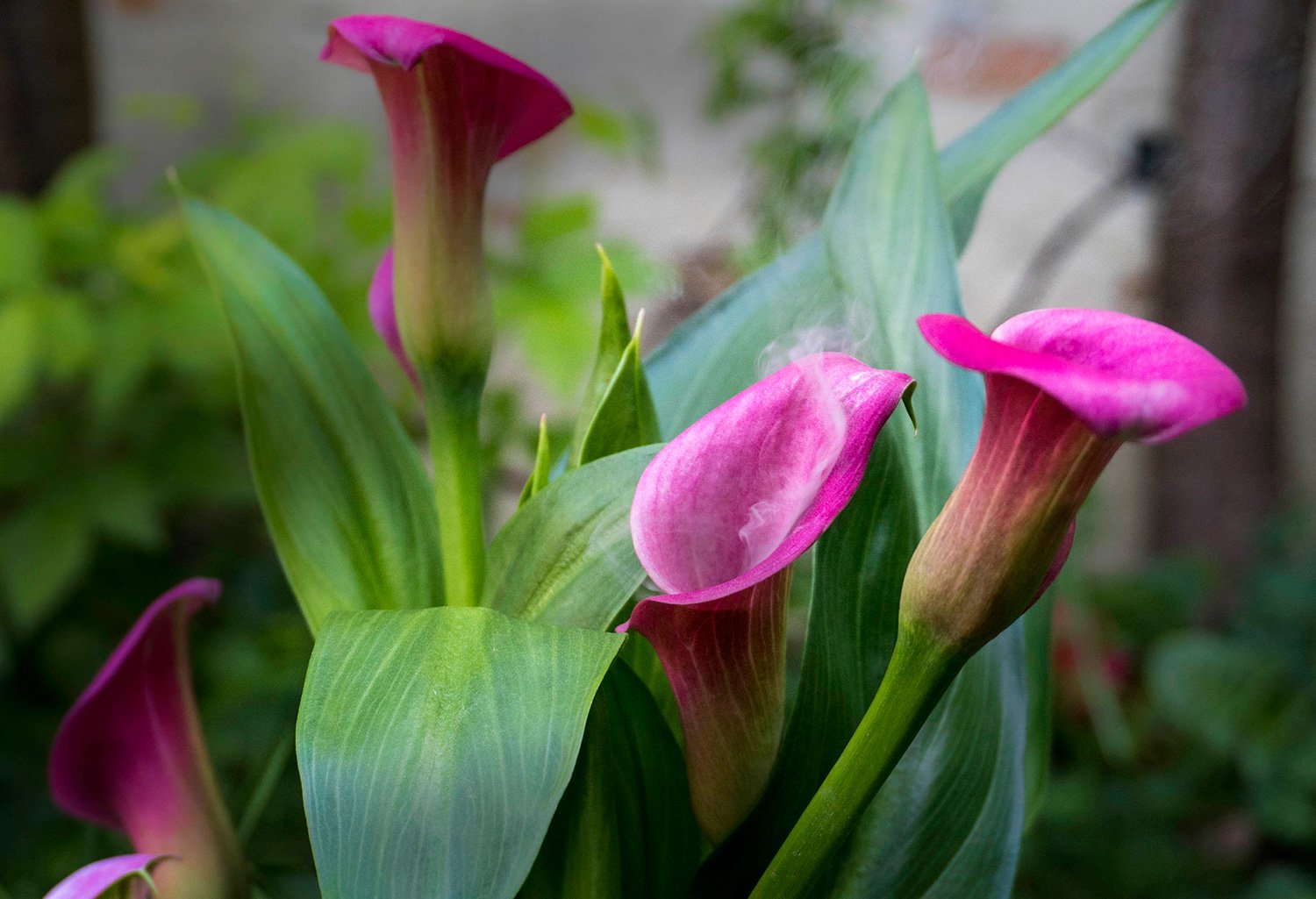
© Peter de Cupere · Peter de Cupere (official site)
Một khu vườn cạnh Arsenale
Tháng 5 năm 2017, tuần khai mạc Venice Biennale lần thứ 57. Cạnh khu Arsenale, trong vườn Spazio Thetis, triển lãm Command Alternative Escape mở cửa từ ngày 6 đến ngày 13 tháng 5, do Natasha Pradhan giám tuyển. Giữa vườn là một tác phẩm của nghệ sĩ người Bỉ Peter de Cupere: Smoke Flowers.
Nhìn qua, đó là những bông hoa thật, lớn nhỏ khác nhau, mọc giữa cây cỏ. Không có gì báo trước. Rồi thỉnh thoảng, từ giữa bông hoa, một làn khói bốc lên.
Người xem tiến lại gần, cúi xuống như trước bất cứ bông hoa nào. Thứ họ ngửi thấy không phải hương hoa. Đó là mùi ô nhiễm không khí công nghiệp. Khói xe, khói nhà máy, thứ không khí người ta hít hằng ngày ở các thành phố lớn mà ít khi dừng lại để ngửi.
De Cupere mô tả tác phẩm như cuộc trả đũa của những bông hoa: chúng nhả lại cho con người chính thứ ô nhiễm con người đã thải ra.
Chín năm để hoa nhả khói
Ý tưởng không mới với nghệ sĩ. Theo thông cáo báo chí của tác phẩm, bản vẽ đầu tiên về Smoke Flowers có từ năm 2008. Ông mất khoảng chín năm nghiên cứu trước khi những bông hoa có thể nhả khói thật trong một khu vườn thật.
Phần mùi được thực hiện với sự hỗ trợ của IFF, một trong những công ty lớn về hương liệu. Thông cáo ghi tên các nhà điều chế đã tạo ra mùi ô nhiễm cho tác phẩm: Bernardo Fleming, Meahb Mc Curtin, Laura French, Gregoire Hausson và Marine Hetheier.
Ở đây có một nghịch lý đáng chú ý. Những người có tay nghề dựng nên mùi hoa, mùi gỗ, mùi trái cây cho nước hoa, được mời dựng lại một mùi mà không ai muốn giữ: mùi của không khí bẩn. Kỹ thuật vẫn vậy, chỉ đổi hướng.
Làn khói không toả liên tục. Nó đến ngắt quãng, bất ngờ. Người xem không biết bông nào sắp nhả khói, cũng không biết lúc nào. Chính sự không đoán trước được ấy giữ họ ở gần, chờ đợi, ngửi thử.
Ô nhiễm có mùi gì
Ô nhiễm không khí thường được nói bằng số. Chỉ số bụi mịn, nồng độ khí thải, bản đồ màu đỏ cam. Những con số ấy quan trọng nhưng xa. Chúng nằm trên màn hình, không nằm trong mũi.
De Cupere đưa ô nhiễm trở về dạng cơ thể nhận biết được. Không phải con số, mà là một mùi, đặt đúng chỗ ta không ngờ tới. Đặt trong một khu vườn, giữa những bông hoa, mùi ấy trở nên rõ hơn nhiều so với khi nó hoà vào không khí thành phố.
Người sống ở thành phố thường không còn ngửi thấy không khí mình đang thở. Mũi quen dần, rồi thôi để ý. Smoke Flowers tách mùi ấy ra khỏi nền quen thuộc và đặt nó vào một khung mới. Một khung đẹp, yên tĩnh, có hoa. Thứ bị bỏ qua lâu nay bỗng khó bỏ qua.
Tác phẩm cũng nói về tự nhiên như một nạn nhân. Hoa hít cùng một bầu không khí với ta. Nếu hoa có thể nhả lại những gì nó phải chịu, đây có lẽ là mùi của nó.
Một nghệ sĩ làm việc với mùi khó chịu
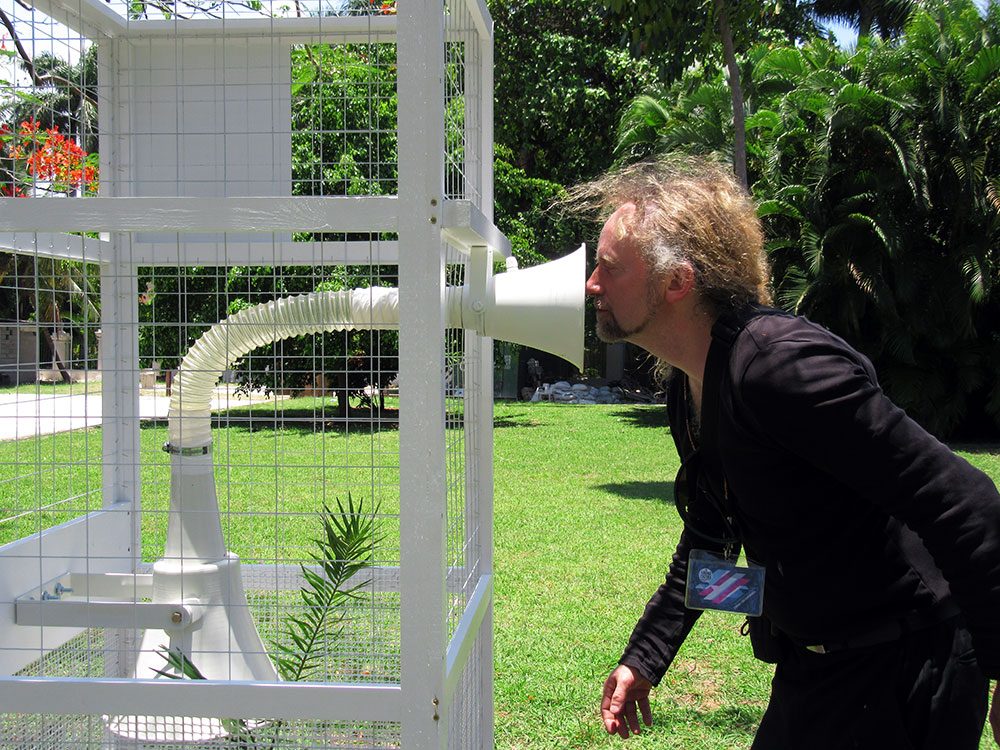
Peter de Cupere là một trong những nghệ sĩ lâu năm nhất lấy mùi làm chất liệu chính. Ông thường làm việc với những mùi người ta muốn tránh: mùi của người lạ, mùi của khói, mùi của thành phố. Trong Smoke Cloud, ông để người xem leo thang, đưa đầu vào giữa một đám mây mang mùi khí thải. Smoke Flowers thu nhỏ ý ấy lại, đặt nó vào lòng một bông hoa.
Năm 2018, Smoke Flowers vào nhóm chung kết giải Sadakichi của Art and Olfaction Awards, giải dành cho những thử nghiệm dùng mùi trong nghệ thuật.
Điều khiến tác phẩm đáng nhớ là sự đơn giản của cú lật ngược. Không có văn bản dài, không có màn hình. Chỉ một bông hoa, một làn khói, và một cái mũi cúi xuống. Người xem mang theo mùi ấy ra khỏi vườn, và có lẽ lần đầu tiên để ý đến không khí trên đường về.
A garden beside the Arsenale
May 2017, the opening week of the 57th Venice Biennale. Beside the Arsenale, in the gardens of Spazio Thetis, the exhibition Command Alternative Escape ran from 6 to 13 May, curated by Natasha Pradhan. In the middle of the garden stood a work by the Belgian artist Peter de Cupere: Smoke Flowers.
At a glance they were real flowers, large and small, growing among the plants. Nothing gave them away. Then, now and again, a thin smoke rose from the centre of a bloom.
Visitors came closer and leaned in as they would to any flower. What they smelled was not a flower. It was industrial air pollution. Exhaust, factory smoke, the air people breathe every day in big cities and rarely stop to smell.
De Cupere described the work as the flowers' revenge: they breathe back at people the very pollution people released.
Nine years to make a flower smoke
The idea was not new to him. According to the work's press release, his first drawing of Smoke Flowers dates from 2008. He spent about nine years researching before flowers could release real smoke in a real garden.
The scent was made with the support of IFF, one of the large flavour and scent companies. The press release names the perfumers who created the pollution smell for the work: Bernardo Fleming, Meahb Mc Curtin, Laura French, Gregoire Hausson and Marine Hetheier.
There is a telling paradox here. People skilled at building the smell of flowers, wood and fruit for perfume were asked to build a smell no one wants to keep: the smell of dirty air. The craft stays the same; only its direction changes.
The smoke does not flow continuously. It comes in bursts, without warning. Visitors cannot tell which flower will smoke next, or when. That unpredictability keeps them close, waiting, sniffing.
What pollution smells like
Air pollution is usually spoken of in numbers. Particulate readings, emission levels, maps in red and orange. The numbers matter but they are distant. They live on screens, not in noses.
De Cupere returns pollution to a form the body recognises. Not a number, but a smell, placed where we least expect it. Set in a garden among flowers, that smell becomes far clearer than when it dissolves into city air.
City dwellers often stop smelling the air they breathe. The nose adapts, then stops paying attention. Smoke Flowers lifts that smell off its familiar background and sets it in a new frame. A quiet, pretty frame, with flowers. What was long ignored becomes hard to ignore.
The work also speaks of nature as a victim. Flowers breathe the same air we do. If a flower could breathe back what it has to bear, this might be its smell.
An artist of unwelcome smells
Peter de Cupere is one of the longest standing artists to use smell as his main material. He often works with smells people would rather avoid: the smell of strangers, of smoke, of the city. In Smoke Cloud he had visitors climb a ladder and put their heads inside a cloud that smelled of exhaust. Smoke Flowers shrinks that idea and places it inside a single bloom.
In 2018 Smoke Flowers was a finalist for the Sadakichi Award of the Art and Olfaction Awards, which recognises experimental work with scent.
What makes the work stay with you is the simplicity of the reversal. No long text, no screens. A flower, a wisp of smoke, a nose bending down. Visitors carry the smell out of the garden and perhaps, for the first time, notice the air on their way home.
Olfactory Art