
Essays · Contemporary Art
Rachel Rose. Everything and More.
Mất trọng lực, ta mới biết thân thể nặng thế nào.
Only without gravity do we learn how heavy a body is.
Whitney Museum of American Art · Whitney Museum of American Art
Một phi hành gia kể lại
Everything and More là một video sắp đặt Rachel Rose làm năm 2015. Video màu, có tiếng, độ phân giải cao, dài mười một phút ba mươi ba giây. Tác phẩm đi cùng những vật liệu đặt trong phòng chiếu: màng mylar, ống PVC và thảm.
Sợi chỉ xuyên suốt là lời kể của David Wolf, một phi hành gia từng sống ngoài không gian. Ông nói về những gì thân thể cảm thấy ở nơi không có trọng lực, và về lúc trở lại Trái Đất, khi mọi giác quan phải học lại cách vận hành.
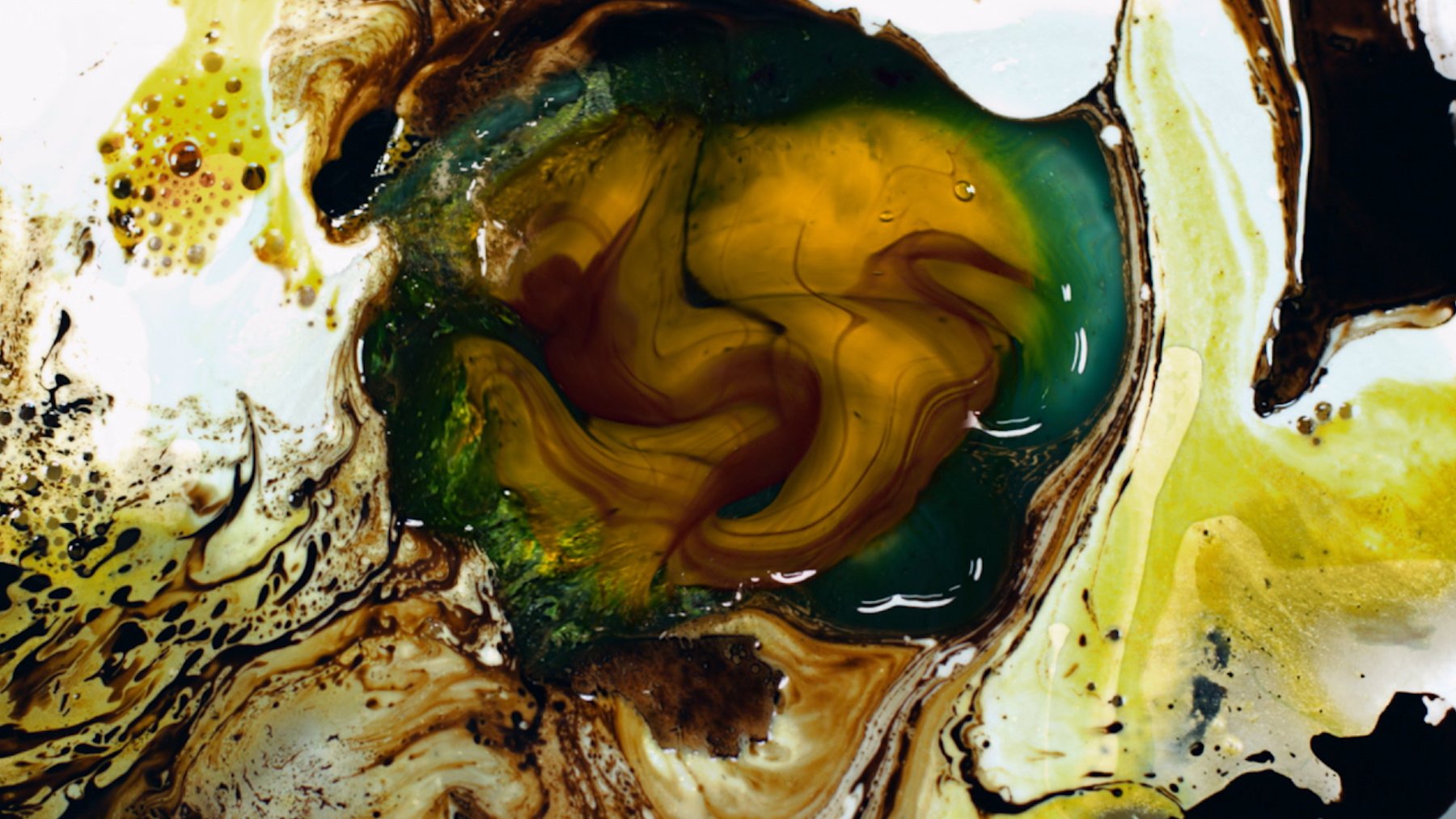
Hình ảnh không minh hoạ lời kể theo kiểu tài liệu. Rose ghép cảnh một bể nước lớn dùng để tập luyện không trọng lực với những cảnh cận của chất lỏng trừu tượng: màu loang, xoáy, tan vào nhau. Người xem không luôn biết mình đang nhìn thứ gì, và chính sự không chắc ấy là điều tác phẩm muốn giữ.
Căn phòng cũng là một phần của video
Tác phẩm ra mắt trong triển lãm cá nhân đầu tiên của Rose tại Mỹ, ở Whitney Museum of American Art, New York, từ 30 tháng 10 năm 2015 đến 7 tháng 2 năm 2016. Triển lãm đặt ở phòng Kaufman trên tầng năm, do giám tuyển Christopher Y. Lew phụ trách. Rose khi ấy mới ngoài hai mươi tuổi, sinh năm 1986, sống và làm việc ở New York.
Bảo tàng khi đó vừa chuyển về toà nhà mới do Renzo Piano thiết kế. Rose làm việc với chính kiến trúc ấy. Video không chỉ chiếu trên một màn hình, nó được đặt trong một không gian đã được sắp lại để người xem cảm thấy căn phòng như một phần của hình ảnh.
Thảm dưới chân, màng mylar phản chiếu, ống nhựa. Những vật liệu rất thường, nhưng khi đặt cạnh những cảnh không trọng lực, chúng nhắc người xem rằng họ vẫn đang đứng trên sàn, vẫn nặng, vẫn ở đây.
Hình ảnh ở khắp nơi, nghĩa ở đâu
Whitney mô tả cách làm của Rose là đi từ một địa điểm hay một ý tưởng cụ thể rồi nối nó ra những chủ đề rộng hơn, dùng cả cảnh tự quay lẫn cảnh tìm được. Câu hỏi của bà là: khi hình ảnh có mặt ở khắp nơi như hôm nay, chúng còn tạo ra nghĩa bằng cách nào?
Everything and More trả lời bằng cách đặt những loại hình ảnh rất khác nhau cạnh nhau. Lời một người từng thật sự rời khỏi mặt đất. Cảnh một bể tập được dựng để giả lập điều đó. Những dòng chất lỏng nhỏ bé nhưng trông như thiên hà. Không cái nào hoàn toàn thật, không cái nào hoàn toàn giả.
Tờ The New Yorker khi ấy gọi tác phẩm là một thiên sử thi về những lực hút, theo nghĩa đen lẫn nghĩa bóng. Lực hút của Trái Đất, và lực hút của những gì khiến con người muốn ở lại, muốn trở về.
Vì sao mười một phút ấy còn ở lại
Nhiều tác phẩm video về không gian dừng lại ở vẻ kỳ vĩ. Rose đi theo hướng ngược lại. Bà quan tâm tới thân thể nhỏ bé đang cảm nhận, không phải vũ trụ bao la được nhìn thấy.
Chính vì thế tác phẩm chạm tới cả những người chưa bao giờ nghĩ về không gian. Ai cũng từng có lúc thấy thân thể mình lạ đi: sau một cơn sốt, sau một chuyến bay dài, khi bước ra khỏi hồ bơi và thấy mình nặng trở lại. Rose lấy những khoảnh khắc ấy và kéo dãn chúng ra.
Trong dòng video nghệ thuật dùng nước và thân thể, tác phẩm này đứng gần những màn hình nguyên tố của Bill Viola và Kira Perov, nhưng nhẹ hơn, ít nghi lễ hơn, và gần đời sống hằng ngày hơn.
Khi rời phòng chiếu, người xem bước ra hành lang của bảo tàng. Chân chạm sàn. Trọng lực vẫn ở đó như mọi ngày. Nhưng trong vài giây, nó được cảm thấy như một điều mới.
An astronaut's account
Everything and More is a video installation Rachel Rose made in 2015. High definition, colour, sound, eleven minutes and thirty three seconds. The work comes with materials placed in the room: mylar, PVC and carpet.
The thread running through it is the voice of David Wolf, an astronaut who lived in space. He speaks about what the body feels where there is no gravity, and about returning to Earth, when every sense has to learn again how to work.
The images do not illustrate his words like a documentary. Rose sets footage of a large pool used for weightlessness training against close views of abstract liquids: colour spreading, swirling, dissolving into itself. Viewers do not always know what they are looking at, and that uncertainty is what the work wants to keep.
The room is part of the video
The work premiered in Rose's first solo exhibition in the United States, at the Whitney Museum of American Art in New York, from 30 October 2015 to 7 February 2016. The show was in the fifth floor Kaufman Gallery, curated by Christopher Y. Lew. Rose, born in 1986, was in her twenties, living and working in New York.
The museum had just moved into its new building by Renzo Piano. Rose worked with that architecture. The video was not simply shown on a screen; it sat in a space rearranged so that viewers felt the room as part of the image.
Carpet underfoot, reflective mylar, plastic pipe. Ordinary materials, but placed beside weightless scenes they remind viewers that they are still standing on a floor, still heavy, still here.
Images everywhere, meaning where
The Whitney describes Rose's method as starting from a specific site or idea and linking it to broader subjects, using both her own footage and found material. Her question: when images are everywhere, how do they still produce meaning?
Everything and More answers by placing very different kinds of images side by side. The words of someone who really left the ground. A training pool built to simulate that. Tiny flows of liquid that look like galaxies. None entirely real, none entirely false.
The New Yorker called it an epic about gravities, literal and figurative. The pull of the Earth, and the pull of whatever makes people want to stay, and to return.
Why those eleven minutes remain
Many videos about space stop at the sublime. Rose goes the other way. She cares about the small body sensing, not the vast universe seen.
That is why the work reaches people who never think about space. Everyone has felt their body turn strange: after a fever, after a long flight, stepping out of a pool and feeling heavy again. Rose takes those moments and stretches them.
Among video works that use water and the body, it stands near the elemental screens of Bill Viola and Kira Perov, but lighter, less ceremonial, closer to daily life.
Leaving the room, viewers step into the museum corridor. Feet on the floor. Gravity is there as always. For a few seconds, though, it feels like something new.
Contemporary Art