
Essays · Olfactory Art
Richard Wilson. 20:50.
Mắt thấy một tấm gương. Mũi biết đó là dầu.
The eye sees a mirror. The nose knows it is oil.
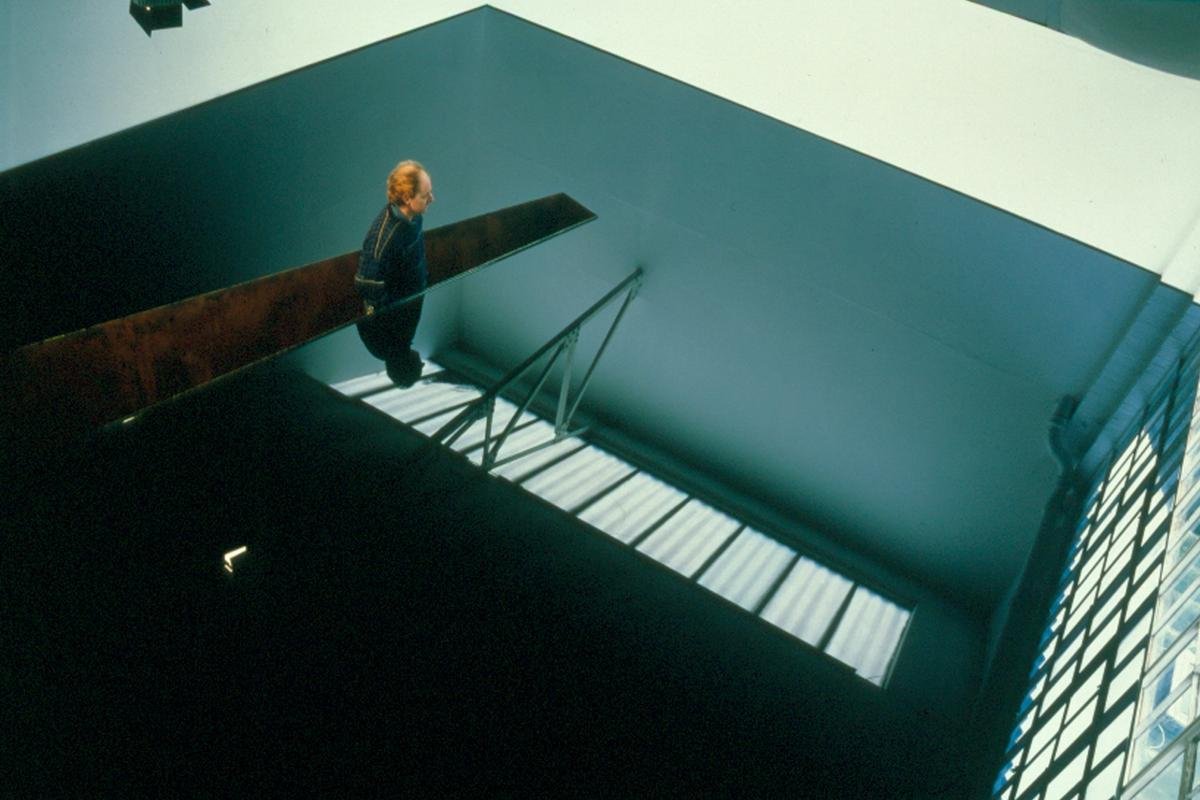
Courtesy Matt's Gallery; © Richard Wilson · Matt's Gallery, London
Căn phòng làm khuôn
Tháng 2 năm 1987, từ ngày 7 đến ngày 22, Richard Wilson làm triển lãm thứ hai của mình ở Matt's Gallery, khi đó nằm trên phố Martello, London. Ông đổ vào phòng trưng bày khoảng 200 gallon dầu nhớt thải, loại dầu đã chạy trong động cơ và được xả ra khi thay.
Theo Matt's Gallery, chính căn phòng trở thành khuôn đúc cho khối dầu. Wilson không dựng một bể chứa đặt giữa phòng. Ông bịt kín phòng, và để dầu lấp đầy nó tới một độ cao nhất định, bám theo mọi góc tường. Kết quả là một mặt phẳng nằm ngang, đen, phản chiếu tuyệt đối.
Một lối đi bằng thép dẫn từ cửa vào. Lối đi hẹp dần, và càng đi vào, dầu càng bao lấy người xem ở cả hai bên. Đứng ở cuối, người ta như lơ lửng giữa hai căn phòng: một căn thật ở trên, một căn phản chiếu ở dưới, giống hệt nhau.
Cũng trong triển lãm ấy, ở bức tường kế bên, Wilson đặt một khối băng. Dầu và băng, hai thứ chất lỏng và rắn, được đặt cạnh nhau như hai cách khác nhau để dừng thời gian lại.
Một con số trên can dầu
Cái tên 20:50 không phải một giờ trong ngày. Nó lấy từ loại dầu máy tái chế Wilson dùng, một con số chỉ độ nhớt in trên can. Tên tác phẩm vì thế không kể chuyện gì. Nó chỉ gọi đúng tên vật liệu.
Dầu nhớt thải là thứ người ta muốn tránh xa. Nó đen, dính, không tẩy được. Một giọt rơi lên áo là vết vĩnh viễn. Trong xưởng sửa xe, nó là rác. Trong phòng của Wilson, nó trở thành thứ gần với gương nhất mà người ta từng thấy.
Và nó có mùi. Không ai đi vào 20:50 mà không nhận ra điều đó. Mùi dầu máy đặc quánh trong không khí, nặng, hơi ngọt, mang theo ký ức về gara, đường cao tốc, động cơ nóng. Hình ảnh thì tinh khiết. Mùi thì kéo người xem về lại thế giới công nghiệp nơi thứ vật liệu ấy sinh ra.
Hai giác quan nói hai điều khác nhau cùng một lúc. Mắt nói: đây là không gian, là ánh sáng, là hình học. Mũi nói: đây là cặn của hàng nghìn cây số đường đã chạy qua. Tác phẩm tồn tại ở chỗ hai lời ấy chạm nhau.
Từ London đến Tasmania
Cũng năm 1987, 20:50 vào bộ sưu tập của Charles Saatchi. Trong nhiều thập niên sau đó, nó được dựng lại ở các không gian của Saatchi Gallery tại London, mỗi lần theo kích thước một căn phòng mới. Vì căn phòng là khuôn, mỗi lần dựng lại, hình dạng khối dầu lại khác.
Về sau tác phẩm được MONA, Museum of Old and New Art ở Tasmania, mua lại. Ở đó nó được lắp đặt lâu dài, như một phần cố định của bảo tàng, không còn phải tháo ra và đổ lại mỗi lần chuyển nhà. Một khối dầu từng làm ngập một gallery nhỏ ở đông London giờ nằm yên ở bên kia địa cầu.
Điều đáng nhớ ở 20:50 là nó không cần kể gì. Không có nhân vật, không có biểu tượng, không có câu chữ. Chỉ có một vật liệu, một căn phòng, và cách người xem đi vào giữa chúng. Wilson để vật liệu tự làm việc: dầu tự phẳng, tự phản chiếu, tự toả mùi.
Có những sắp đặt khác cũng dùng mùi để kéo người xem vào một căn phòng rồi làm họ lo lắng, như lớp bột talc và mùi khí gas trong Volátil của Cildo Meireles. 20:50 không đe doạ ai. Nó chỉ nhắc rằng thứ đẹp nhất trong phòng cũng là thứ bẩn nhất, và mũi là giác quan duy nhất không bị đánh lừa.
The room as mould
From 7 to 22 February 1987, Richard Wilson held his second exhibition at Matt's Gallery, then on Martello Street in London. He filled the gallery with about 200 gallons of used sump oil, the kind drained from an engine at an oil change.
According to Matt's Gallery, the room itself became the mould for the oil. Wilson did not build a tank in the middle of the space. He sealed the room and let the oil fill it to a set height, following every corner. The result was a horizontal plane, black, perfectly reflective.
A steel walkway led in from the door. It narrowed as it went, and the deeper one walked, the more the oil closed in on both sides. At the end one seemed to hover between two rooms: a real one above, a reflected one below, identical.
In the same exhibition, on the neighbouring wall, Wilson placed a block of ice. Oil and ice, a liquid and a solid, set side by side as two different ways of stopping time.
A number on an oil can
The title 20:50 is not a time of day. It comes from the grade of recycled engine oil Wilson used, a viscosity number printed on the can. So the title tells no story. It simply names the material.
Used sump oil is something people keep away from. It is black, sticky, impossible to wash out. A drop on a shirt is a permanent mark. In a repair shop it is waste. In Wilson's room it became the closest thing to a mirror anyone had seen.
And it smells. No one walks into 20:50 without noticing. The smell of engine oil hangs thick in the air, heavy, faintly sweet, carrying memories of garages, motorways, hot engines. The image is pure. The smell pulls the visitor back to the industrial world where the material was born.
Two senses say two different things at once. The eye says: this is space, light, geometry. The nose says: this is the residue of thousands of miles of road. The work lives where those two statements meet.
From London to Tasmania
Also in 1987, 20:50 entered the collection of Charles Saatchi. Over the following decades it was installed in several Saatchi Gallery spaces in London, each time to the size of a new room. Because the room is the mould, the shape of the oil changed with every installation.
Later the work was acquired by MONA, the Museum of Old and New Art in Tasmania, where it is installed long term as a fixed part of the museum, no longer drained and refilled with every move. A body of oil that once flooded a small gallery in east London now rests on the other side of the world.
What stays with you about 20:50 is that it needs to tell nothing. No figures, no symbols, no text. Only a material, a room, and the way the visitor walks between them. Wilson let the material do the work: the oil levels itself, reflects itself, gives off its own smell.
Other installations also use smell to draw visitors into a room and then unsettle them, like the talc and the scent of gas in Volátil by Cildo Meireles. 20:50 threatens no one. It only reminds us that the most beautiful thing in the room is also the dirtiest, and that the nose is the one sense not fooled.
Olfactory Art