
Essays · Contemporary Art
teamLab Borderless: MORI Building DIGITAL ART MUSEUM.
Một nơi không có bản đồ, chỉ có đường đi.
A place with no map, only paths.
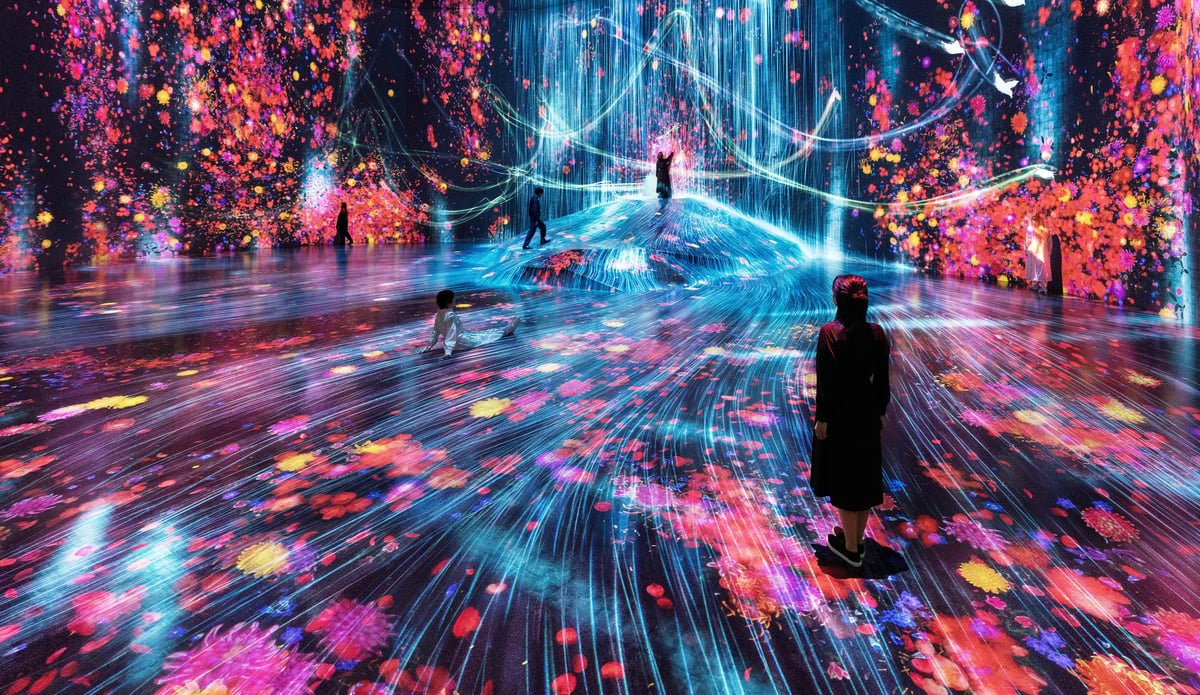
© teamLab · teamLab (official site)
Một bảo tàng không có bản đồ
teamLab là một tập thể nghệ thuật ở Tokyo, gồm nghệ sĩ, lập trình viên, kỹ sư và kiến trúc sư. Năm 2018, họ mở teamLab Borderless ở khu Odaiba, Tokyo, cùng tập đoàn Mori Building. Tên đầy đủ là MORI Building DIGITAL ART MUSEUM: teamLab Borderless.
Cách teamLab mô tả nơi này rất ngắn: một thế giới của những tác phẩm không có ranh giới, một bảo tàng không có bản đồ. Người đến không nhận lối đi được đánh số. Không có mũi tên chỉ hướng. Họ bước vào một hành lang tối, và từ đó tự chọn.
Bảo tàng gây tiếng vang ngay từ đầu. Theo tư liệu teamLab tập hợp, năm 2021 nơi này được Guinness ghi nhận là bảo tàng đón nhiều khách nhất thế giới trong số các bảo tàng dành riêng cho một nhóm hay một nghệ sĩ. Sau đó bảo tàng ở Odaiba đóng cửa. Ngày 9 tháng 2 năm 2024, teamLab Borderless mở lại ở Azabudai Hills, một khu phức hợp mới ở trung tâm Tokyo.
Tác phẩm rời khỏi phòng
Ở một bảo tàng thông thường, mỗi tác phẩm có chỗ của nó. Bức tranh treo trên tường, bức tượng đứng trên bệ, người xem đi từ vật này sang vật khác. teamLab Borderless làm ngược lại. Tác phẩm là ánh sáng chiếu từ máy, điều khiển bằng phần mềm, và phần mềm cho phép chúng di chuyển.
Một dòng hoa có thể bắt đầu ở phòng này rồi lan ra hành lang. Một đàn chim ánh sáng có thể bay qua một tác phẩm khác và làm nó đổi màu. teamLab mô tả rằng các tác phẩm giao tiếp với nhau, ảnh hưởng lẫn nhau, có lúc hoà vào nhau. Người xem cũng là một phần của hệ thống: chạm tay, đứng yên, đi qua, tất cả đều làm hình ảnh thay đổi.
Ở Azabudai Hills, bảo tàng có những khu mang tên riêng: Bubble Universe với những quả cầu ánh sáng, Future Park nơi trẻ em vẽ những sinh vật rồi thấy chúng sống dậy trên tường, và EN TEA HOUSE, phòng trà nơi hoa nở trong chén. Mỗi mùa lại có tác phẩm mới xuất hiện rồi rút đi.
Vì hình ảnh luôn được phần mềm sinh ra theo thời gian thực, không có hai lần đến nào giống nhau. Tác phẩm không lặp lại. Nó chỉ tiếp diễn. Người quay lại lần thứ hai sẽ không tìm thấy đúng thứ mình nhớ. Họ chỉ tìm thấy một phiên bản khác, cùng họ nhưng khác dáng. Có người vì thế mà đến nhiều lần, như quay lại một khu vườn vào những mùa khác nhau để xem nó đã đổi thế nào.
Cơ thể như cách đọc
teamLab viết rằng con người hiểu thế giới qua cơ thể, qua việc đi lại tự do và tạo quan hệ với người khác, và rằng cơ thể có cảm nhận thời gian riêng. Borderless được dựng trên ý đó. Không phải nhìn từ xa, mà đi vào, đứng giữa, để ánh sáng chạy qua người.
Đó cũng là điều khiến nơi này gây tranh luận. Có người thấy nó là nghệ thuật cho số đông, đẹp để chụp ảnh hơn là để nghĩ. Có người thấy nó mở ra một kiểu bảo tàng mới, nơi ranh giới giữa tác phẩm, người xem và không gian không còn rõ. Cả hai cách nhìn đều có lý.
Nó gần với những căn phòng gương của Yayoi Kusama, như The Souls of Millions of Light Years Away, nơi người xem đứng giữa vô số đốm sáng và mất cảm giác về tường. Nhưng Kusama giữ người xem trong một phòng kín. teamLab mở tất cả các cửa.
Theo số liệu teamLab công bố, năm 2025 bảo tàng ở Azabudai Hills đón khoảng 1,69 triệu lượt khách. Mỗi người mang về một con đường riêng, vì không ai đi theo cùng một bản đồ.
A museum without a map
teamLab is an art collective based in Tokyo, made up of artists, programmers, engineers and architects. In 2018 they opened teamLab Borderless in Odaiba, Tokyo, with the developer Mori Building. Its full name is MORI Building DIGITAL ART MUSEUM: teamLab Borderless.
teamLab describes the place briefly: a world of artworks without boundaries, a museum without a map. Visitors are given no numbered route. There are no arrows. They step into a dark corridor and choose from there.
It drew attention from the start. According to press material gathered by teamLab, in 2021 it received a Guinness World Record as the most visited museum in the world dedicated to a single group or artist. The Odaiba museum later closed. On 9 February 2024, teamLab Borderless reopened at Azabudai Hills, a new complex in central Tokyo.
Works that leave the room
In an ordinary museum, each work has its place. The painting hangs, the sculpture stands, the visitor moves from one to the next. teamLab Borderless does the reverse. The works are projected light, run by software, and the software lets them move.
A stream of flowers may begin in one room and spread into the corridor. A flock of birds made of light may cross another work and change its colour. teamLab says the works communicate, influence each other, and sometimes intermingle. Visitors are part of the system too: touching, standing still, walking past, all alter the image.
At Azabudai Hills there are named areas: Bubble Universe with its spheres of light, Future Park where children draw creatures and watch them come alive on the walls, and EN TEA HOUSE, where flowers bloom in the tea bowl. Each season new works appear and withdraw.
Because the images are generated in real time, no two visits are alike. The work does not repeat. It only continues. Whoever returns will not find exactly what they remember, only another version, the same family in a different shape. Some come back for that reason, as one returns to a garden in different seasons.
The body as a way of reading
teamLab writes that people understand the world through their bodies, moving freely and forming relationships with others, and that the body has its own sense of time. Borderless is built on that idea. Not looking from a distance, but entering, standing inside, letting light run across you.
That is also why it divides opinion. Some see art for crowds, better for photographs than for thought. Others see a new kind of museum, where the lines between work, viewer and space blur. Both have a point.
It is close to Yayoi Kusama's mirror rooms, such as The Souls of Millions of Light Years Away, where viewers stand among countless points of light and lose the sense of walls. But Kusama keeps the viewer in a closed room. teamLab opens every door.
By teamLab's own figures, the Azabudai Hills museum welcomed around 1.69 million visitors in 2025. Each takes home a different route, since no one follows the same map.
Contemporary Art