
Essays · Olfactory Art
Boris Raux. La Fabrique des Méduses.
Nước gội đầu cũng là một dấu vết.
Rinse water is a trace too.
Institute for Art and Olfaction · Institute for Art and Olfaction
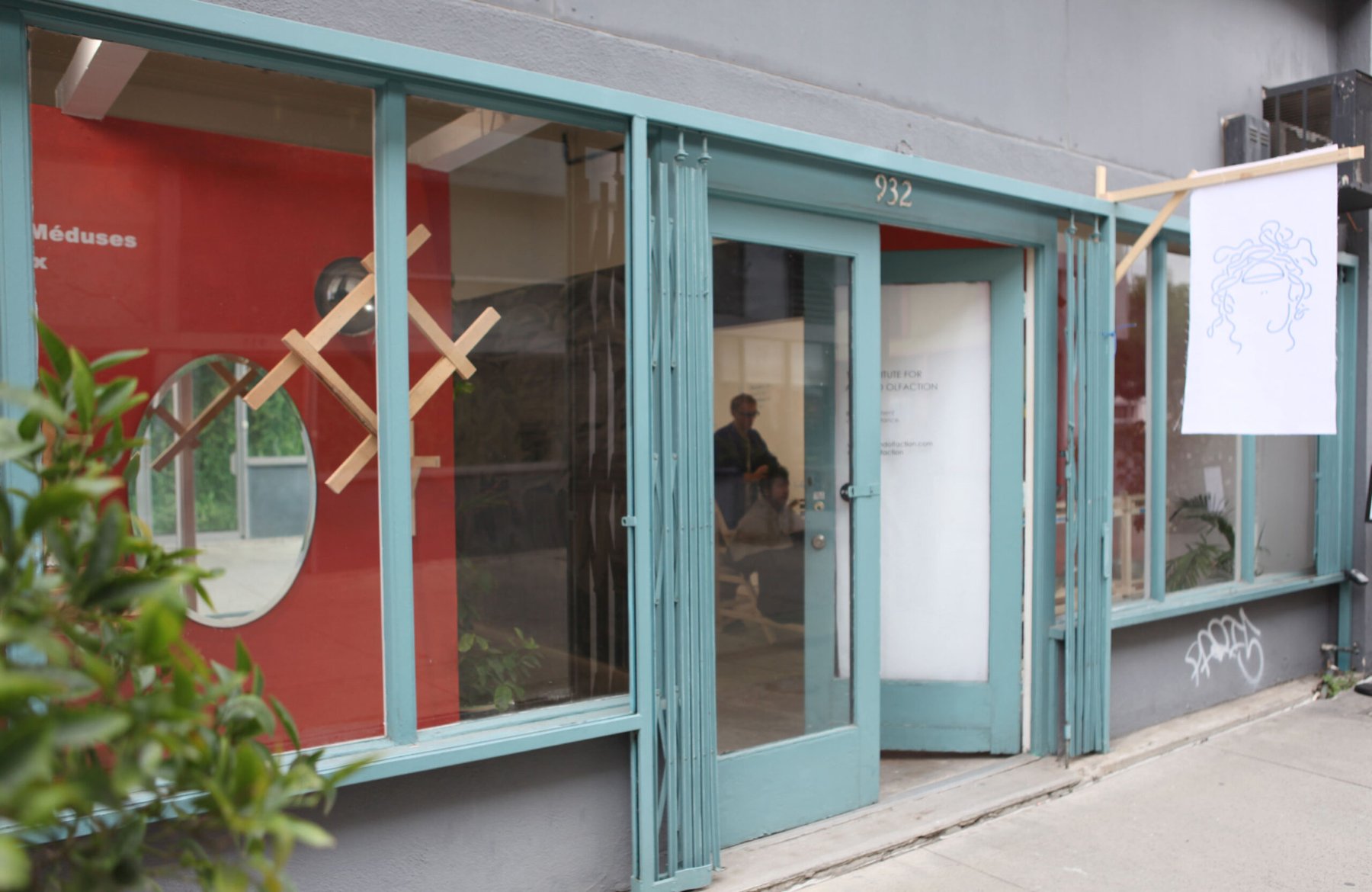
Một tiệm gội đầu trong phòng triển lãm
Tháng 10 năm 2022, trong mười ngày, từ 21 đến 30, phòng trưng bày của Institute for Art and Olfaction ở Los Angeles có một cấu trúc gỗ lớn. Trên các ngăn là những vật thể trong mờ, mềm, có hình dáng giống con sứa. Chúng có mùi.
Tác phẩm tên là La Fabrique des Méduses, nghĩa là Xưởng Sứa. Tác giả là Boris Raux, nghệ sĩ Pháp sống ở Saint Étienne. Nhưng cấu trúc gỗ chỉ là một nửa. Nửa còn lại là một màn trình diễn.
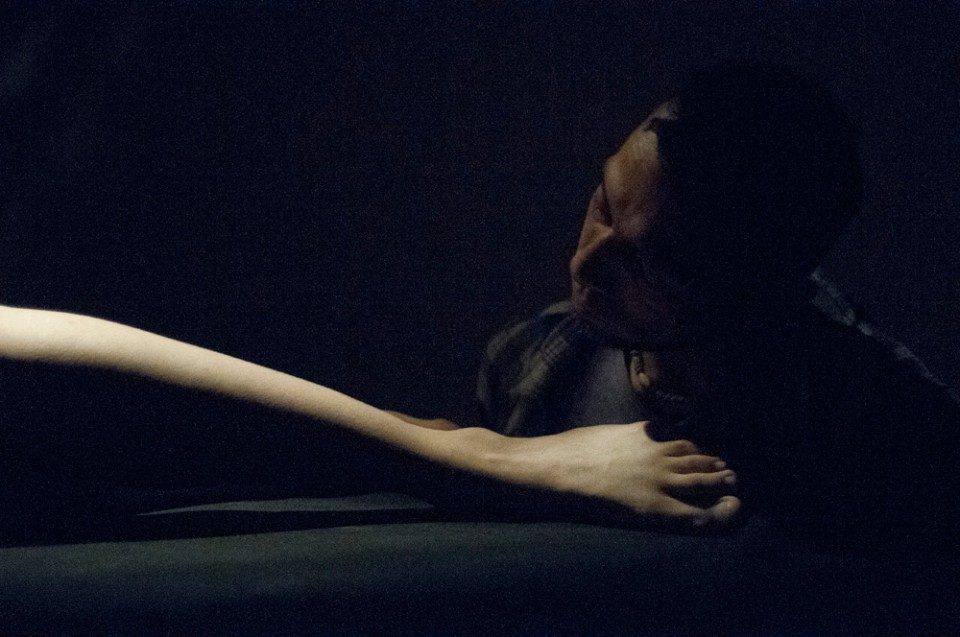
Khách đến, lần lượt từng người, ngồi vào chỗ gội. Raux đóng vai người chăm sóc và thợ làm tóc. Ông xoa bóp da đầu, gội tóc cho họ. Khoảng ba lít nước được dùng cho mỗi người. Chỗ nước ấy không đi xuống cống. Nó được thu lại.
Từ nước gội thành con sứa
Sau buổi gội, nước của từng người được làm đông thành gel. Mỗi khối gel là một con sứa, và mỗi con sứa là một người. Chúng được đặt lên cấu trúc gỗ, cạnh những con sứa của người khác.
Rồi thời gian làm phần việc của nó. Gel bay hơi dần. Khi nước rời đi, mùi của người đã được gội toả vào không gian, chậm, qua nhiều ngày. Người xem đến sau không gặp những người ấy. Họ chỉ ngửi thấy một chút gì đó còn lại của họ.
Nguồn triển lãm nói tác phẩm làm mới truyền thống Vanitas. Vanitas là một thể loại tranh tĩnh vật ở châu Âu, đặt đầu lâu, nến tàn, hoa héo cạnh nhau để nhắc rằng mọi thứ sẽ qua. Raux không vẽ đầu lâu. Ông để một vật tự biến mất trước mắt người xem. Con sứa nhỏ đi mỗi ngày. Nó là đồng hồ của chính nó.
Cái tên sứa cũng có lý. Sứa gần như chỉ là nước. Không xương, không vỏ. Một con sứa dạt vào bờ sẽ khô đi và gần như không để lại gì. Những con sứa của Raux đi theo đúng con đường ấy, chỉ khác là trên đường đi, chúng để lại mùi.
Người nghệ sĩ như một nhà nghiên cứu
Raux học mỹ thuật tại Central Saint Martins ở London. Ông tiếp cận việc làm nghệ thuật bằng phương pháp của một người nghiên cứu khoa học: thu thập, xử lý, quan sát. Với ông, mùi là một công cụ sáng tạo và xã hội thường bị bỏ quên.
Ông gom thực hành của mình quanh bốn chủ đề khứu giác: những của chung, những thân thể chung, những nơi chốn chung và những câu chuyện chung. Tất cả nằm dưới một tên gọi, The Factories of Commons. La Fabrique des Méduses là một trong những xưởng ấy. Nguyên liệu của nó là thân thể của những người đến xem.
Tác phẩm được Institut Français và thành phố Saint Étienne hỗ trợ. Nó chỉ kéo dài mười ngày. Nhưng với một tác phẩm dựa trên sự bay hơi, mười ngày là đủ để thấy mọi thứ thay đổi.
Sự chăm sóc như chất liệu
Gội đầu cho người khác là một việc thân mật. Người được gội phải tin người gội, phải để lộ cổ, nhắm mắt, để nước chảy qua mặt. Trong tiệm tóc, đó là dịch vụ. Trong phòng triển lãm của Raux, đó là điều kiện để tác phẩm tồn tại.
Không có khách thì không có con sứa nào. Tác phẩm không thể làm xong trước ngày khai mạc. Nó lớn lên từng người một, từng lần gội một, và cùng lúc nó cũng đang biến mất, từng giọt một.
Điều Penta thấy đáng nhớ là sự im lặng của nó. Không có chân dung, không có tên, không có câu chuyện kể về từng người. Chỉ có một khối gel và một mùi. Người ta thường nghĩ để nhớ một ai đó cần ảnh hay chữ. Raux cho thấy đôi khi chỉ cần nước đã chạm vào tóc họ. Janine Antoni từng tắm bằng những bức tượng xà phòng đúc hình chính mình, để việc tắm rửa bào mòn chân dung. Raux đi theo hướng khác: việc tắm rửa không bào mòn ai, nó tạo ra một vật mới.
A hair salon in the gallery
In October 2022, for ten days, from the 21st to the 30th, the gallery of the Institute for Art and Olfaction in Los Angeles held a large wooden structure. On its shelves sat soft, translucent objects shaped like jellyfish. They had a smell.
The work is called La Fabrique des Méduses, the Jellyfish Factory. Its author is Boris Raux, a French artist based in Saint Étienne. But the wooden structure is only half of it. The other half is a performance.
Visitors came one at a time and sat down at a wash station. Raux took the role of caretaker and hairdresser. He massaged their scalps and washed their hair. About three litres of water were used for each person. That water did not go down the drain. It was collected.
From rinse water to jellyfish
After each wash, the person's water was set into a gel. Each block of gel became a jellyfish, and each jellyfish was one person. They were placed on the wooden structure next to the jellyfish of others.
Then time did its part. The gel slowly evaporated. As the water left, the smell of the person who had been washed drifted into the space, slowly, over days. Visitors who came later never met those people. They only smelled something that remained of them.
The exhibition text says the work renews the Vanitas tradition. Vanitas is a genre of European still life that set skulls, guttering candles and wilting flowers side by side as a reminder that everything passes. Raux paints no skulls. He lets an object vanish in front of the viewer. The jellyfish shrinks every day. It is its own clock.
The name makes sense too. A jellyfish is almost nothing but water. No bones, no shell. One washed up on a beach dries out and leaves almost nothing behind. Raux's jellyfish follow the same path, except that along the way they leave a smell.
The artist as researcher
Raux studied fine art at Central Saint Martins in London. He approaches art with the methods of a scientific researcher: collect, process, observe. For him, scent is a creative and social tool that is too often overlooked.
He organises his practice around four olfactory themes: common goods, common bodies, common places and common fictions. All of it sits under one name, The Factories of Commons. La Fabrique des Méduses is one of those factories. Its raw material is the bodies of the people who come to see it.
The work was supported by the Institut Français and the city of Saint Étienne. It ran for only ten days. But for a work built on evaporation, ten days is enough to watch everything change.
Care as material
Washing someone else's hair is an intimate act. The person being washed has to trust the one washing, bare their neck, close their eyes, let water run near their face. In a salon it is a service. In Raux's gallery it is the condition for the work to exist.
Without visitors there are no jellyfish. The work cannot be finished before the opening. It grows one person at a time, one wash at a time, and at the same moment it is disappearing, one drop at a time.
What Penta finds memorable is its quiet. No portraits, no names, no stories about each person. Only a block of gel and a smell. We tend to think that remembering someone requires a photograph or words. Raux shows that sometimes all it takes is the water that touched their hair. Janine Antoni once bathed with soap busts cast from her own head, letting washing wear the portrait away. Raux goes another way: washing wears no one away; it makes a new object.
Olfactory Art