
Essays · Olfactory Art
Linh lan. Bông hoa không cho chiết.
Muốn biết nó, phải đứng cạnh nó.
To know it, you have to stand beside it.
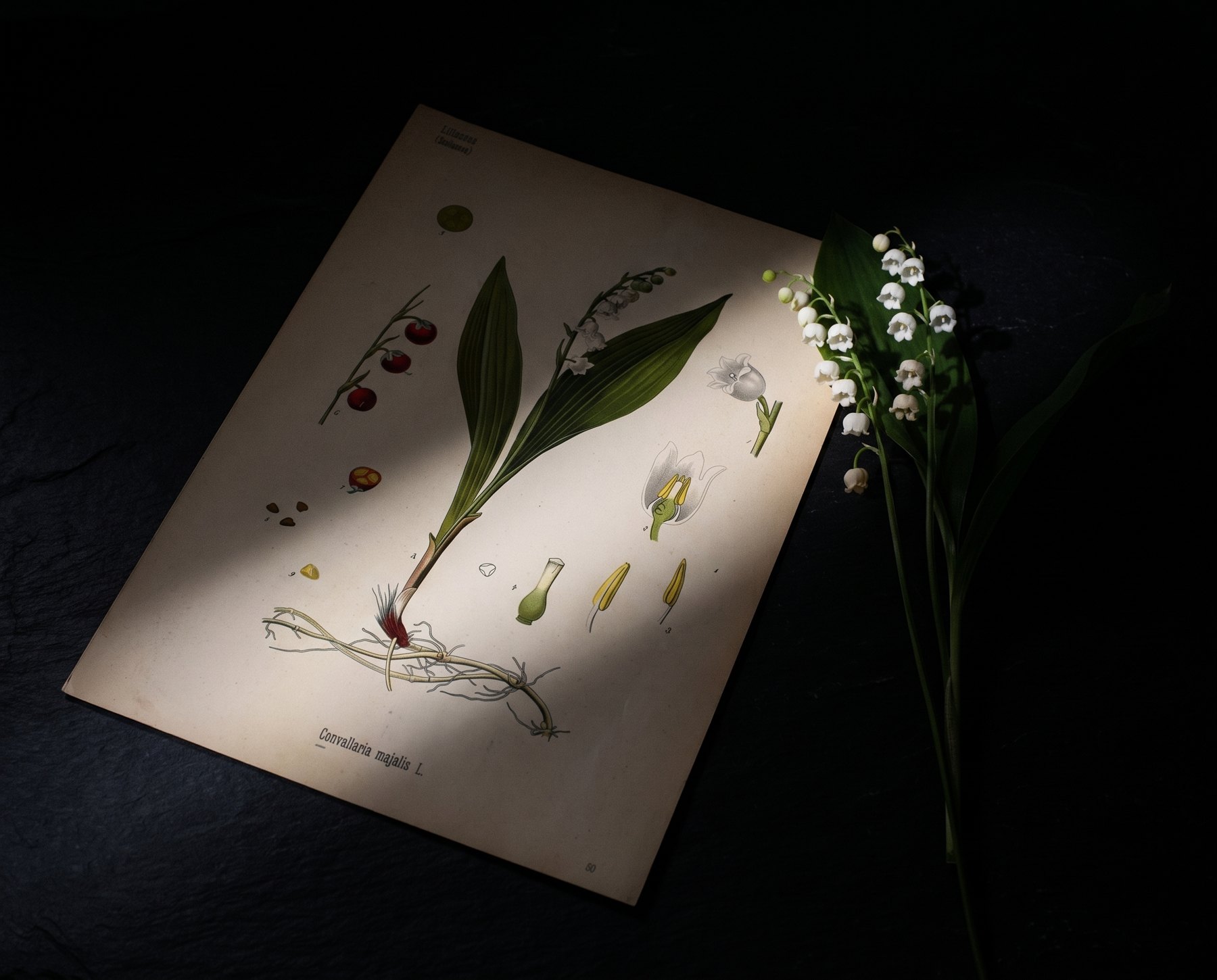
Một bông hoa không cho chiết
Linh lan, tên khoa học Convallaria majalis, là một cây thân thảo nhỏ mọc dưới tán rừng ôn đới. Mỗi cành mang một chuỗi hoa hình chuông trắng, cúi xuống đất. Hoa nở vào cuối xuân, trong vài tuần, rồi thôi.
Mùi của nó rất dễ nhận: mát, sạch, có chút xanh của lá mới, chút ngọt của mật. Đứng gần một khóm linh lan, người ta ngửi thấy ngay. Nhưng khi đem bông hoa đi chiết, kết quả gần như không có gì. Lượng chất thơm quá ít, và phần lấy ra được không giữ lại cái mùi mà mũi nhận thấy ngoài vườn. Trong thương mại, không có một chiết xuất linh lan nào đáng kể.
Người làm nước hoa từ lâu đã biết điều đó. G. W. Septimus Piesse, trong cuốn The Art of Perfumery bản in năm 1857, không đưa ra cách chiết linh lan. Ông đưa ra một công thức giả: dịch chiết hoa huệ, hoa nhài, hoa cam, vani, keo vàng, hoa hồng, và vài giọt dầu hạnh nhân. Một bông hoa được vẽ lại bằng bảy bông hoa khác.
Đó là điểm khởi đầu của mọi linh lan trong chai: một sự vắng mặt, và một nỗ lực lấp đầy nó.
Dựng lại bằng phân tử
Khi hoá học hữu cơ đi vào nước hoa, linh lan là một trong những bông hoa đầu tiên được dựng lại bằng phân tử. Hydroxycitronellal, làm ra từ citronellal bằng cách gắn thêm nước vào phân tử, là một trong những chất linh lan tổng hợp lâu đời nhất. Mùi của nó mềm, ngọt, hơi xanh, gần với hoa linh lan và hoa đoạn.
Sau đó đến những phân tử khác. Lilial của Givaudan, mùi linh lan sạch, hơi phấn. Lyral của IFF, mềm và bền. Chúng rẻ, ổn định, và đi vào rất nhiều sản phẩm, từ nước hoa đến bột giặt. Trong vài chục năm, phần lớn mùi linh lan mà người ta ngửi trong đời sống hằng ngày đến từ hai phân tử này.
Không phân tử nào trong số đó có trong bông hoa theo cách người ta dùng chúng. Chúng không phải linh lan được chiết ra. Chúng là những nét vẽ, được chọn vì giống, được giữ vì tiện.
Diorissimo: một bông hoa được vẽ lại
Năm 1956, nhà Dior ra mắt Diorissimo, do Edmond Roudnitska sáng tác. Đó là một nước hoa gần như chỉ nói về linh lan, bông hoa Christian Dior yêu thích. Roudnitska không có tinh dầu linh lan để dùng. Ông phải dựng bông hoa từ những thứ khác, sao cho người ngửi tin rằng mình đang đứng trong vườn.
Diorissimo thường được nhắc như một trong những linh lan đẹp nhất từng được làm ra. Điều đáng chú ý là vẻ đẹp đó hoàn toàn là dựng. Không có một giọt nào lấy từ bông hoa. Tác phẩm giống một bức chân dung vẽ rất giống, đến mức người xem quên rằng người mẫu không hề ngồi trong phòng.
Đó là một phần của nghề: khi vật không cho mang đi, người ta học cách nhìn nó thật kỹ, rồi dựng lại.
Khi mùi dựng lại cũng phải đổi
Câu chuyện không dừng ở bản vẽ đầu tiên. Lyral bị Liên minh châu Âu đưa vào danh mục cấm trong mỹ phẩm vì tỷ lệ dị ứng tiếp xúc cao, với hạn cuối vào năm 2021. Lilial bị xếp vào nhóm chất có hại cho sinh sản và bị cấm trong mỹ phẩm tại EU từ ngày 1 tháng 3 năm 2022, theo Quy định (EU) 2021/1902.
Vậy là bản dựng lại của một bông hoa không chiết được cũng phải dựng lại một lần nữa. Người làm nước hoa chuyển sang những phân tử khác như Florol, Mayol, và nhiều chất mới hơn. Linh lan trong chai hôm nay khác với linh lan trong chai hai mươi năm trước, dù bông hoa ngoài vườn vẫn vậy.
Có một sự trớ trêu nhẹ ở đây. Bông hoa thật không đổi. Chỉ những bức vẽ về nó là thay liên tục. Mỗi thế hệ mũi lớn lên với một linh lan khác, và mỗi thế hệ đều tin đó là mùi của bông hoa.
Còn khóm linh lan dưới bóng cây thì vẫn nở vài tuần mỗi năm, không cần ai vẽ lại.
A flower that yields nothing
Lily of the valley, Convallaria majalis, is a small plant of temperate woodland floors. Each stem carries a row of white bell flowers bowing toward the ground. It blooms in late spring, for a few weeks, and then stops.
Its smell is easy to recognise: cool, clean, a touch of new leaf, a touch of honey. Stand near a patch and you notice it at once. But extract the flower and almost nothing comes out. There is too little scent material, and what can be taken does not hold the smell the nose finds in the garden. No lily of the valley extract of any importance exists in trade.
Perfumers have long known this. G. W. Septimus Piesse, in the 1857 edition of The Art of Perfumery, gives no method for extracting it. He gives an imitation instead: extracts of tuberose, jasmine, orange flower, vanilla, cassie and rose, with a few drops of almond oil. One flower painted with seven others.
That is where every lily of the valley in a bottle begins: with an absence, and an effort to fill it.
Rebuilt from molecules
When organic chemistry entered perfumery, lily of the valley was among the first flowers rebuilt from molecules. Hydroxycitronellal, made from citronellal by adding water across the molecule, is one of the oldest synthetic muguet materials. It smells soft, sweet and slightly green, close to lily of the valley and linden blossom.
Others followed. Givaudan's Lilial, clean and a little powdery. IFF's Lyral, soft and long lasting. They were cheap and stable and went into countless products, from perfume to detergent. For decades much of the lily of the valley people smelled in daily life came from these two molecules.
None of them was extracted from the flower. They are brushstrokes, chosen because they resembled it, kept because they were convenient.
Diorissimo: a flower painted again
In 1956 Dior launched Diorissimo, composed by Edmond Roudnitska. It speaks almost only of lily of the valley, the flower Christian Dior loved. Roudnitska had no lily of the valley oil to work with. He had to build the flower from other things, so that the wearer would believe they stood in a garden.
Diorissimo is often named among the finest lilies of the valley ever made. What stands out is that its beauty is entirely constructed. Not one drop came from the flower. It is like a portrait so close to life that the viewer forgets the sitter was never in the room.
This is part of the craft: when a thing will not be carried away, you learn to look at it very closely, and then rebuild.
When the rebuilt smell must change too
The story did not stop with the first drawing. The European Union banned Lyral from cosmetics because of high rates of contact allergy, with a final deadline in 2021. Lilial was classified as toxic for reproduction and banned from cosmetics in the EU from 1 March 2022 under Regulation (EU) 2021/1902.
So the reconstruction of a flower that cannot be extracted had to be reconstructed again. Perfumers turned to other molecules such as Florol, Mayol and newer materials. The lily of the valley in a bottle today differs from the one of twenty years ago, while the flower in the garden has not changed.
There is a quiet irony here. The real flower stays the same. Only the portraits keep changing. Each generation of noses grows up with a different lily of the valley, and each believes it is the smell of the flower.
The patch in the shade still blooms a few weeks a year, with no need to be painted.
Olfactory Art