
Essays · Olfactory Art
Dành dành. Bông hoa trắng không giữ được.
Hoa ngả vàng. Mùi thì còn lại.
The flower yellows. The smell remains.
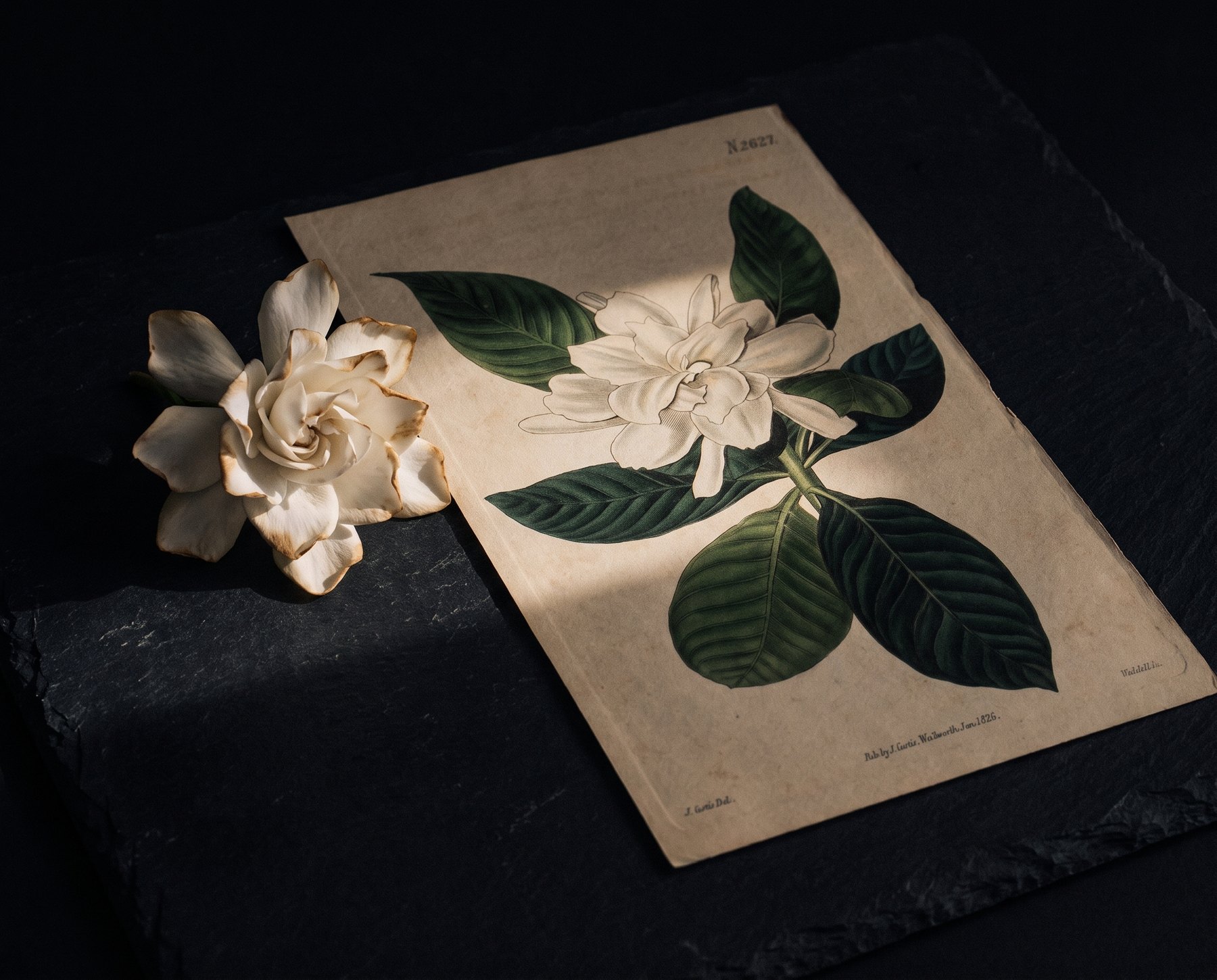
Dành dành trong vườn châu Á
Dành dành, Gardenia jasminoides, là một cây bụi thường xanh có gốc ở miền nam Trung Quốc, Việt Nam và các vùng lân cận. Lá dày, xanh bóng. Hoa to, cánh trắng dày như sáp, nở từ cuối xuân sang đầu hè. Ở Việt Nam, cây được trồng trong vườn, trong chậu, trước hiên nhà.
Tên chi Gardenia do nhà thực vật học John Ellis đặt vào thế kỷ 18, theo tên Alexander Garden, một bác sĩ và nhà tự nhiên học. Nhưng từ lâu trước đó, cây đã quen thuộc ở châu Á. Quả dành dành chín màu cam đỏ, được dùng để nhuộm vàng thức ăn và vải.
Mùi dành dành đậm và ngọt, dày như kem, có phần xanh của lá, phần chín của trái cây, và một nét gì đó giống nấm, giống sữa dừa. Một bông trong phòng là đủ thấy.
Nhưng bông hoa không bền. Cánh trắng ngả vàng khi hoa tàn, thường chỉ sau một hai ngày. Chạm tay vào, chỗ chạm sẽ thâm lại. Đó là một bông hoa không chịu được việc bị giữ.
Không chiết được: vì sao
Cái mỏng manh ấy cũng là lý do dành dành gần như vắng mặt trong thế giới tinh dầu. Hoa cho ra rất ít chất thơm. Cánh hoa dập nát và đổi màu nhanh trong khi xử lý. Chiết xuất dành dành thật chỉ từng được làm với lượng rất nhỏ, và nguồn của nó luôn cần được kiểm chứng.
Nên phần lớn dành dành trong lịch sử nước hoa là dựng lại. Người ta ngửi bông hoa, ghi nhận những gì mình thấy, rồi đi tìm những vật liệu khác có thể gợi ra từng phần.
Các nghiên cứu phân tích không khí quanh bông hoa sống ghi nhận linalool, methyl benzoate, những ester mùi xanh, và các lacton mùi sữa. Không chất nào là dành dành. Nhưng đặt chúng cạnh nhau đúng cách, bông hoa bắt đầu hiện ra.
Dựng lại một bông hoa trắng
Một bản dành dành dựng lại thường đứng giữa hoa nhài, hoa huệ và hoa cam, ba bông hoa trắng khác mà người làm nước hoa hiểu rõ hơn. Benzyl acetate cho phần ngọt sáng giống nhài. Các lacton cho phần sữa, phần kem. Những ester xanh cho cái tươi của lá. Và một chút mùi nấm, rất nhỏ, cho cái ẩm của cánh hoa dày.
Chi tiết mùi nấm là một quan sát đáng chú ý. Ở gần một bông dành dành thật, người ta thấy nó nếu để ý: một nét đất, hơi ẩm, không thơm theo nghĩa thông thường. Người dựng lại phải quyết định có giữ nét đó hay không. Giữ thì bông hoa thật hơn. Bỏ thì bông hoa sạch hơn, nhưng xa hơn.
Mỗi bản dành dành là một lựa chọn như vậy. Không có bản gốc để so. Chỉ có bông hoa ngoài hiên, trắng buổi sáng, vàng buổi chiều hôm sau.
Hoa ngả vàng, mùi còn lại
Có một điều ngược đời ở dành dành. Bông hoa thật thì không giữ được. Mùi dựng lại thì giữ được rất lâu, trong chai, trong ngăn tủ, trên khăn tay. Cái bền vững lại là cái không có thật.
Nhưng có lẽ đó không phải là mất mát. Mùi dựng lại không thay bông hoa. Nó giữ một buổi sáng cụ thể: lúc bông hoa còn trắng, lúc cánh còn cứng, lúc mùi còn tươi. Nó giống một tấm ảnh chụp đúng giờ, trước khi ánh sáng đổi.
Người ở Việt Nam có thể đi ra hiên và ngửi một bông dành dành thật vào đầu hè. Đó là điều mà không chai nào làm thay được. Nhưng khi mùa qua, khi cây chỉ còn lá, một mùi dựng lại có thể nhắc rằng bông hoa đã từng ở đó.
Hoa ngả vàng. Mùi còn lại. Cả hai đều là dấu vết của cùng một buổi sáng.
Gardenia in Asian gardens
Gardenia, Gardenia jasminoides, is an evergreen shrub native to southern China, Vietnam and nearby regions. Its leaves are thick and glossy. Its flowers are large, with thick white petals like wax, opening from late spring into early summer. In Vietnam, where it is called dành dành, it grows in gardens, in pots, by the front door.
The genus name Gardenia was given by the botanist John Ellis in the eighteenth century, after Alexander Garden, a physician and naturalist. Long before that, the plant was familiar across Asia. Its ripe orange red fruit is used to dye food and cloth yellow.
The smell of gardenia is dense and sweet, thick like cream, with the green of leaves, the ripeness of fruit, and something like mushroom or coconut milk. One flower in a room is enough.
But the flower does not last. The white petals yellow as it fades, often after a day or two. Touch it and the spot will bruise. It is a flower that does not tolerate being held.
Why it cannot be extracted
That fragility is also why gardenia is nearly absent from the world of essential oils. The flower gives very little scent material. The petals bruise and change colour quickly during processing. Genuine gardenia extract has only been made in very small amounts, and its source always needs checking.
So most gardenias in perfume history are reconstructions. Someone smells the flower, notes what they find, and looks for other materials that can suggest each part.
Analyses of the air around the living flower report linalool, methyl benzoate, green esters and milky lactones. None of these is gardenia. Placed together in the right way, the flower begins to appear.
Rebuilding a white flower
A rebuilt gardenia usually sits between jasmine, tuberose and orange flower, three white flowers that perfumers understand better. Benzyl acetate brings a bright sweetness like jasmine. Lactones bring milk and cream. Green esters bring the freshness of leaves. And a tiny touch of mushroom brings the damp of thick petals.
The mushroom detail is a sharp observation. Close to a real gardenia you can find it if you pay attention: an earthy, slightly damp note, not pleasant in the usual sense. The one rebuilding must decide whether to keep it. Keep it and the flower is truer. Drop it and the flower is cleaner, but further away.
Every gardenia is a choice like that. There is no original to compare against. Only the flower on the porch, white in the morning, yellow by the next afternoon.
The flower yellows, the smell remains
There is a reversal in gardenia. The real flower cannot be kept. The rebuilt smell keeps for a long time, in a bottle, in a drawer, on a handkerchief. What lasts is what was never real.
Perhaps that is not a loss. The rebuilt smell does not replace the flower. It keeps a particular morning: when the flower was still white, the petals still firm, the smell still fresh. Like a photograph taken on time, before the light changed.
In Vietnam you can step out to the porch in early summer and smell a real gardenia. No bottle can do that for you. But when the season passes and the shrub is only leaves, a rebuilt smell can remind you that the flower was there.
The flower yellows. The smell remains. Both are traces of the same morning.

Olfactory Art