
Essays · Olfactory Art
Tử đinh hương. Một mùi phải dựng lại.
Giống bông hoa. Nhưng không bao giờ là bông hoa.
Like the flower. Never the flower.
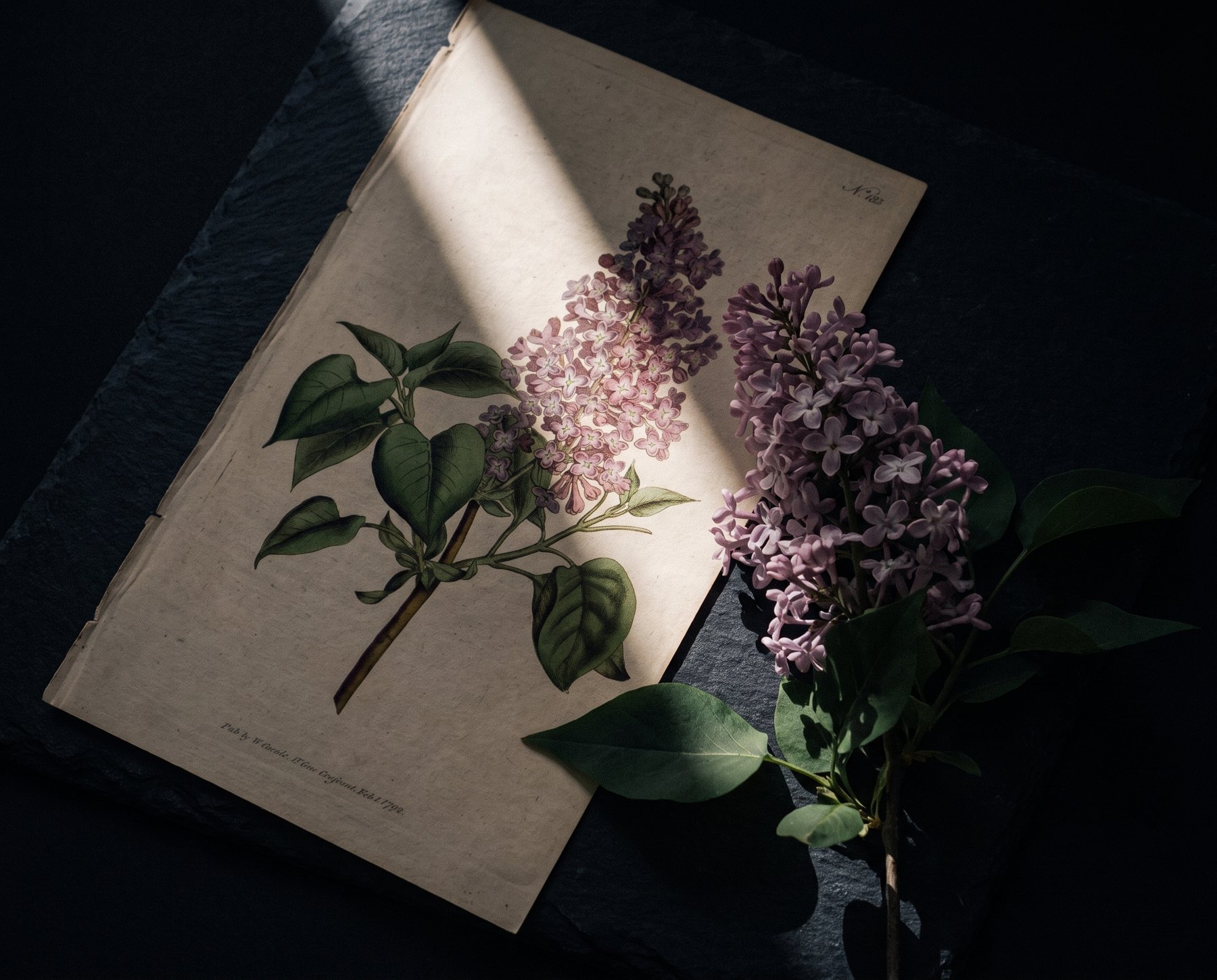
Một bông hoa mùa xuân không cho tinh dầu
Tử đinh hương, Syringa vulgaris, là một cây bụi có gốc ở bán đảo Balkan, về sau được trồng khắp châu Âu và Bắc Mỹ. Cuối xuân, cây ra những chùm hoa nhỏ dày đặc, màu tím nhạt, tím sẫm hoặc trắng. Màu của nó mạnh đến mức trong tiếng Anh và tiếng Pháp, tên bông hoa trở thành tên một sắc tím.
Mùi tử đinh hương rất dễ nhớ. Ngọt, mát, hơi phấn, có chút xanh của lá và chút cay rất nhẹ. Nó theo gió đi xa, vào qua cửa sổ, ở lại trên áo. Nhưng như linh lan, bông hoa này không chịu vào chai. Hoa nhỏ, mỏng, lượng chất thơm ít, và thứ lấy ra được không giữ lại cái mùi người ta nhớ. Ngày nay gần như không có chiết xuất tử đinh hương nào trong thương mại.
Cho nên từ rất sớm, người làm nước hoa đã hiểu rằng nếu muốn có tử đinh hương, họ phải dựng nó.
Công thức thế kỷ 19
G. W. Septimus Piesse, nhà hoá học và người làm nước hoa ở London, xuất bản The Art of Perfumery vào giữa thế kỷ 19. Trong bản in năm 1857, ông viết rằng tinh chất tử đinh hương có thể lấy bằng cách ngâm hoa trong mỡ. Nhưng ngay sau đó, ông đưa ra một công thức giả, như thể biết rằng ít ai sẽ đi con đường kia.
Công thức gồm dịch chiết hoa huệ, một phần nhỏ dịch chiết hoa cam, vài giọt dầu hạnh nhân, và một ít cồn ngâm cầy hương. Không có tử đinh hương nào trong đó. Chỉ có những bông hoa trắng khác, một chút vị đắng của hạnh nhân, và một chút mùi động vật để giữ mọi thứ lại với nhau.
Đó là cách làm của thời ấy: dựng một bông hoa bằng những bông hoa khác. Người ngửi không cần biết. Họ chỉ cần nhận ra mùi mà mình từng gặp trong vườn.
Terpineol và heliotropin
Khi hoá học hữu cơ phát triển vào nửa sau thế kỷ 19, hộp màu của người làm nước hoa rộng ra. Hai chất trở nên quan trọng với tử đinh hương.
Terpineol, có mặt tự nhiên trong nhiều loại tinh dầu như thông và tràm, mang một mùi hoa khô, sạch, gợi đến tử đinh hương. Nó rẻ và bền, và trở thành xương sống của nhiều bản tử đinh hương dựng lại, nhất là trong xà phòng.
Heliotropin, còn gọi là piperonal, có mùi ngọt, phấn, gợi hạnh nhân và hoa vòi voi châu Âu. Nó làm mềm cái sạch của terpineol, thêm vào đó vẻ phấn của cánh hoa. Về sau, những phân tử linh lan như hydroxycitronellal cũng được thêm vào, để có phần mát và xanh.
Không chất nào là tử đinh hương. Mỗi chất là một nét: nét này cho sự sạch, nét kia cho sự mềm, nét khác cho sự mát. Đặt đủ nét, người xem thấy bông hoa hiện ra.
Chân dung vẽ theo trí nhớ
Có một khác biệt tinh tế giữa chép và nhớ. Người chép nhìn vật và sao lại từng chi tiết. Người nhớ thì giữ lại cái ấn tượng, và bỏ qua những gì không còn trong đầu. Tử đinh hương trong nước hoa luôn thuộc loại thứ hai. Nó không được chép từ bông hoa, vì bông hoa không cho chép. Nó được dựng từ cái mà người ta nhớ về bông hoa.
Vì thế mỗi bản tử đinh hương mang dấu vết của người dựng. Người này nhớ phần phấn, người kia nhớ phần xanh, người khác nhớ cái mát của buổi sáng khi hoa còn đẫm sương. Không bản nào sai. Không bản nào đủ.
Và bông hoa thật thì vẫn nở mỗi mùa xuân, vài tuần, cho những ai đi ngang qua vườn đúng lúc. Mùi của nó ở đó, trọn vẹn, và không ai mang về được.
A spring flower that yields no oil
Lilac, Syringa vulgaris, is a shrub native to the Balkan peninsula, later planted across Europe and North America. In late spring it carries dense clusters of small flowers, pale purple, deep purple or white. Its colour is so strong that in English and French the flower's name became the name of a shade.
The smell of lilac is easy to remember. Sweet, cool, a little powdery, with a green edge from the leaves and a very light spice. It travels on the wind, comes in through windows, stays on clothes. But like lily of the valley, the flower refuses the bottle. The blossoms are small and thin, the scent material is scarce, and what can be taken does not hold the smell people remember. Today there is almost no lilac extract in trade.
So from early on, perfumers understood that if they wanted lilac, they had to build it.
A nineteenth century formula
G. W. Septimus Piesse, a chemist and perfumer in London, published The Art of Perfumery in the mid nineteenth century. In the 1857 edition he writes that lilac can be taken by steeping the flowers in fat. Then, straight away, he gives an imitation formula, as if he knew few would take the first road.
The formula calls for tuberose extract, a smaller part of orange flower extract, a few drops of almond oil and a little tincture of civet. No lilac at all. Only other white flowers, a bitter touch of almond, and a trace of animal to hold everything together.
That was the method of the time: build one flower out of others. The wearer did not need to know. They only needed to recognise the smell they had met in a garden.
Terpineol and heliotropin
As organic chemistry grew in the second half of the nineteenth century, the perfumer's paintbox widened. Two materials became central to lilac.
Terpineol, found naturally in many oils such as pine and cajeput, has a dry, clean floral smell that recalls lilac. It was cheap and stable, and it became the backbone of many rebuilt lilacs, especially in soap.
Heliotropin, also called piperonal, smells sweet and powdery, of almond and heliotrope. It softens the cleanness of terpineol and adds the powder of petals. Later, muguet molecules such as hydroxycitronellal were added for coolness and green.
None of these is lilac. Each is a stroke: one for cleanness, one for softness, one for coolness. Lay down enough strokes and the flower appears.
A portrait from memory
There is a fine difference between copying and remembering. The copyist looks at the thing and reproduces each detail. The one who remembers keeps an impression and drops whatever has faded. Lilac in perfume always belongs to the second kind. It is not copied from the flower, because the flower cannot be copied. It is built from what people remember of the flower.
So each lilac carries the trace of its maker. One remembers the powder, another the green, another the cool of a morning when the blossoms were still wet. None is wrong. None is enough.
And the real flower still blooms each spring, for a few weeks, for anyone who passes the garden at the right time. Its smell is there, whole, and no one can take it home.

Olfactory Art